Lee Sang-Hun, Cox Charles L
Department of Molecular and Integrative Physiology, 2357 Beckman Institute for Advanced Science and Technology, University of Illinois at Urbana-Champaign, 405 North Mathews Avenue, MC-251, Urbana, IL 61801, United States.
Neuropharmacology. 2008 Dec;55(8):1329-39. doi: 10.1016/j.neuropharm.2008.08.028. Epub 2008 Aug 30.
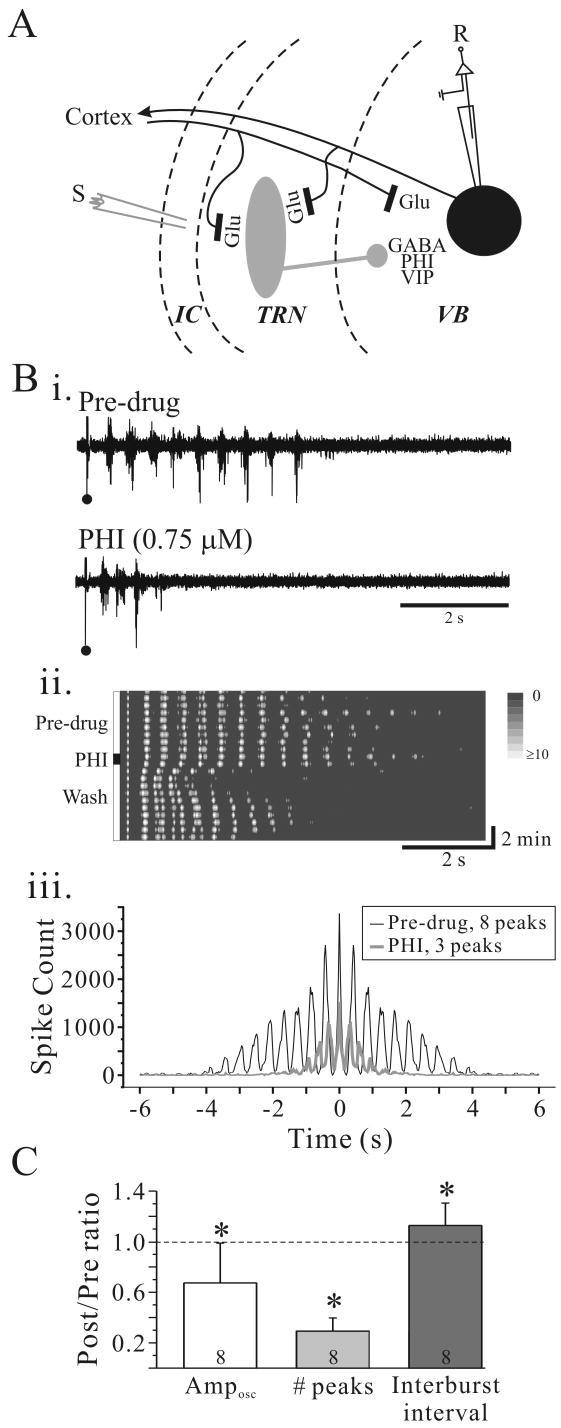
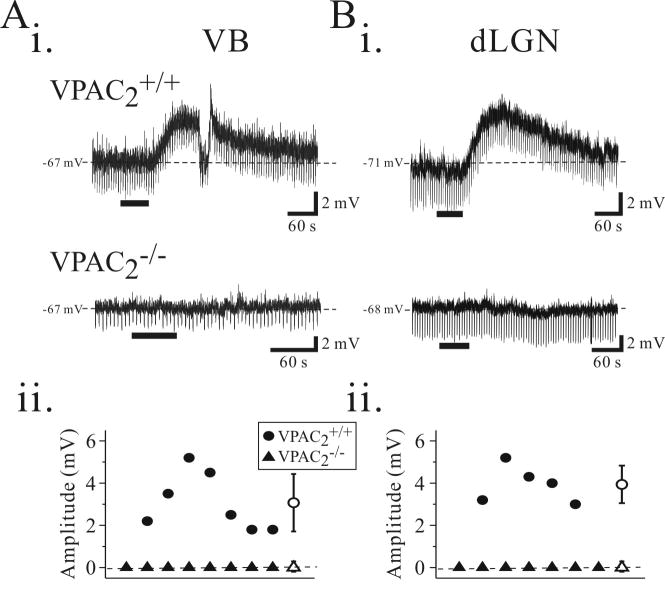
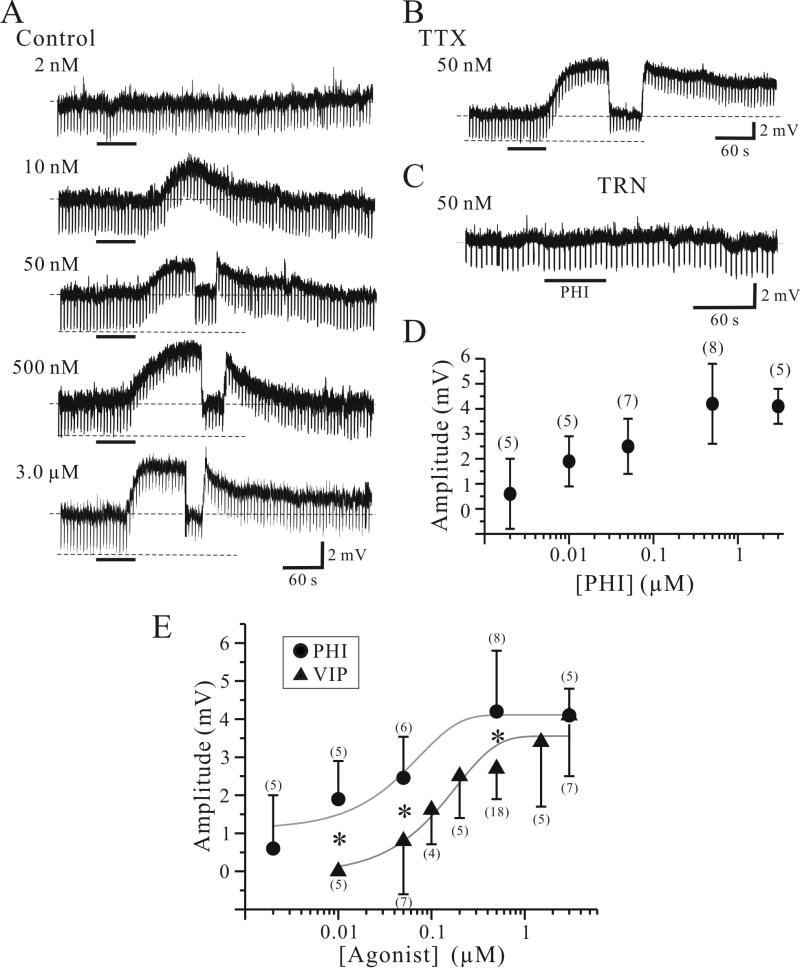
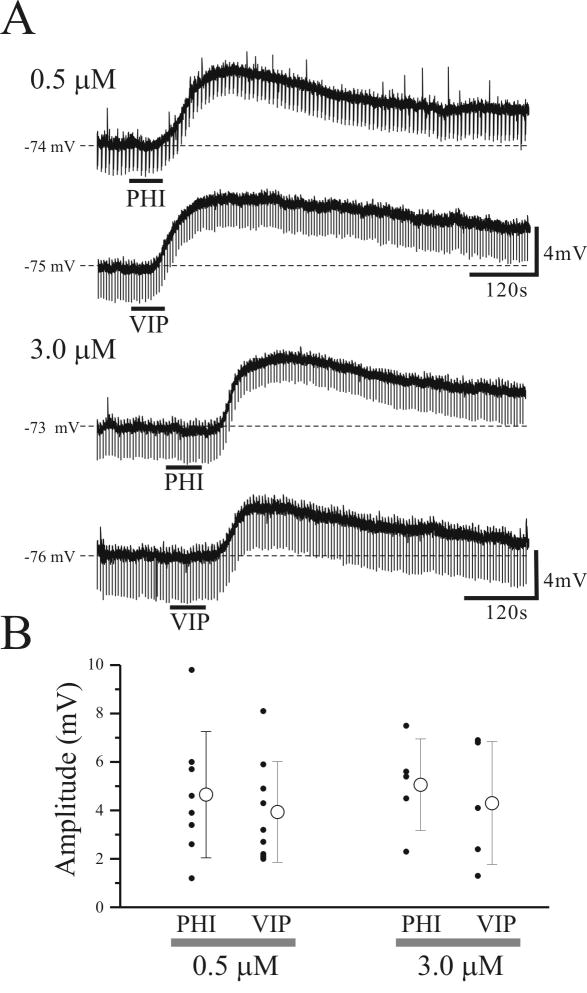
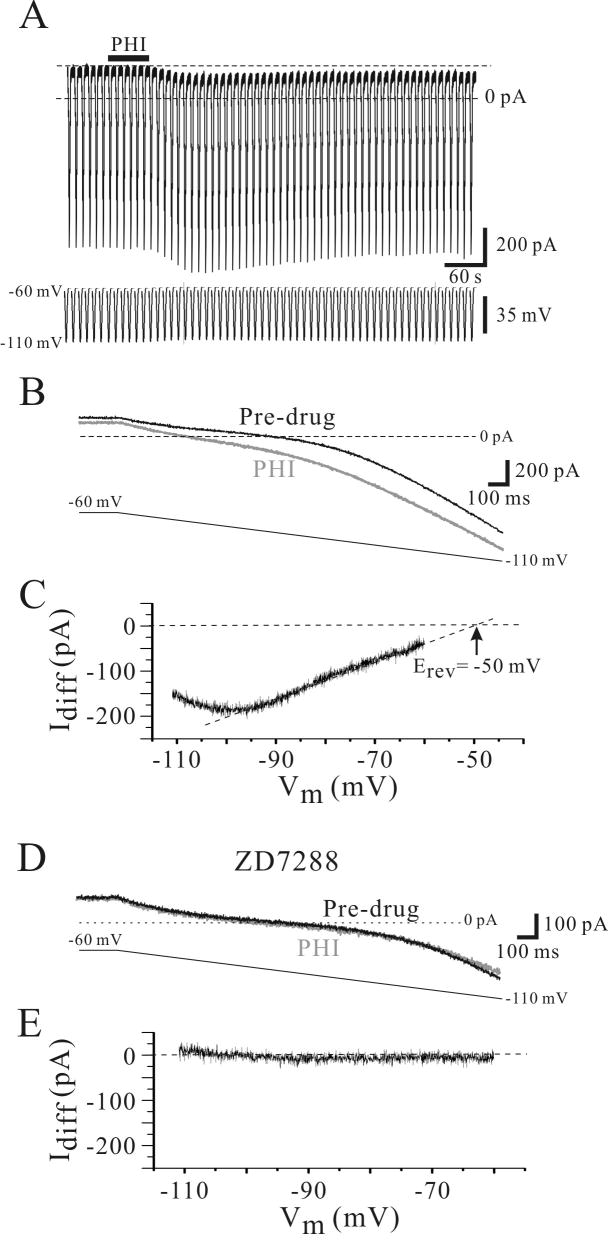
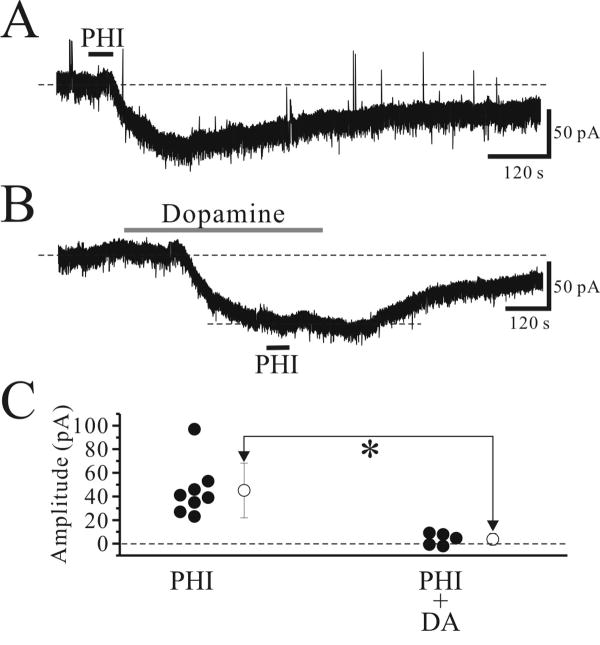
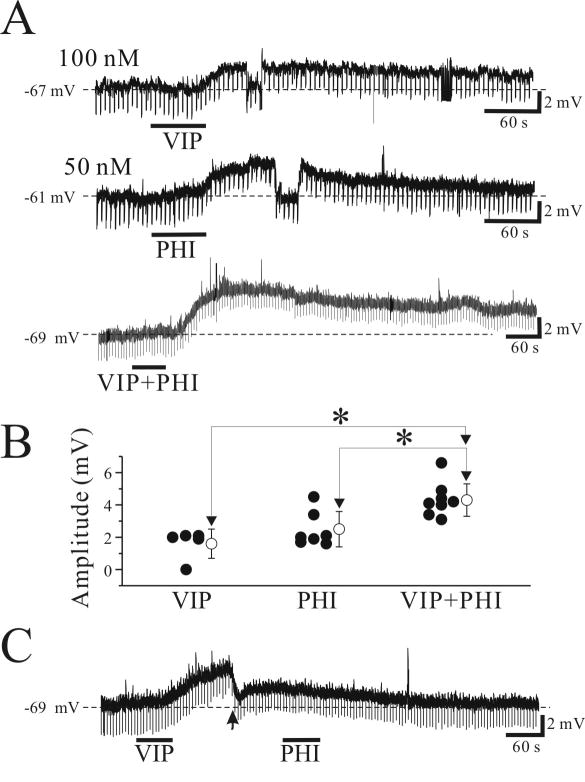
Peptide histidine isoleucine (PHI) and vasoactive intestinal peptide (VIP) are neuropeptides synthesized from a common precursor, prepro-VIP, and share structural similarity and biological functions in many systems. Within the central nervous system and peripheral tissues, PHI and VIP have overlapping distribution. PHI-mediated functions are generally via activation of VIP receptors; however, the potency and affinity of PHI for VIP receptors are significantly lower than VIP. In addition, several studies suggest distinct PHI receptors that are independent of VIP receptors. PHI receptors have been cloned and characterized in fish, but their existence in mammals is still unknown. This study focuses on the functional role of PHI in the thalamus because of the localization of both PHI and VIP receptors in this brain region. Using extracellular multiple-unit recording techniques, we found that PHI strongly attenuated the slow intrathalamic rhythmic activity. Using intracellular recording techniques, we found that PHI selectively depolarized thalamic relay neurons via an enhancement of the hyperpolarization-activated mixed cation current, Ih. Further, the actions of PHI were occluded by VIP and dopamine, indicating these modulators converge onto a common mechanism. In contrast to previous work, we found that PHI was more potent than VIP in producing excitatory actions on thalamic neurons. We next used the transgenic mice lacking a specific VIP receptor, VPAC2, to identify its possible role in PHI-mediated actions in the thalamus. PHI depolarized all relay neurons tested from wild-type mice (VPAC2(+/+)); however, in knockout mice (VPAC2(-/-)), PHI produced no change in membrane potential in all neurons tested. Our findings indicate that excitatory actions of PHI are mediated by VPAC2 receptors, not by its own PHI receptors and the excitatory actions of PHI clearly attenuate intrathalamic rhythmic activities, and likely influence information transfer through thalamocortical circuits.
肽组氨酸异亮氨酸(PHI)和血管活性肠肽(VIP)是由共同前体——前血管活性肠肽原合成的神经肽,在许多系统中具有结构相似性和生物学功能。在中枢神经系统和外周组织中,PHI和VIP分布重叠。PHI介导的功能通常通过激活VIP受体实现;然而,PHI对VIP受体的效力和亲和力明显低于VIP。此外,多项研究表明存在独立于VIP受体的独特PHI受体。PHI受体已在鱼类中克隆并鉴定,但在哺乳动物中的存在情况仍不清楚。由于PHI和VIP受体在该脑区的定位,本研究聚焦于PHI在丘脑中的功能作用。使用细胞外多单位记录技术,我们发现PHI强烈减弱丘脑内缓慢的节律性活动。使用细胞内记录技术,我们发现PHI通过增强超极化激活的混合阳离子电流(Ih)选择性地使丘脑中继神经元去极化。此外,PHI的作用被VIP和多巴胺阻断,表明这些调节剂汇聚到一个共同机制上。与先前的研究不同,我们发现PHI在对丘脑神经元产生兴奋作用方面比VIP更有效。接下来,我们使用缺乏特定VIP受体VPAC2的转基因小鼠,来确定其在PHI介导的丘脑作用中的可能作用。PHI使野生型小鼠(VPAC2(+/+))中所有测试的中继神经元去极化;然而,在基因敲除小鼠(VPAC2(-/-))中,PHI对所有测试神经元的膜电位没有影响。我们的研究结果表明,PHI的兴奋作用由VPAC2受体介导,而非其自身的PHI受体介导,并且PHI的兴奋作用明显减弱丘脑内的节律性活动,可能影响通过丘脑皮质回路的信息传递。