Feres K J, Ischenko I, Hayman M J
Department of Molecular Genetics & Microbiology, Stony Brook University, Stony Brook, NY, USA.
Oncogene. 2009 Jan 15;28(2):279-88. doi: 10.1038/onc.2008.383. Epub 2008 Oct 6.
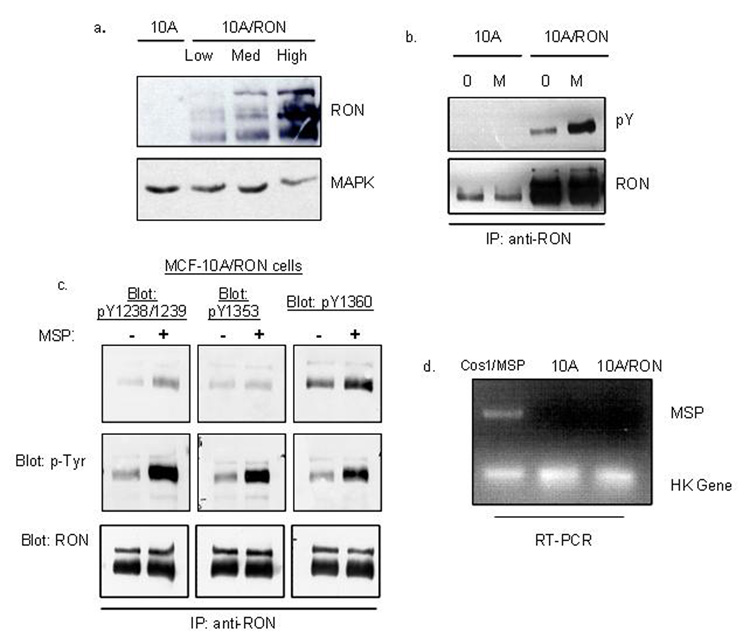
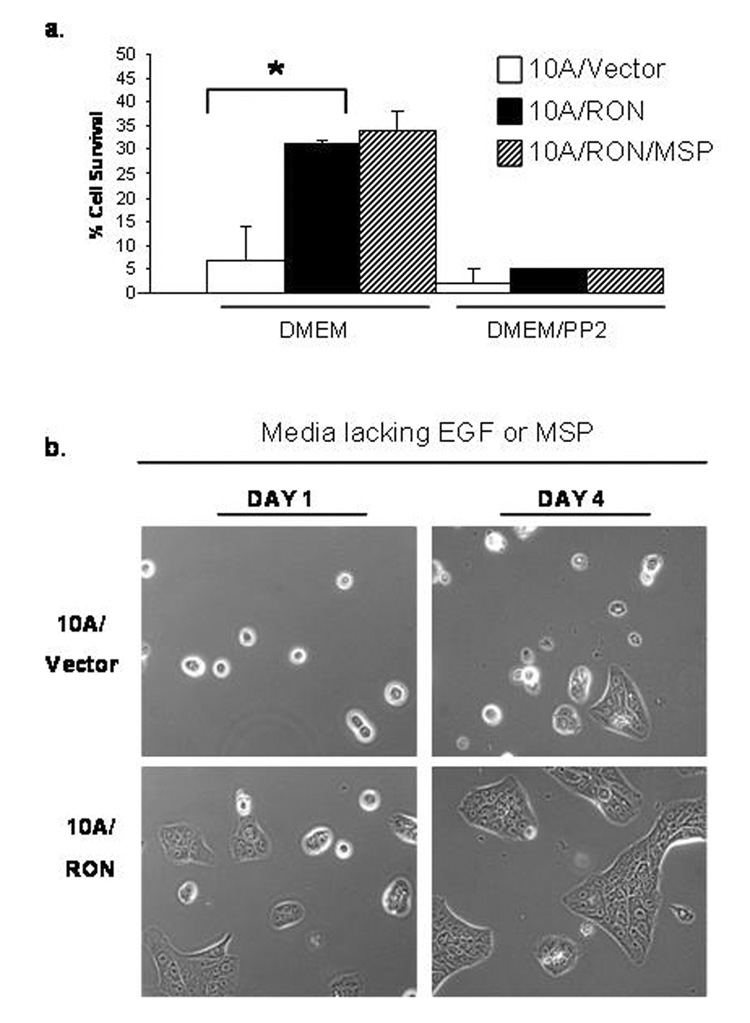
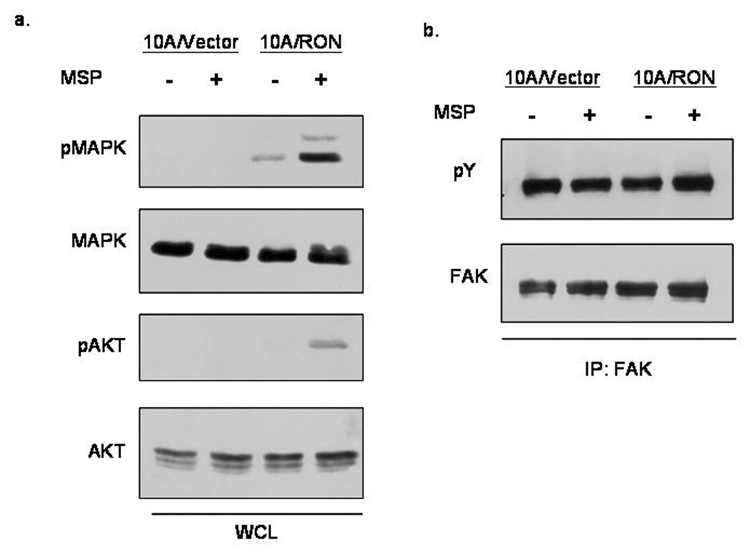
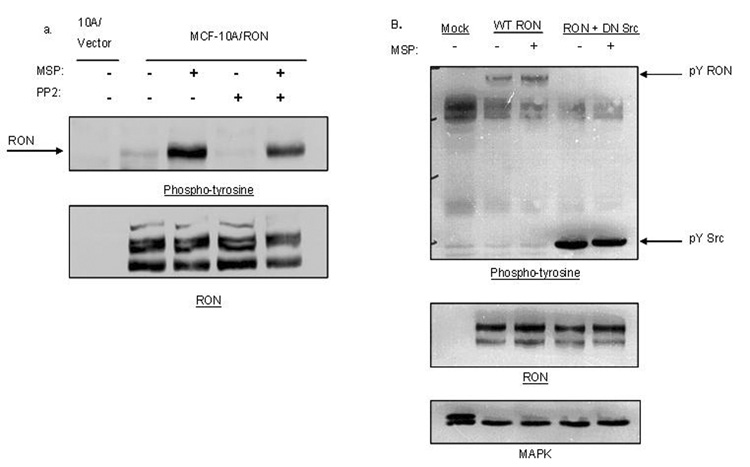
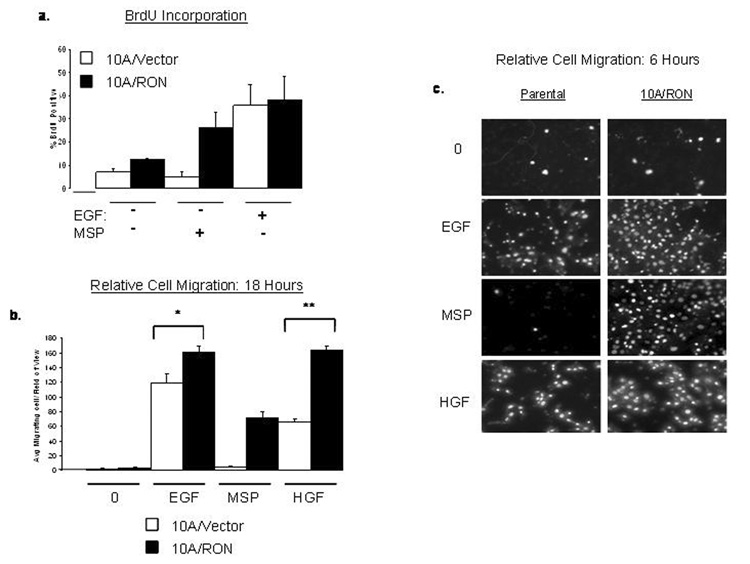
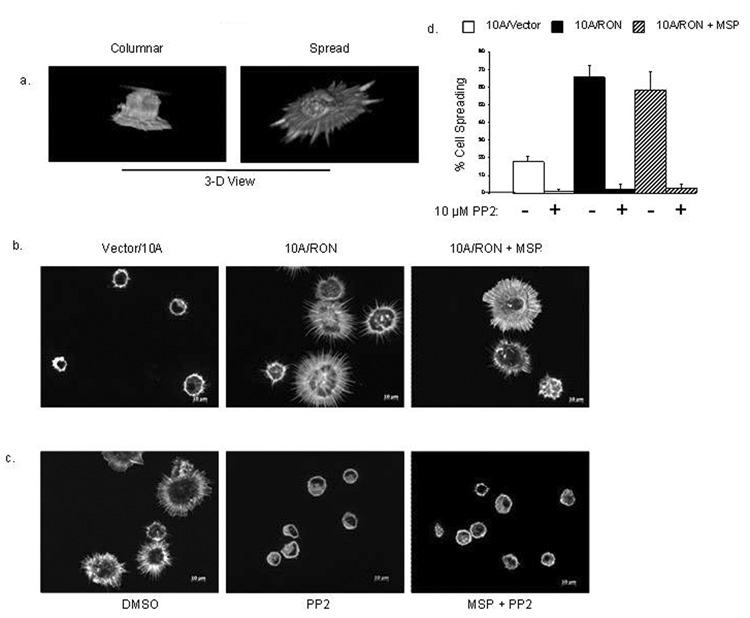
The recepteur d'origine nantais (RON) is a receptor tyrosine kinase (RTK) in the scatter factor family, which includes the c-Met receptor. RON exhibits increased expression in a significant number of human breast cancer tissues as well as in many established breast cancer cell lines. Recent studies have indicated that in addition to ligand-dependent signaling events, RON also promotes signals in the absence of its only known ligand, MSP, when expressed in epithelial cells. In this study, we found that when expressed in MCF-10A breast epithelial cells, RON exhibits both MSP-dependent and MSP-independent signaling, which lead to distinct biological outcomes. In the absence of MSP, RON signaling promotes cell survival, increased cell spreading and enhanced migration in response to other growth factors. However, both RON-mediated proliferation and migration require the addition of MSP in MCF-10A cells. Both MSP-dependent and MSP-independent signaling by RON are mediated in part by Src family kinases. These data suggest that RON has two alternative modes of signaling that can contribute to oncogenic behavior in normal breast epithelial cells.
源自南特的受体(RON)是散射因子家族中的一种受体酪氨酸激酶(RTK),该家族包括c-Met受体。RON在大量人类乳腺癌组织以及许多已建立的乳腺癌细胞系中表达增加。最近的研究表明,除了依赖配体的信号事件外,当在上皮细胞中表达时,RON在缺乏其唯一已知配体MSP的情况下也能促进信号传导。在本研究中,我们发现当在MCF-10A乳腺上皮细胞中表达时,RON表现出依赖MSP和不依赖MSP的信号传导,这导致不同的生物学结果。在没有MSP的情况下,RON信号传导促进细胞存活、增加细胞铺展并增强对其他生长因子的迁移反应。然而,RON介导的增殖和迁移在MCF-10A细胞中都需要添加MSP。RON依赖MSP和不依赖MSP的信号传导部分由Src家族激酶介导。这些数据表明,RON有两种可替代的信号传导模式,可导致正常乳腺上皮细胞中的致癌行为。