Frick Kevin K, Krieger Nancy S, Nehrke Keith, Bushinsky David A
Division of Nephrology, Department of Medicine, University of Rochester School of Medicine and Dentistry, Rochester, New York 14642, USA.
J Bone Miner Res. 2009 Feb;24(2):305-13. doi: 10.1359/jbmr.081015.
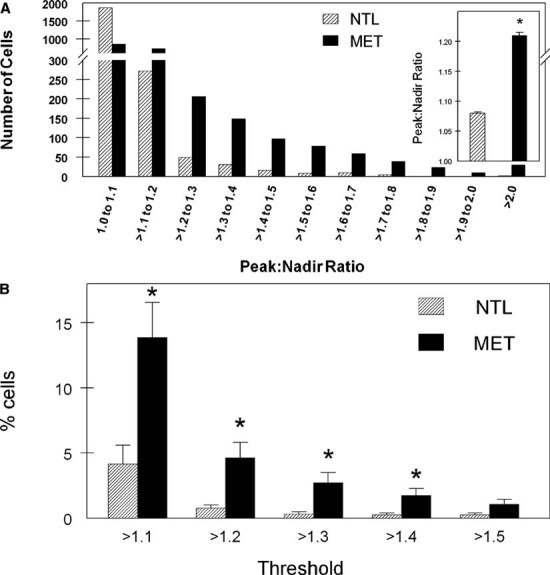
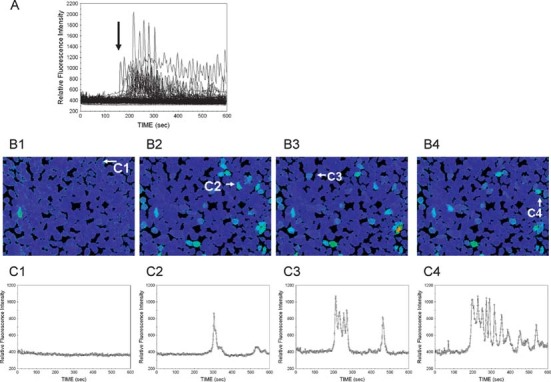
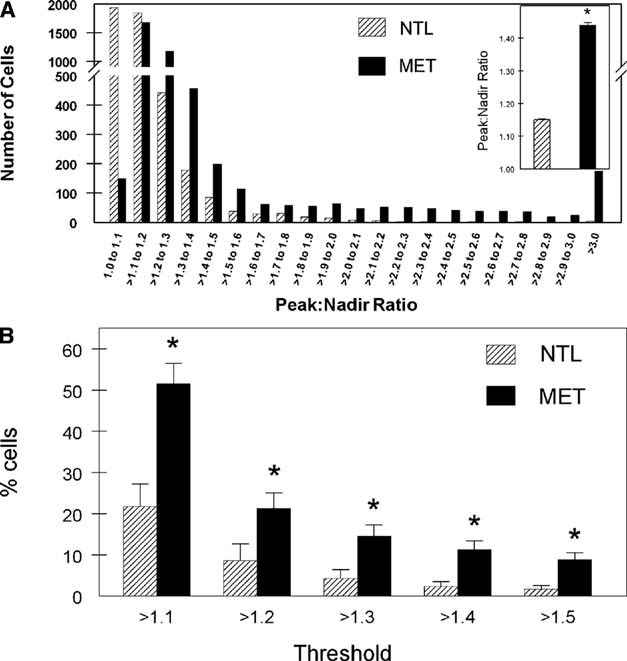
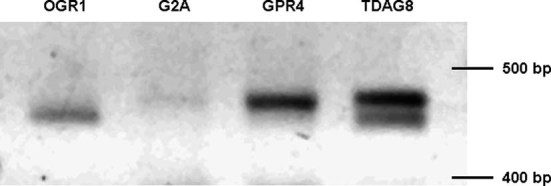
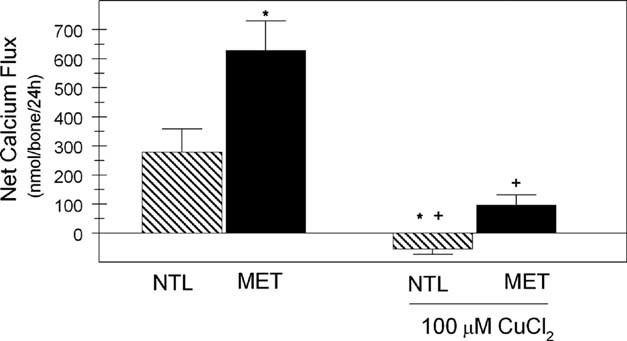
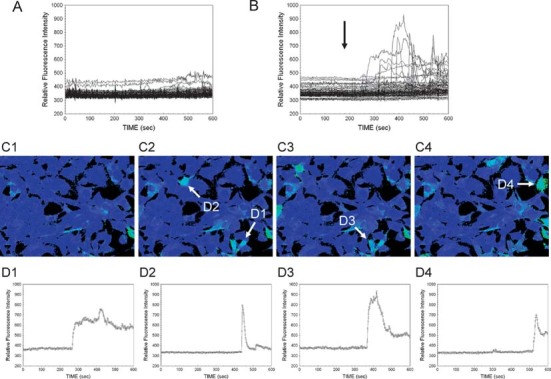
Metabolic acidosis increases urine Ca without increasing intestinal absorption, leading to bone Ca loss. It is unclear how bone cells detect the increase in proton concentration. To determine which G protein-coupled proton sensing receptors are expressed in bone, PCR was performed, and products were detected for OGR1, TDAG8, G2A, and GPR4. We tested the hypothesis that the G protein-coupled proton sensor, OGR1, is an H(+)-sensing receptor in bone. To determine whether acid-induced bone resorption involves OGR1, we incubated mouse calvariae in neutral pH (NTL) or acidic (MET) medium +/- the OGR1 inhibitor CuCl(2). CuCl(2) decreased MET-induced Ca efflux. We used fluorescent imaging of perfused bone cells to determine whether MET increases Ca(i). Perfusion with MET induced a rapid, flow-independent, increase in Ca(i) in individual bone cells. To determine whether transfection of OGR1 into a heterologous cell type would increase Ca(i) in response to H(+), we perfused Chinese hamster ovary (CHO) cells transfected with mouse OGR1 cDNA. Perfusion with MET induced a rapid increase in Ca(i) in OGR1-transfected CHO cells. These data indicate that OGR1 induces an increase in Ca(i) in response to MET and is a prime candidate for an osteoblast proton sensor.
代谢性酸中毒会增加尿钙排泄而不增加肠道对钙的吸收,从而导致骨钙流失。目前尚不清楚骨细胞是如何检测质子浓度升高的。为了确定骨中表达哪些G蛋白偶联质子感应受体,进行了聚合酶链反应(PCR),并检测到了OGR1、TDAG8、G2A和GPR4的产物。我们检验了G蛋白偶联质子传感器OGR1是骨中H(+)感应受体这一假设。为了确定酸诱导的骨吸收是否涉及OGR1,我们将小鼠颅骨在中性pH(NTL)或酸性(MET)培养基中培养,并加入或不加入OGR1抑制剂CuCl₂。CuCl₂降低了MET诱导的钙外流。我们使用灌注骨细胞的荧光成像来确定MET是否会增加细胞内钙(Ca(i))。用MET灌注可诱导单个骨细胞中Ca(i)快速、与流量无关的增加。为了确定将OGR1转染到异源细胞类型中是否会响应H(+)增加Ca(i),我们用小鼠OGR1 cDNA转染中国仓鼠卵巢(CHO)细胞并进行灌注。用MET灌注可诱导OGR1转染的CHO细胞中Ca(i)快速增加。这些数据表明,OGR1会响应MET诱导Ca(i)增加,并且是成骨细胞质子传感器的主要候选者。