Cunliffe Vincent T
MRC Centre for Developmental and Biomedical Genetics and Department of Biomedical Science, University of Sheffield, Firth Court, Western Bank, Sheffield S10 2TN, United Kingdom.
Curr Opin Genet Dev. 2008 Oct;18(5):404-10. doi: 10.1016/j.gde.2008.10.001. Epub 2008 Oct 16.
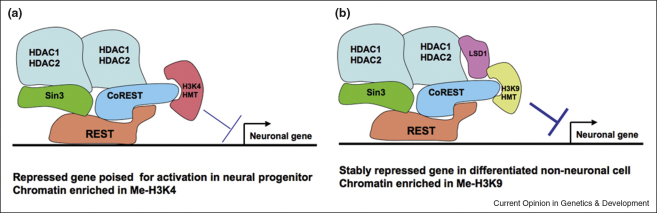
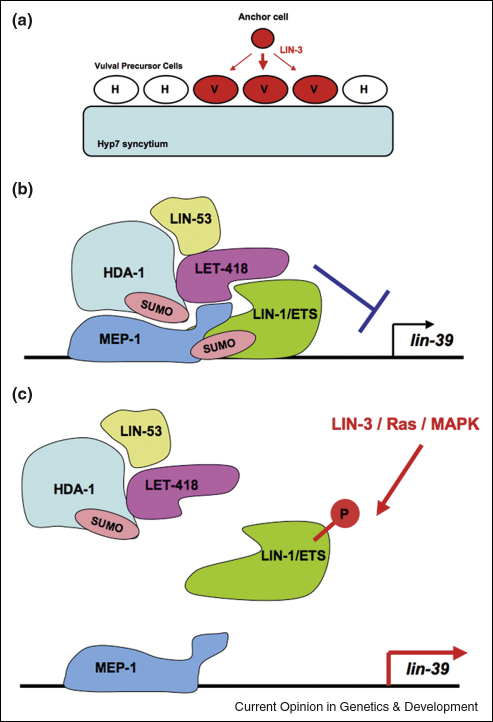
Histone deacetylases (HDACs) are essential catalytic components of the transcription silencing machinery and they play important roles in the programming of multicellular development. HDACs are present within multisubunit protein complexes, other components of which govern HDAC target gene specificity by controlling interactions with sequence-specific DNA-binding proteins. Here, I review the different developmental roles of the Sin3, NuRD, CoREST and NCoR/SMRT Class I HDAC complexes. With their distinct subunit composition, these versatile molecular devices function in many different settings, to promote axis specification and tissue patterning, to maintain stem cell pluripotency, facilitate self-renewal, guide lineage commitment and drive cell differentiation.
组蛋白去乙酰化酶(HDACs)是转录沉默机制中必不可少的催化成分,在多细胞发育编程中发挥着重要作用。HDACs存在于多亚基蛋白质复合物中,其中其他成分通过控制与序列特异性DNA结合蛋白的相互作用来决定HDAC靶基因的特异性。在此,我将综述Sin3、NuRD、CoREST和NCoR/SMRT I类HDAC复合物在不同发育过程中的作用。这些多功能分子装置具有独特的亚基组成,在许多不同情况下发挥作用,促进轴的特化和组织模式形成,维持干细胞多能性,促进自我更新,引导谱系定向并驱动细胞分化。