Seim Inge, Carter Shea L, Herington Adrian C, Chopin Lisa K
Institute of Health and Biomedical Innovation, Queensland University of Technology, Kelvin Grove, Queensland, Australia.
BMC Mol Biol. 2008 Oct 28;9:95. doi: 10.1186/1471-2199-9-95.
The peptide hormone ghrelin has many important physiological and pathophysiological roles, including the stimulation of growth hormone (GH) release, appetite regulation, gut motility and proliferation of cancer cells. We previously identified a gene on the opposite strand of the ghrelin gene, ghrelinOS (GHRLOS), which spans the promoter and untranslated regions of the ghrelin gene (GHRL). Here we further characterise GHRLOS.
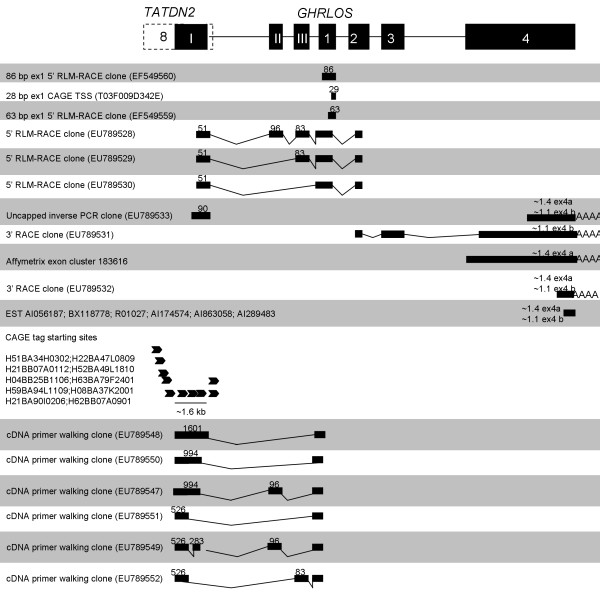
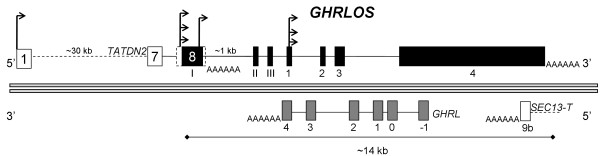
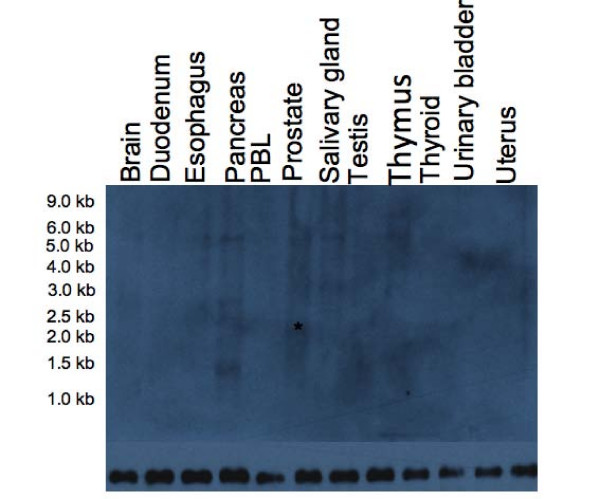
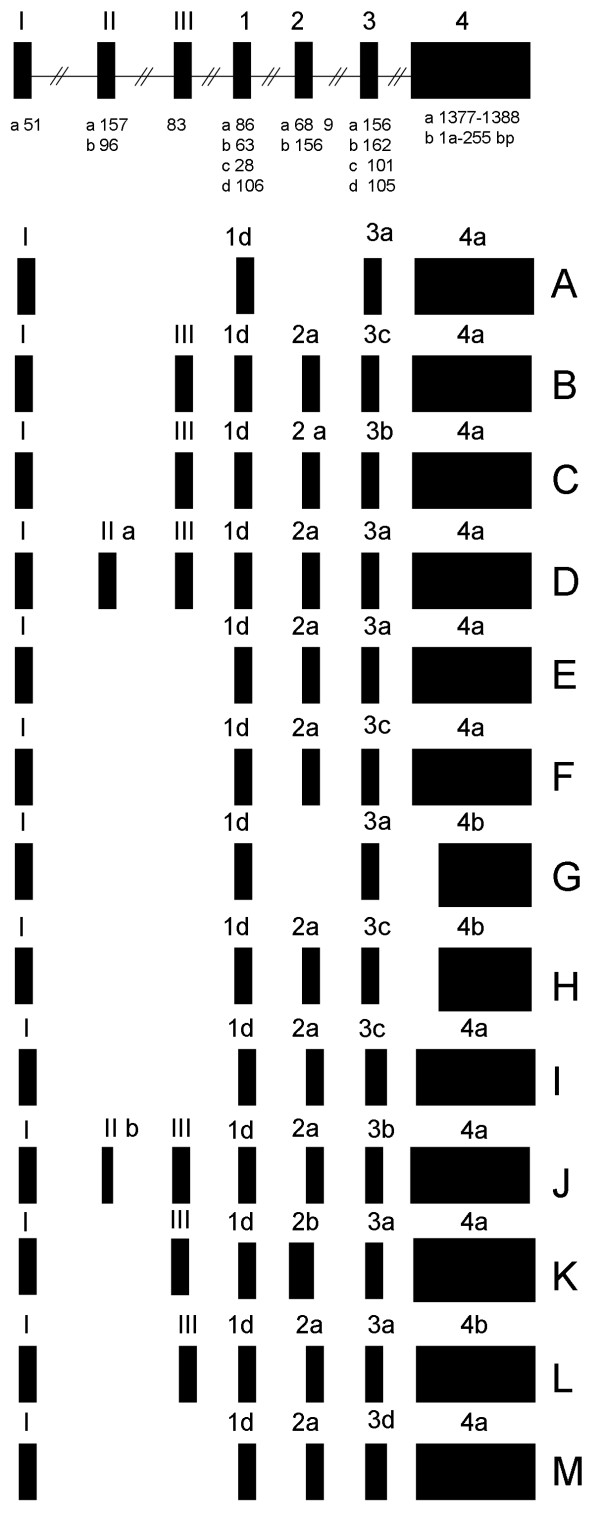
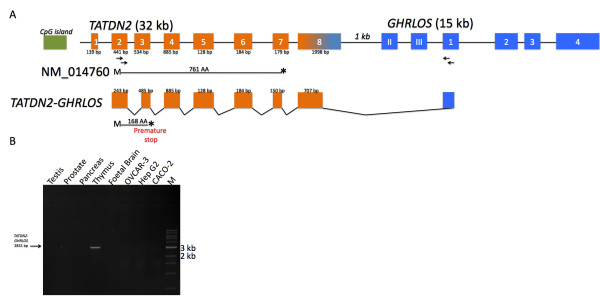
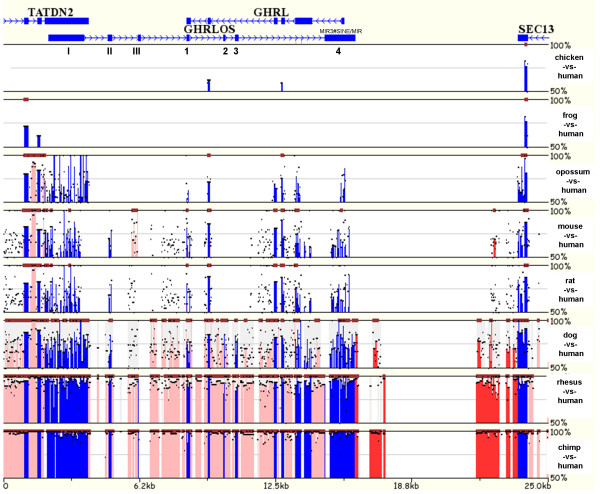
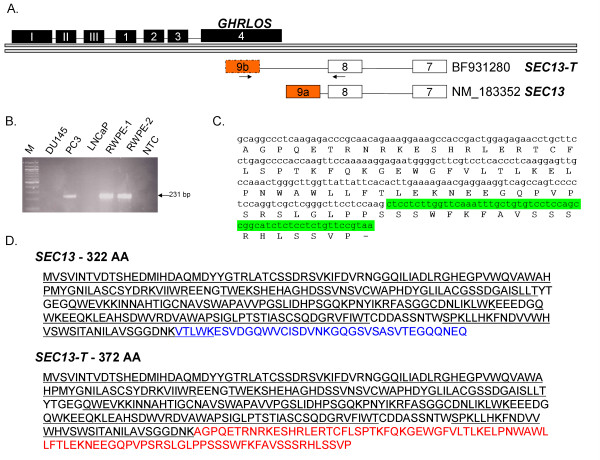
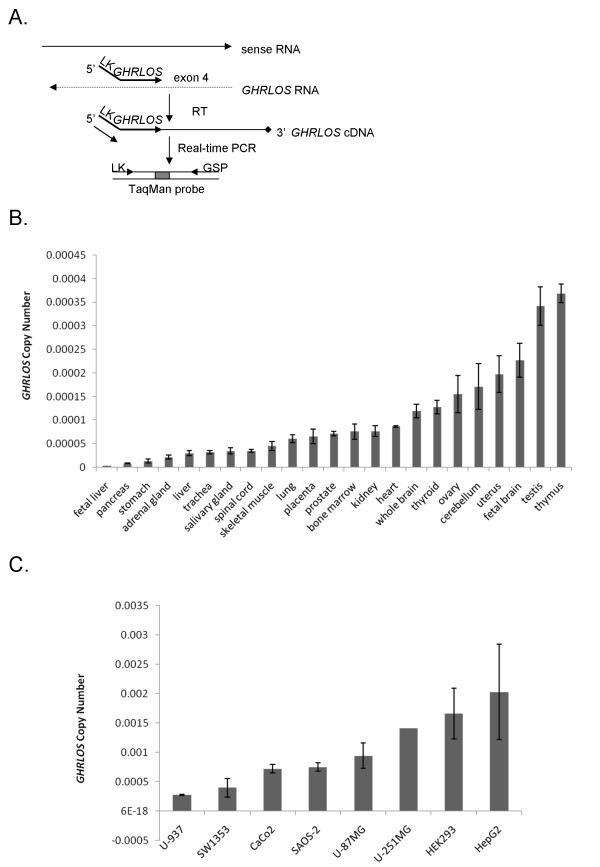
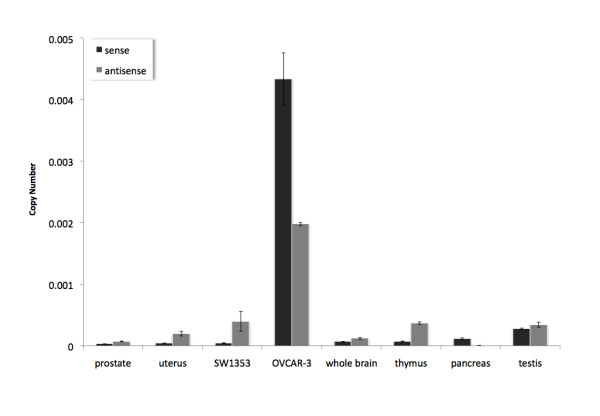
We have described GHRLOS mRNA isoforms that extend over 1.4 kb of the promoter region and 106 nucleotides of exon 4 of the ghrelin gene, GHRL. These GHRLOS transcripts initiate 4.8 kb downstream of the terminal exon 4 of GHRL and are present in the 3' untranslated exon of the adjacent gene TATDN2 (TatD DNase domain containing 2). Interestingly, we have also identified a putative non-coding TATDN2-GHRLOS chimaeric transcript, indicating that GHRLOS RNA biogenesis is extremely complex. Moreover, we have discovered that the 3' region of GHRLOS is also antisense, in a tail-to-tail fashion to a novel terminal exon of the neighbouring SEC13 gene, which is important in protein transport. Sequence analyses revealed that GHRLOS is riddled with stop codons, and that there is little nucleotide and amino-acid sequence conservation of the GHRLOS gene between vertebrates. The gene spans 44 kb on 3p25.3, is extensively spliced and harbours multiple variable exons. We have also investigated the expression of GHRLOS and found evidence of differential tissue expression. It is highly expressed in tissues which are emerging as major sites of non-coding RNA expression (the thymus, brain, and testis), as well as in the ovary and uterus. In contrast, very low levels were found in the stomach where sense, GHRL derived RNAs are highly expressed.
GHRLOS RNA transcripts display several distinctive features of non-coding (ncRNA) genes, including 5' capping, polyadenylation, extensive splicing and short open reading frames. The gene is also non-conserved, with differential and tissue-restricted expression. The overlapping genomic arrangement of GHRLOS with the ghrelin gene indicates that it is likely to have interesting regulatory and functional roles in the ghrelin axis.
肽激素胃饥饿素具有许多重要的生理和病理生理作用,包括刺激生长激素(GH)释放、调节食欲、肠道蠕动以及癌细胞增殖。我们之前在胃饥饿素基因的反义链上鉴定出一个基因,即胃饥饿素OS(GHRLOS),它跨越胃饥饿素基因(GHRL)的启动子和非翻译区。在此,我们进一步对GHRLOS进行表征。
我们描述了GHRLOS mRNA亚型,其延伸至胃饥饿素基因GHRL启动子区域的1.4 kb及外显子4的106个核苷酸。这些GHRLOS转录本在GHRL末端外显子4下游4.8 kb处起始,并存在于相邻基因TATDN2(含TatD核酸酶结构域2)的3'非翻译外显子中。有趣的是,我们还鉴定出一种假定的非编码TATDN2 - GHRLOS嵌合转录本,这表明GHRLOS RNA生物合成极其复杂。此外,我们发现GHRLOS的3'区域也是反义的,与相邻的SEC13基因的一个新的末端外显子呈尾对尾方式,SEC13基因在蛋白质转运中很重要。序列分析表明,GHRLOS充满终止密码子,并且脊椎动物之间GHRLOS基因的核苷酸和氨基酸序列保守性很低。该基因位于3p25.3上,跨度为44 kb,有广泛的剪接且含有多个可变外显子。我们还研究了GHRLOS的表达,并发现了组织差异表达的证据。它在新兴的非编码RNA表达主要位点组织(胸腺、脑和睾丸)以及卵巢和子宫中高度表达。相比之下,在胃中发现其水平极低,而胃中正义的、源自GHRL的RNA高度表达。
GHRLOS RNA转录本显示出非编码(ncRNA)基因的几个独特特征,包括5'加帽、多聚腺苷酸化、广泛剪接和短开放阅读框。该基因也不保守,具有差异表达和组织限制性表达。GHRLOS与胃饥饿素基因的重叠基因组排列表明它可能在胃饥饿素轴中具有有趣的调控和功能作用。