Cerdà Joan, Mercadé Jaume, Lozano Juan José, Manchado Manuel, Tingaud-Sequeira Angèle, Astola Antonio, Infante Carlos, Halm Silke, Viñas Jordi, Castellana Barbara, Asensio Esther, Cañavate Pedro, Martínez-Rodríguez Gonzalo, Piferrer Francesc, Planas Josep V, Prat Francesc, Yúfera Manuel, Durany Olga, Subirada Francesc, Rosell Elisabet, Maes Tamara
Laboratory of the Institut de Recerca i Tecnologia Agroalimentàries-Institut de Ciències del Mar, Consejo Superior de Investigaciones Científicas, 08003 Barcelona, Spain.
BMC Genomics. 2008 Oct 30;9:508. doi: 10.1186/1471-2164-9-508.
The Senegalese sole, Solea senegalensis, is a highly prized flatfish of growing commercial interest for aquaculture in Southern Europe. However, despite the industrial production of Senegalese sole being hampered primarily by lack of information on the physiological mechanisms involved in reproduction, growth and immunity, very limited genomic information is available on this species.
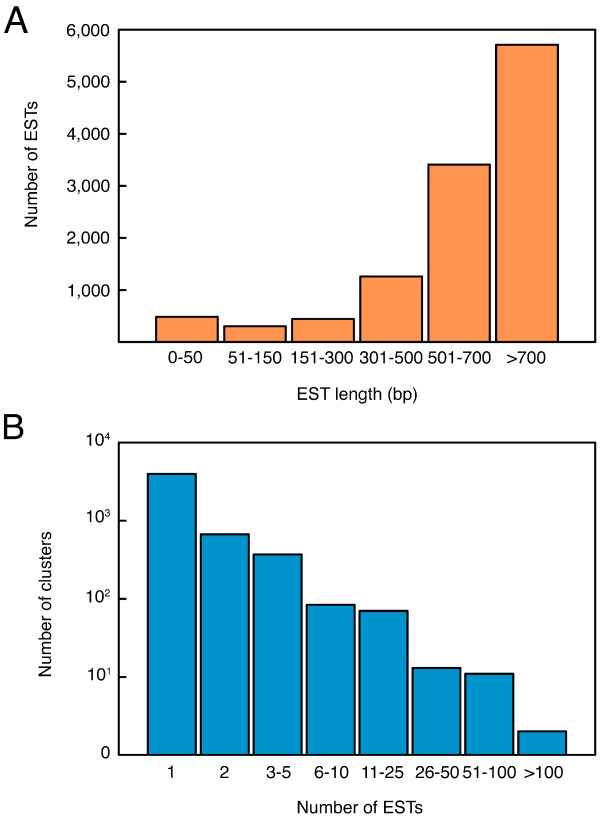
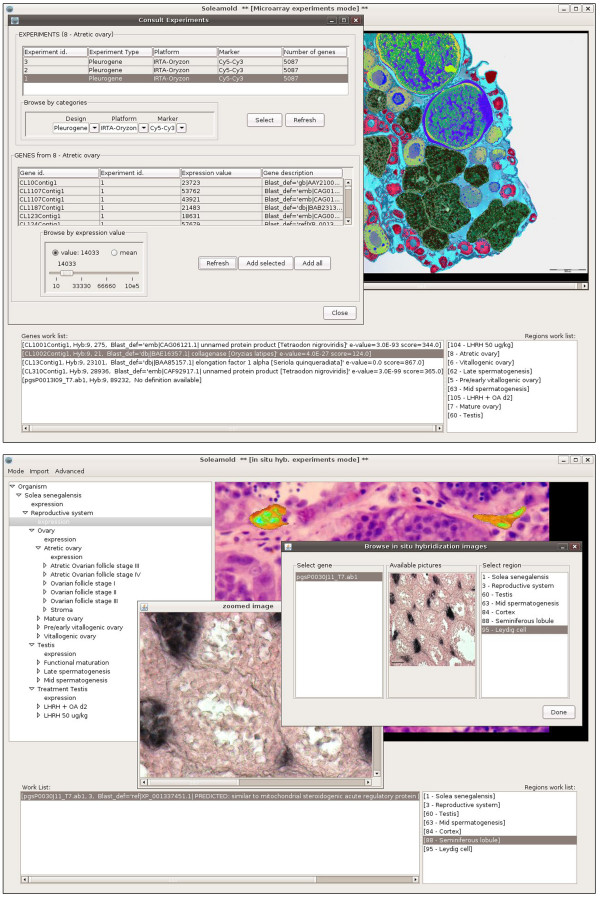
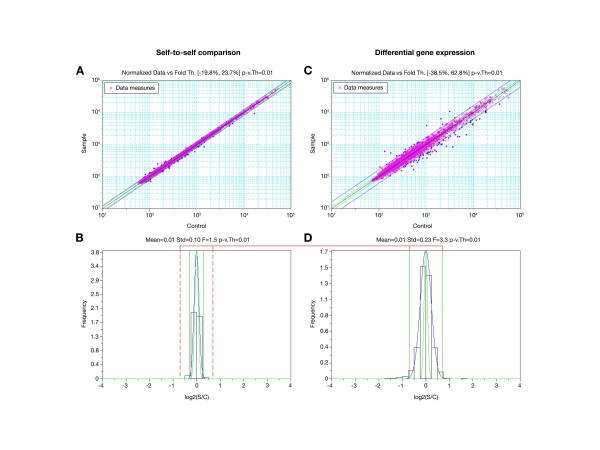
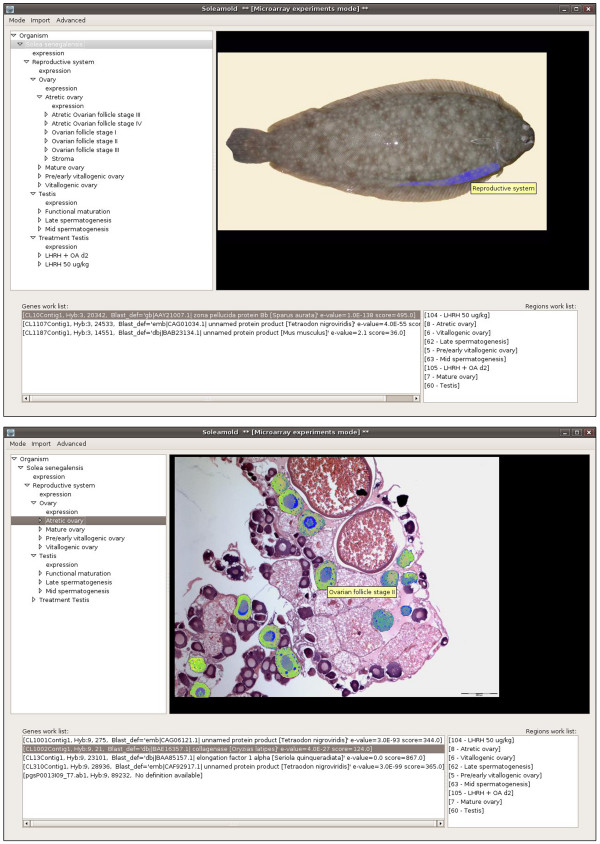
Sequencing of a S. senegalensis multi-tissue normalized cDNA library, from adult tissues (brain, stomach, intestine, liver, ovary, and testis), larval stages (pre-metamorphosis, metamorphosis), juvenile stages (post-metamorphosis, abnormal fish), and undifferentiated gonads, generated 10,185 expressed sequence tags (ESTs). Clones were sequenced from the 3'-end to identify isoform specific sequences. Assembly of the entire EST collection into contigs gave 5,208 unique sequences of which 1,769 (34%) had matches in GenBank, thus showing a low level of redundancy. The sequence of the 5,208 unigenes was used to design and validate an oligonucleotide microarray representing 5,087 unique Senegalese sole transcripts. Finally, a novel interactive bioinformatic platform, Soleamold, was developed for the Senegalese sole EST collection as well as microarray and ISH data.
New genomic resources have been developed for S. senegalensis, an economically important fish in aquaculture, which include a collection of expressed genes, an oligonucleotide microarray, and a publicly available bioinformatic platform that can be used to study gene expression in this species. These resources will help elucidate transcriptional regulation in wild and captive Senegalese sole for optimization of its production under intensive culture conditions.
塞内加尔鳎(Solea senegalensis)是一种备受青睐的比目鱼,在南欧水产养殖中的商业价值日益凸显。然而,尽管塞内加尔鳎的工业化生产主要因缺乏有关繁殖、生长和免疫生理机制的信息而受阻,但该物种的基因组信息却非常有限。
对来自成年组织(脑、胃、肠、肝、卵巢和睾丸)、幼体阶段(变态前、变态期)、幼鱼阶段(变态后、异常鱼)以及未分化性腺的塞内加尔鳎多组织标准化cDNA文库进行测序,共获得10,185个表达序列标签(EST)。从3'端对克隆进行测序以鉴定异构体特异性序列。将整个EST集合组装成重叠群,得到5,208个独特序列,其中1,769个(34%)在GenBank中有匹配项,因此显示出较低的冗余度。利用这5,208个单基因的序列设计并验证了一个代表5,087个塞内加尔鳎独特转录本的寡核苷酸微阵列。最后,为塞内加尔鳎EST集合以及微阵列和原位杂交数据开发了一个新型交互式生物信息学平台Soleamold。
已为水产养殖中具有重要经济意义的塞内加尔鳎开发了新的基因组资源,包括一组表达基因、一个寡核苷酸微阵列以及一个可用于研究该物种基因表达的公共生物信息学平台。这些资源将有助于阐明野生和养殖塞内加尔鳎的转录调控,以优化其在集约化养殖条件下的生产。