Urbino Cica, Thébaud Gael, Granier Martine, Blanc Stéphane, Peterschmitt Michel
CIRAD-UMR BGPI, F-34398 Montpellier, France.
Virol J. 2008 Oct 31;5:135. doi: 10.1186/1743-422X-5-135.
Viruses of the genus Begomovirus (Geminiviridae) are emerging economically important plant viruses with a circular, single-stranded DNA genome. Previous studies have shown that geminiviruses and RNA viruses exhibit similar mutation frequencies, although geminiviruses are replicated by host DNA polymerases and RNA viruses by their own virus-encoded error-prone RNA-dependent RNA-polymerase. However, the phenotypic effects of naturally occurring mutations have never been extensively investigated in geminiviruses, particularly because, to be infectious, cloned viral genomes usually require sub-cloning as complete or partial tandem repeats into a binary vector from Agrobacterium tumefaciens.
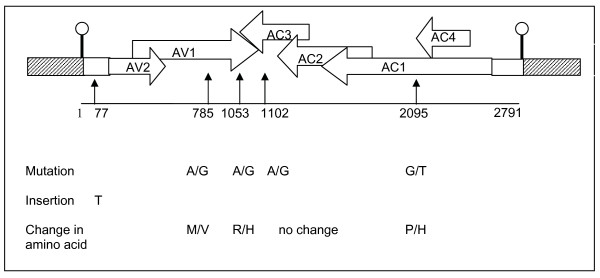
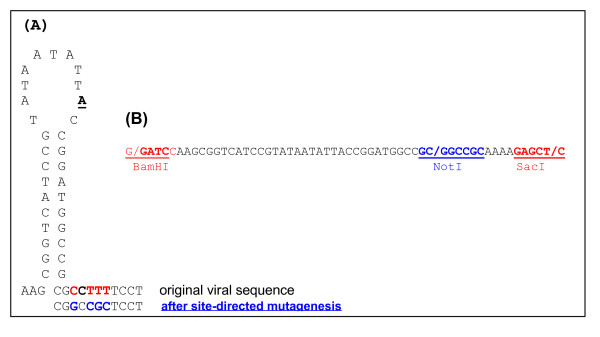
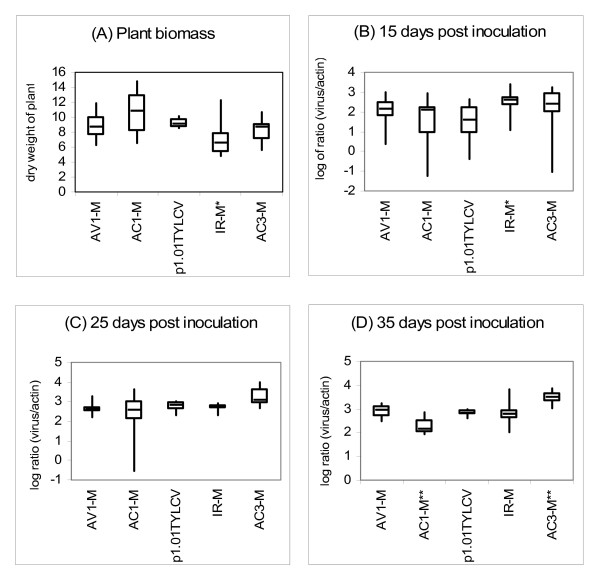
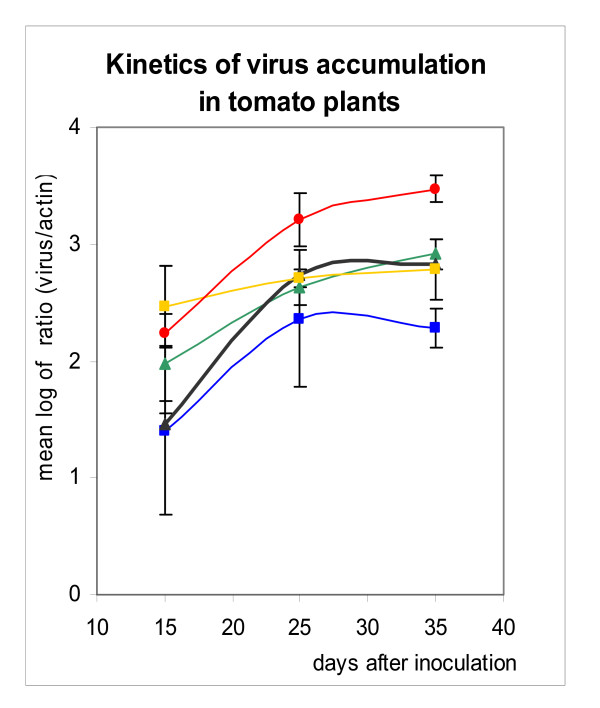
Using Tomato yellow leaf curl virus (TYLCV), we show here that infectivity can be obtained when only a 41-nucleotide region containing a highly conserved stem-loop is repeated. A binary vector containing this 41-nt region and a unique restriction site was created, allowing direct cloning of infectious monomeric viral genomes provided that they harbour the same restriction site at the corresponding nucleotide position. This experimental system, which can be transferable to other geminiviruses, was validated by analysis of the phenotypic effect of mutations appearing in TYLCV genomes in a single tomato host plant originally inoculated with a unique viral sequence. Fourteen full-length infectious genomes extracted from this plant were directly cloned and sequenced. The mutation frequency was 1.38 x 10⁻⁴ mutation per nucleotide sequenced, similar to that found previously for another begomovirus by sequencing PCR-amplified partial sequences. Interestingly, even in this minimal pool of analysed genomes, mutants with altered properties were readily identified, one of them being fitter and reducing plant biomass more drastically than the parental clone.
The cloning strategy presented here is useful for any extensive phenotyping of geminivirus variants and particularly of artificially generated mutants or recombinants.
双生病毒属(双生病毒科)的病毒是新出现的对经济有重要影响的植物病毒,其基因组为环状单链DNA。先前的研究表明,双生病毒和RNA病毒表现出相似的突变频率,尽管双生病毒由宿主DNA聚合酶复制,而RNA病毒由其自身病毒编码的易出错的RNA依赖性RNA聚合酶复制。然而,天然发生的突变的表型效应在双生病毒中从未得到广泛研究,特别是因为为了具有感染性,克隆的病毒基因组通常需要作为完整或部分串联重复序列亚克隆到来自根癌农杆菌的二元载体中。
利用番茄黄化曲叶病毒(TYLCV),我们在此表明,当仅重复一个包含高度保守茎环的41个核苷酸区域时,即可获得感染性。构建了一个包含该41个核苷酸区域和一个独特限制性位点的二元载体,只要感染性单体病毒基因组在相应核苷酸位置具有相同的限制性位点,就允许直接克隆。通过分析最初接种单一病毒序列的单个番茄宿主植物中TYLCV基因组中出现的突变的表型效应,验证了这个可转移到其他双生病毒的实验系统。从该植物中提取的14个全长感染性基因组被直接克隆并测序。突变频率为每测序核苷酸1.38×10⁻⁴个突变,与先前通过测序PCR扩增的部分序列在另一种双生病毒中发现的频率相似。有趣的是,即使在这个最小的分析基因组库中,也很容易鉴定出具有改变特性的突变体,其中一个比亲本克隆更具适应性,对植物生物量的减少作用更大。
本文提出的克隆策略对于双生病毒变体的任何广泛表型分析都很有用,特别是对于人工产生的突变体或重组体。