Martin Bronwen, Golden Erin, Carlson Olga D, Pistell Paul, Zhou Jie, Kim Wook, Frank Brittany P, Thomas Sam, Chadwick Wayne A, Greig Nigel H, Bates Gillian P, Sathasivam Kirupa, Bernier Michel, Maudsley Stuart, Mattson Mark P, Egan Josephine M
Laboratory of Neurosciences, National Institute on Aging Intramural Research Program, Baltimore, Maryland, USA.
Diabetes. 2009 Feb;58(2):318-28. doi: 10.2337/db08-0799. Epub 2008 Nov 4.
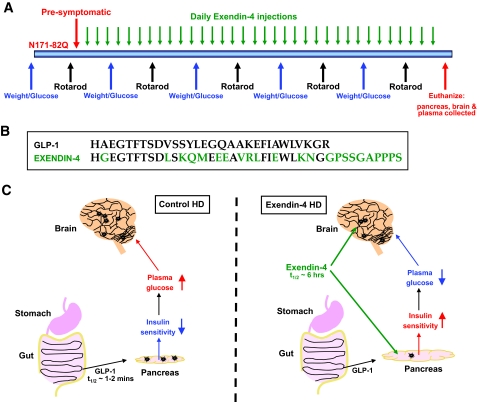
The aim of this study was to find an effective treatment for the genetic form of diabetes that is present in some Huntington's disease patients and in Huntington's disease mouse models. Huntington's disease is a neurodegenerative disorder caused by a polyglutamine expansion within the huntingtin protein. Huntington's disease patients exhibit neuronal dysfunction/degeneration, chorea, and progressive weight loss. Additionally, they suffer from abnormalities in energy metabolism affecting both the brain and periphery. Similarly to Huntington's disease patients, mice expressing the mutated human huntingtin protein also exhibit neurodegenerative changes, motor dysfunction, perturbed energy metabolism, and elevated blood glucose levels.
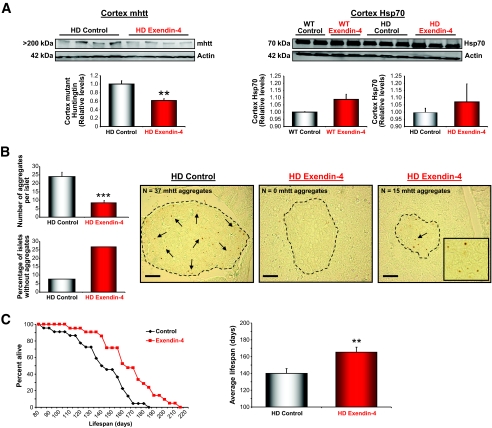
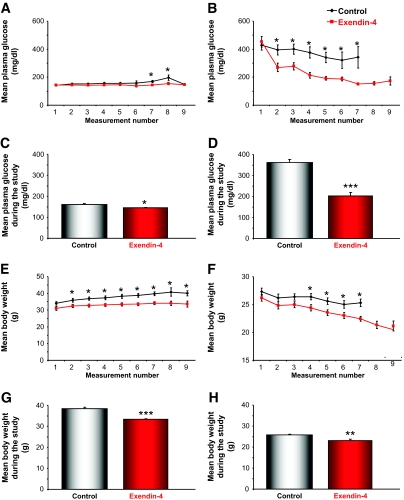
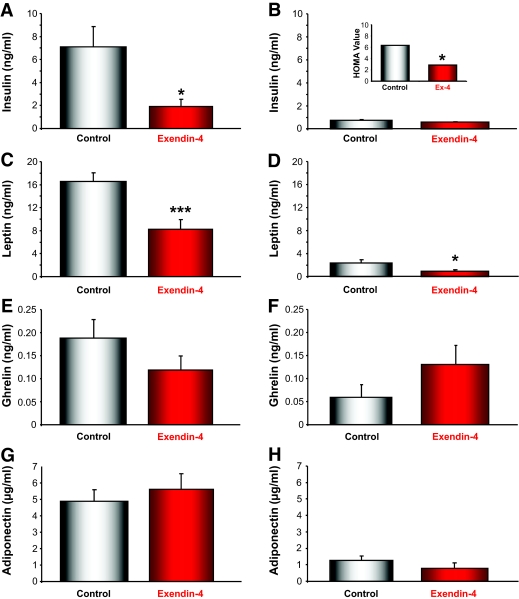
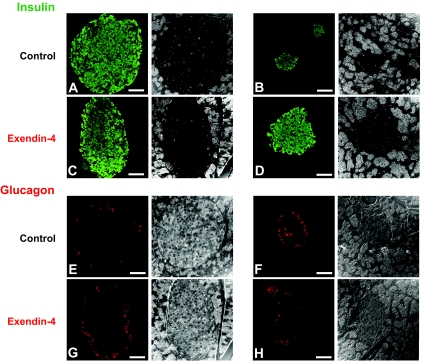
Huntington's disease mice were treated with an FDA-approved antidiabetic glucagon-like peptide 1 receptor agonist, exendin-4 (Ex-4), to test whether euglycemia could be achieved, whether pancreatic dysfunction could be alleviated, and whether the mice showed any neurological benefit. Blood glucose and insulin levels and various appetite hormone concentrations were measured during the study. Additionally, motor performance and life span were quantified and mutant huntingtin (mhtt) aggregates were measured in both the pancreas and brain.
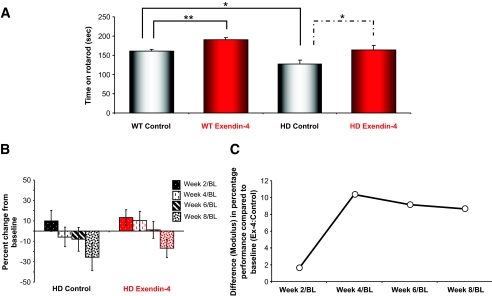
Ex-4 treatment ameliorated abnormalities in peripheral glucose regulation and suppressed cellular pathology in both brain and pancreas in a mouse model of Huntington's disease. The treatment also improved motor function and extended the survival time of the Huntington's disease mice. These clinical improvements were correlated with reduced accumulation of mhtt protein aggregates in both islet and brain cells.
Targeting both peripheral and neuronal deficits, Ex-4 is an attractive agent for therapeutic intervention in Huntington's disease patients suffering from diabetes.
本研究旨在找到一种针对某些亨廷顿舞蹈症患者及亨廷顿舞蹈症小鼠模型中存在的遗传性糖尿病的有效治疗方法。亨廷顿舞蹈症是一种由亨廷顿蛋白内多聚谷氨酰胺扩增引起的神经退行性疾病。亨廷顿舞蹈症患者表现出神经元功能障碍/退化、舞蹈症和进行性体重减轻。此外,他们还存在影响大脑和外周的能量代谢异常。与亨廷顿舞蹈症患者相似,表达突变型人类亨廷顿蛋白的小鼠也表现出神经退行性变化、运动功能障碍、能量代谢紊乱和血糖水平升高。
用美国食品药品监督管理局(FDA)批准的抗糖尿病胰高血糖素样肽1受体激动剂艾塞那肽-4(Ex-4)治疗亨廷顿舞蹈症小鼠,以测试是否能实现血糖正常、是否能缓解胰腺功能障碍以及小鼠是否有任何神经学益处。在研究过程中测量血糖和胰岛素水平以及各种食欲激素浓度。此外,对运动能力和寿命进行量化,并测量胰腺和大脑中的突变型亨廷顿蛋白(mhtt)聚集体。
在亨廷顿舞蹈症小鼠模型中,Ex-4治疗改善了外周葡萄糖调节异常,并抑制了大脑和胰腺中的细胞病变。该治疗还改善了运动功能并延长了亨廷顿舞蹈症小鼠的存活时间。这些临床改善与胰岛和脑细胞中mhtt蛋白聚集体的积累减少相关。
针对外周和神经元缺陷,Ex-4是对患有糖尿病的亨廷顿舞蹈症患者进行治疗干预的一种有吸引力的药物。