Brame Ryan S, Zaider Marco, Zakian Kristen L, Koutcher Jason A, Shukla-Dave Amita, Reuter Victor E, Zelefsky Michael J, Scardino Peter T, Hricak Hedvig
CMS, Inc., St. Louis, MO, USA.
Int J Radiat Oncol Biol Phys. 2009 May 1;74(1):110-4. doi: 10.1016/j.ijrobp.2008.07.055. Epub 2008 Nov 5.
To quantify, as a function of average magnetic resonance spectroscopy (MRS) score and tumor volume, the probability that a cancer-suspected lesion has an elevated Gleason grade.
The data consist of MRS imaging ratios R stratified by patient, lesion (contiguous abnormal voxels), voxels, biopsy and pathologic Gleason grade, and lesion volume. The data were analyzed using a logistic model.
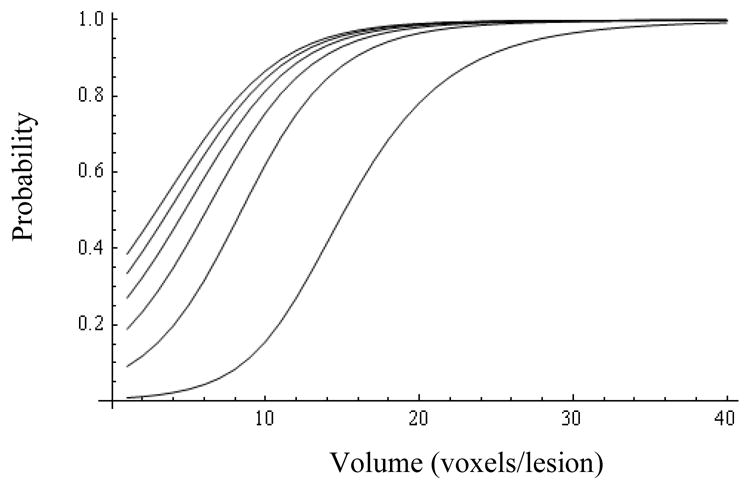
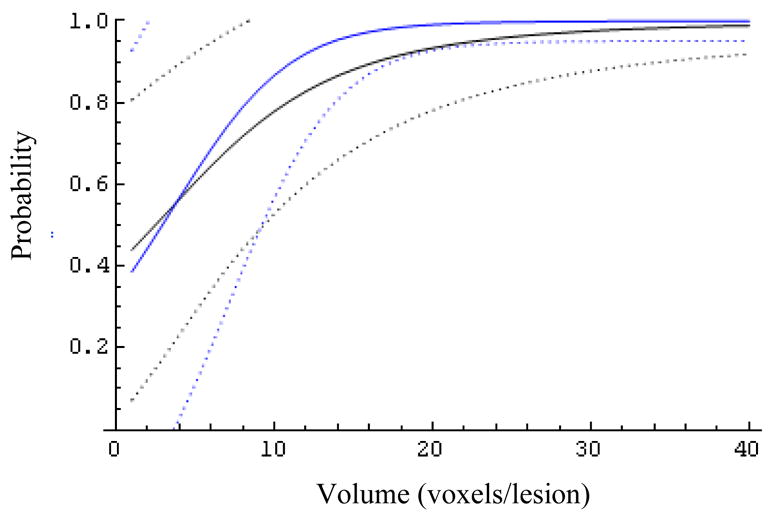
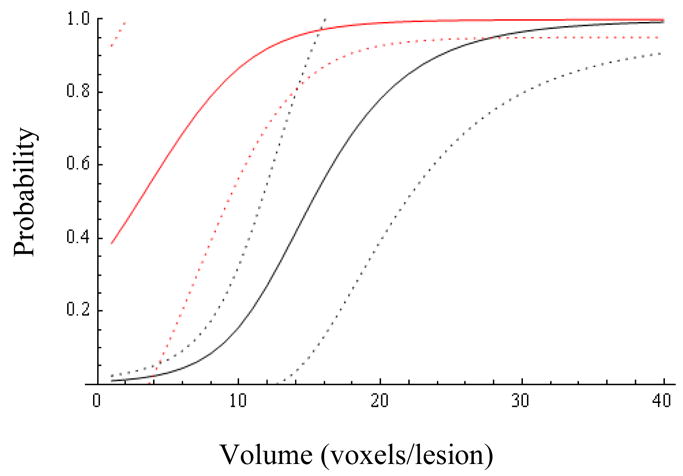
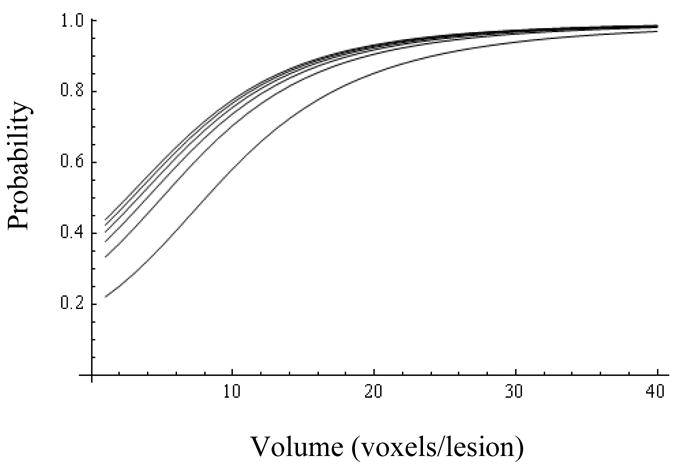
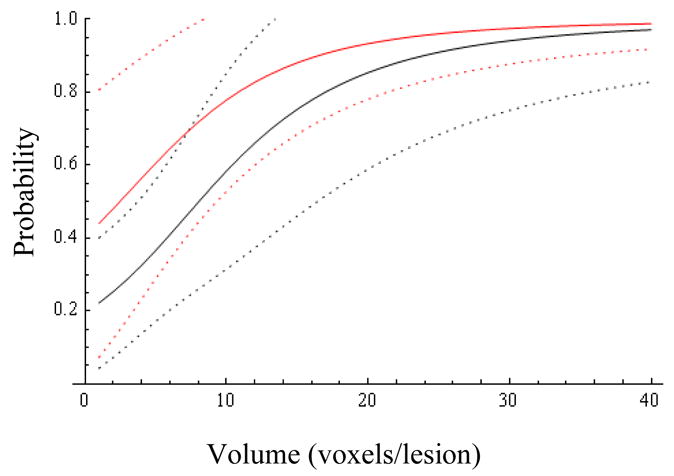
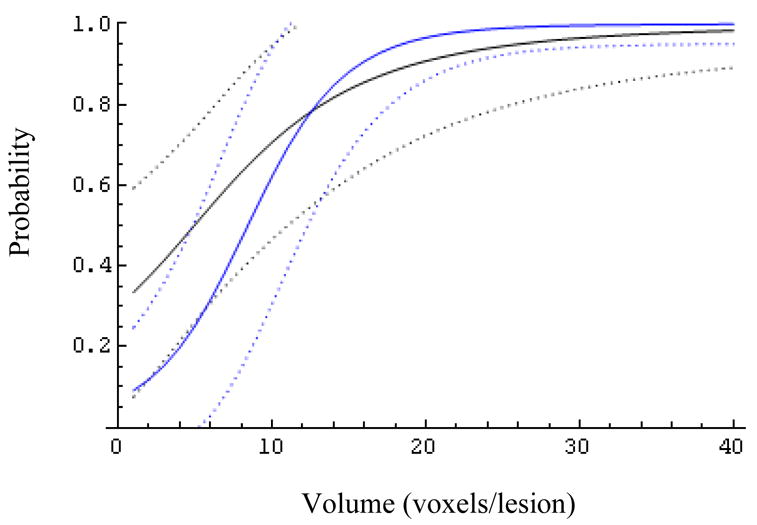
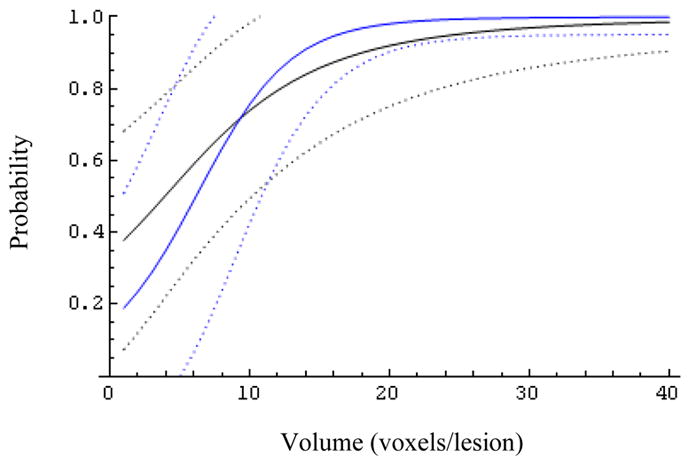
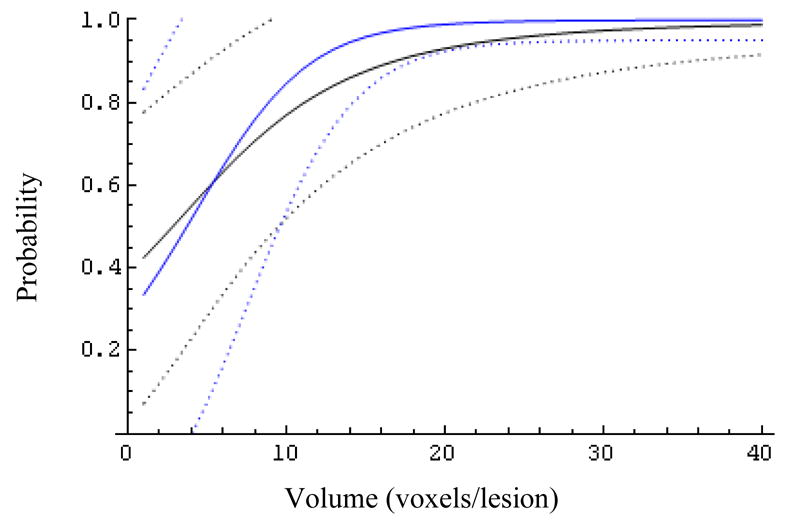
For both low and high Gleason score biopsy lesions, the probability of pathologic Gleason score >/=4+3 increases with lesion volume. At low values of R a lesion volume of at least 15-20 voxels is needed to reach a probability of success of 80%; the biopsy result helps reduce the prediction uncertainty. At larger MRS ratios (R > 6) the biopsy result becomes essentially uninformative once the lesion volume is >12 voxels. With the exception of low values of R, for lesions with low Gleason score at biopsy, the MRS ratios serve primarily as a selection tool for assessing lesion volumes.
In patients with biopsy Gleason score >/=4+3, high MRS imaging tumor volume and (creatine + choline)/citrate ratio may justify the initiation of voxel-specific dose escalation. This is an example of biologically motivated focal treatment for which intensity-modulated radiotherapy and especially brachytherapy are ideally suited.
根据平均磁共振波谱(MRS)评分和肿瘤体积,量化疑似癌症病变具有高Gleason分级的概率。
数据包括按患者、病变(连续异常体素)、体素、活检和病理Gleason分级以及病变体积分层的MRS成像比率R。使用逻辑模型分析数据。
对于低Gleason评分和高Gleason评分的活检病变,病理Gleason评分≥4+3的概率随病变体积增加。在R值较低时,病变体积至少需要15 - 20个体素才能达到80%的成功概率;活检结果有助于降低预测不确定性。在较大的MRS比率(R>6)时,一旦病变体积>12个体素,活检结果基本上就没有信息价值了。除了R值较低的情况外,对于活检时Gleason评分较低的病变,MRS比率主要作为评估病变体积的选择工具。
在活检Gleason评分≥4+3的患者中,高MRS成像肿瘤体积和(肌酸+胆碱)/柠檬酸盐比率可能证明开始进行体素特异性剂量递增是合理的。这是一种以生物学为动机的局部治疗示例,对于这种治疗,调强放疗尤其是近距离放疗非常适合。