Chen Bao-An, Dai Yong-Yuan, Wang Xue-Mei, Zhang Ren-Yun, Xu Wen-Lin, Shen Hui-Ling, Gao Feng, Sun Qian, Deng Xiao-Jing, Ding Jia-Hua, Gao Chong, Sun Yun-Yu, Cheng Jian, Wang Jun, Zhao Gang, Chen Ning-Na
Department of Hematology, The Affiliated Zhongda Hospital of Southeast University, Nanjing 210009, P.R. China.
Int J Nanomedicine. 2008;3(3):343-50.
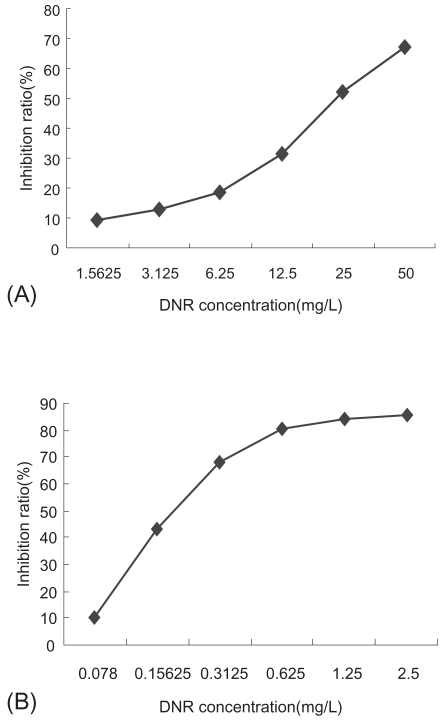
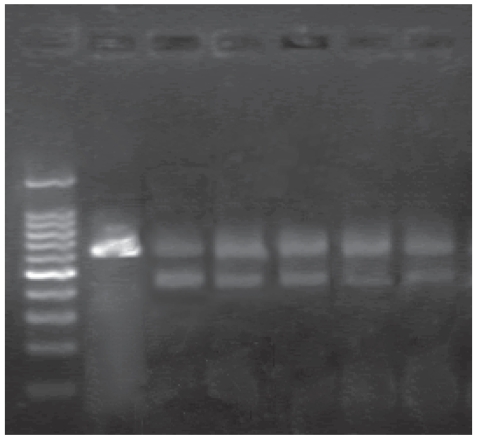
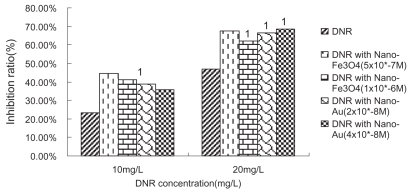
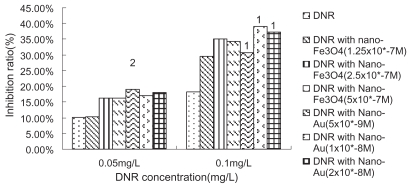
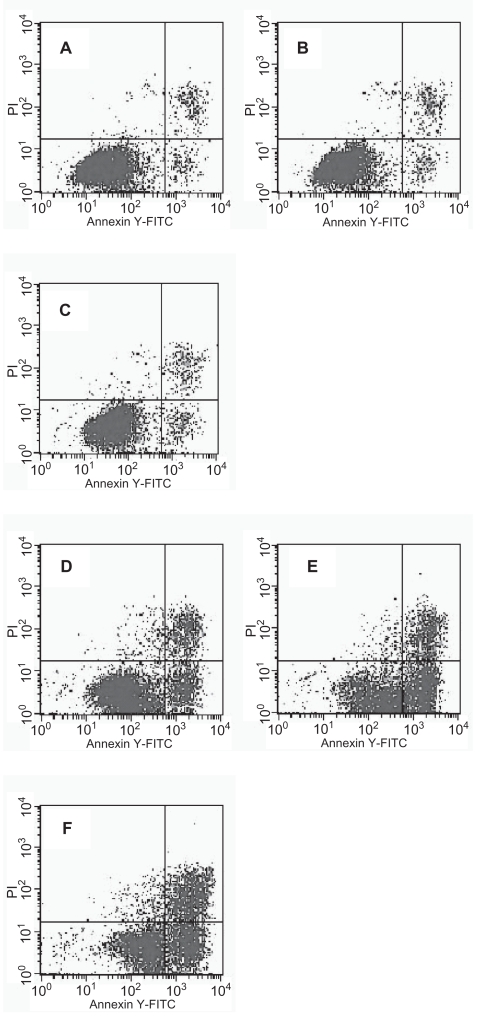
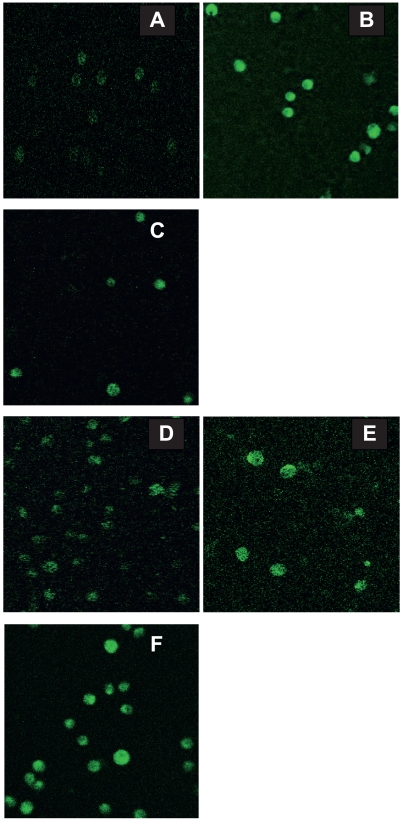
In this study, we have explored the possibility of the combination of the high reactivity of nano Fe3O4 or Au nanoparticles and daunomycin, one of the most important antitumor drugs in the treatment of acute leukemia clinically, to inhibit MDR of K562/A02 cells. Initially, to determine whether the magnetic nanoparticle Fe3O4 and Au can facilitate the anticancer drug to reverse the resistance of cancer cells, we have explored the cytotoxic effect of daunomycin (DNR) with and without the magnetic nano-Fe3O4 or nano-Au on K562 and K562/A02 cells by MTT assay. Besides, the intracellular DNR concentration and apoptosis of the K562/A02 cells was further investigated by flow cytometry and confocal fluorescence microscopic studies. The MDR1 gene expression of the K562/A02 cells was also studied by RT-PCR method. Our results indicate that 5.0 x 10(-7) M nano-Fe3O4 or 2.0 x 10(-8) M nano-Au is biocompatible and can apparently raise the intracellular DNR accumulation of the K562/A02 cells and increase the apoptosis of tumor cells. Moreover, our observations illustrate that although these two kinds of nanoparticles themselves could not lower the MDRI gene expression of the K562/A02 cells, yet they could degrade the MDR1 gene level when combining with anticancer drug DNR. This raises the possibility to combine the nano-Fe3O4 or nano-Au with DNR to reverse the drug resistance of K562/A02 cells, which could offer a new strategy for the promising efficient chemotherapy of the leukemia patients.
在本研究中,我们探索了纳米Fe3O4或金纳米颗粒的高反应活性与柔红霉素(临床上治疗急性白血病最重要的抗肿瘤药物之一)相结合以抑制K562/A02细胞多药耐药性的可能性。首先,为了确定磁性纳米颗粒Fe3O4和金是否能促进抗癌药物逆转癌细胞的耐药性,我们通过MTT法研究了有或没有磁性纳米Fe3O4或纳米金存在时柔红霉素(DNR)对K562和K562/A02细胞的细胞毒性作用。此外,通过流式细胞术和共聚焦荧光显微镜研究进一步探究了K562/A02细胞内DNR浓度及细胞凋亡情况。还通过RT-PCR法研究了K562/A02细胞的MDR1基因表达。我们的结果表明,5.0×10(-7)M的纳米Fe3O4或2.0×10(-8)M的纳米金具有生物相容性,并且能显著提高K562/A02细胞内DNR的积累量,增加肿瘤细胞的凋亡。此外,我们的观察结果表明,虽然这两种纳米颗粒本身不能降低K562/A02细胞的MDRI基因表达,但它们与抗癌药物DNR联合时能降低MDR1基因水平。这增加了将纳米Fe3O4或纳米金与DNR联合以逆转K562/A02细胞耐药性的可能性,这可能为白血病患者有前景的高效化疗提供一种新策略。