Remani Sreevidya, Sun Jiakang, Kotaria Rusudan, Mayor June A, Brownlee June M, Harrison David H T, Walters D Eric, Kaplan Ronald S
Department of Biochemistry & Molecular Biology, Rosalind Franklin University of Medicine and Science, The Chicago Medical School, 3333 Green Bay Road, North Chicago, IL 60064, USA.
J Bioenerg Biomembr. 2008 Dec;40(6):577-85. doi: 10.1007/s10863-008-9187-1. Epub 2008 Nov 11.
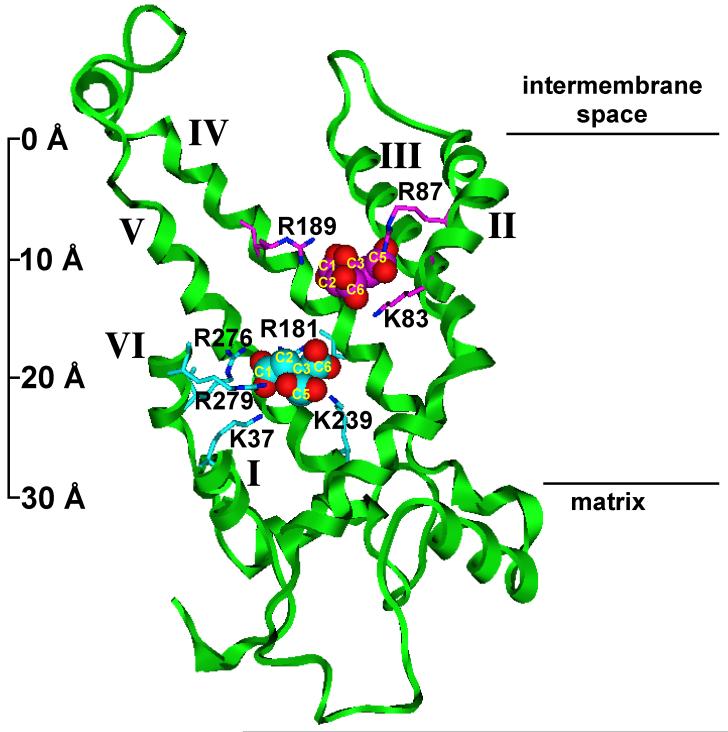
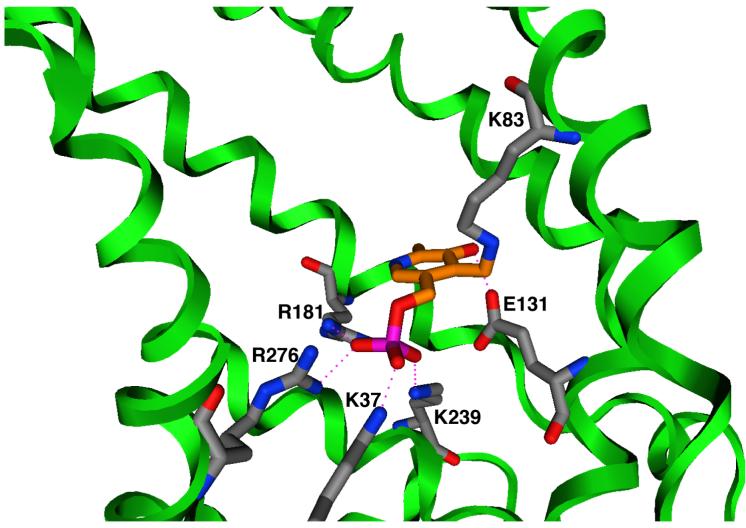
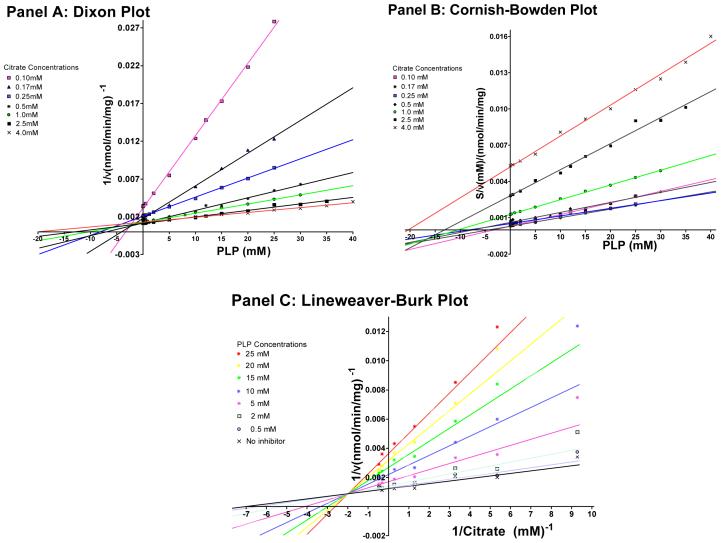
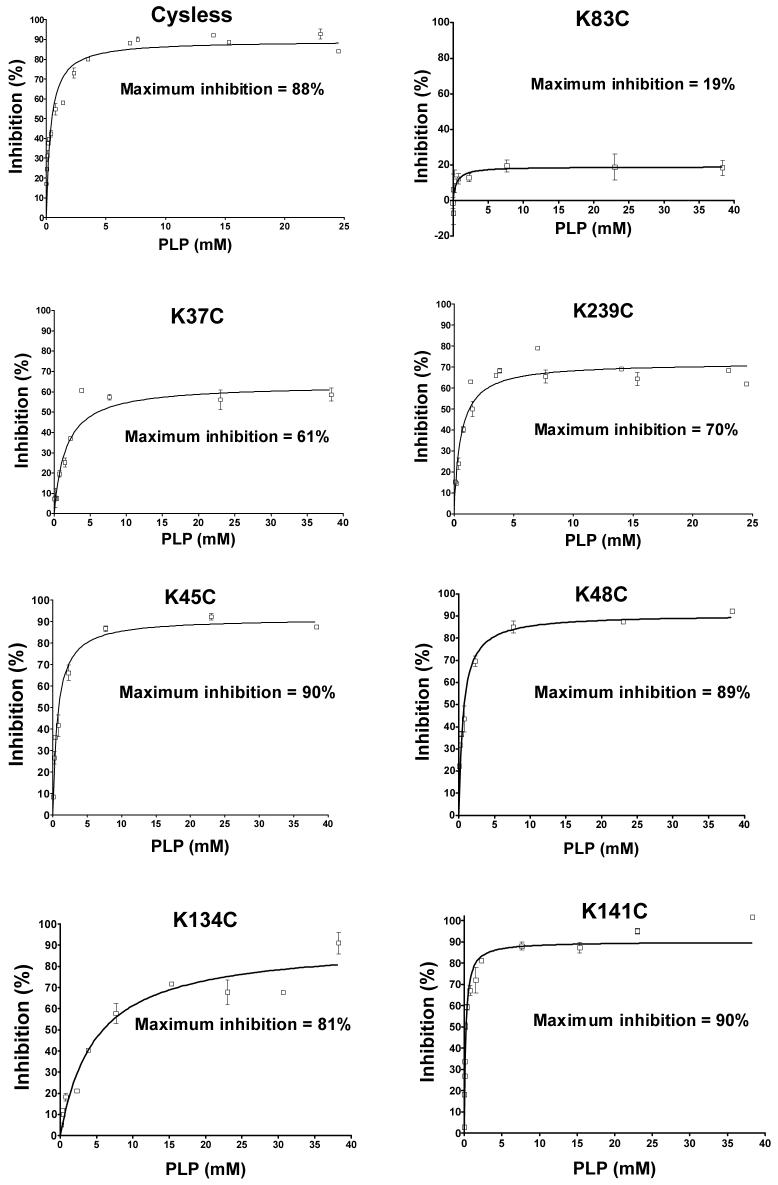
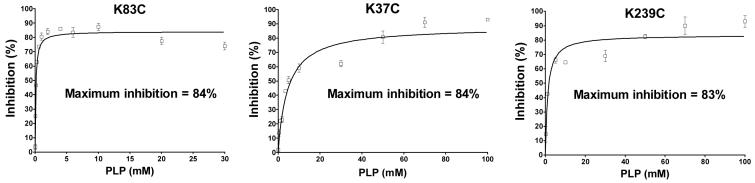
The present investigation identifies the molecular basis for the well-documented inhibition of the mitochondrial inner membrane citrate transport protein (CTP) function by the lysine-selective reagent pyridoxal 5'-phosphate. Kinetic analysis indicates that PLP is a linear mixed inhibitor of the Cys-less CTP, with a predominantly competitive component. We have previously concluded that the CTP contains at least two substrate binding sites which are located at increasing depths within the substrate translocation pathway and which contain key lysine residues. In the present investigation, the roles of Lys-83 in substrate binding site one, Lys-37 and Lys-239 in substrate binding site two, and four other off-pathway lysines in conferring PLP-inhibition of transport was determined by functional characterization of seven lysine to cysteine substitution mutants. We observed that replacement of Lys-83 with cysteine resulted in a 78% loss of the PLP-mediated inhibition of CTP function. In contrast, replacement of either Lys-37 or Lys-239 with cysteine caused a modest reduction in the inhibition caused by PLP (i.e., 31% and 20% loss of inhibition, respectively). Interestingly, these losses of PLP-mediated inhibition could be rescued by covalent modification of each cysteine with MTSEA, a reagent that adds a lysine-like moiety (i.e. SCH(2)CH(2)NH(3) (+)) to the cysteine sulfhydryl group. Importantly, the replacement of non-binding site lysines (i.e., Lys-45, Lys-48, Lys-134, Lys-141) with cysteine resulted in little change in the PLP inhibition. Based upon these results, we conducted docking calculations with the CTP structural model leading to the development of a physical binding model for PLP. In combination, our data support the conclusion that PLP exerts its main inhibitory effect by binding to residues located within the two substrate binding sites of the CTP, with Lys-83 being the primary determinant of the total PLP effect since the replacement of this single lysine abolishes nearly all of the observed inhibition by PLP.
本研究确定了赖氨酸选择性试剂磷酸吡哆醛对线粒体内膜柠檬酸转运蛋白(CTP)功能产生充分记录的抑制作用的分子基础。动力学分析表明,磷酸吡哆醛是无半胱氨酸CTP的线性混合抑制剂,主要具有竞争性成分。我们之前得出结论,CTP至少包含两个底物结合位点,它们位于底物转运途径中越来越深的位置,并且包含关键的赖氨酸残基。在本研究中,通过对七个赖氨酸到半胱氨酸替代突变体的功能表征,确定了底物结合位点一中的赖氨酸83、底物结合位点二中的赖氨酸37和赖氨酸239以及其他四个非途径赖氨酸在赋予磷酸吡哆醛转运抑制作用中的作用。我们观察到,用半胱氨酸替代赖氨酸83导致磷酸吡哆醛介导的CTP功能抑制作用丧失78%。相比之下,用半胱氨酸替代赖氨酸37或赖氨酸239会使磷酸吡哆醛引起的抑制作用适度降低(即分别丧失31%和20%的抑制作用)。有趣的是,这些磷酸吡哆醛介导的抑制作用的丧失可以通过用MTSEA对每个半胱氨酸进行共价修饰来挽救,MTSEA是一种将赖氨酸样部分(即SCH(2)CH(2)NH(3) (+))添加到半胱氨酸巯基上的试剂。重要的是,用半胱氨酸替代非结合位点赖氨酸(即赖氨酸45、赖氨酸48、赖氨酸134、赖氨酸141)导致磷酸吡哆醛抑制作用几乎没有变化。基于这些结果,我们用CTP结构模型进行了对接计算,从而建立了磷酸吡哆醛的物理结合模型。综合来看,我们的数据支持以下结论:磷酸吡哆醛通过与CTP的两个底物结合位点内的残基结合发挥其主要抑制作用,赖氨酸83是磷酸吡哆醛总效应的主要决定因素,因为替换这个单一赖氨酸几乎消除了观察到的磷酸吡哆醛的所有抑制作用。