Sonavane Shrihari, Chakrabarti Pinak
Department of Biochemistry, Bose Institute, Calcutta, India.
PLoS Comput Biol. 2008 Sep;4(9):e1000188. doi: 10.1371/journal.pcbi.1000188. Epub 2008 Sep 26.
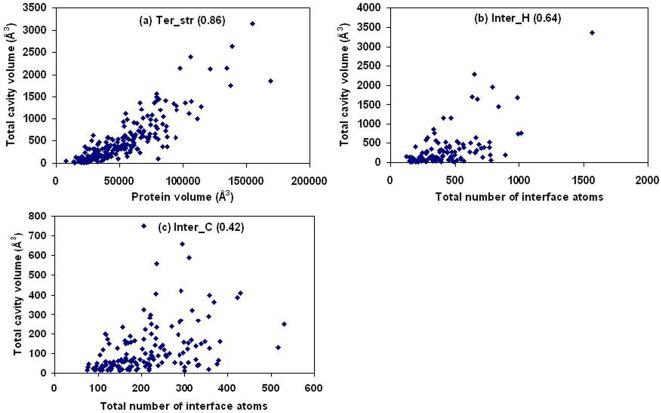
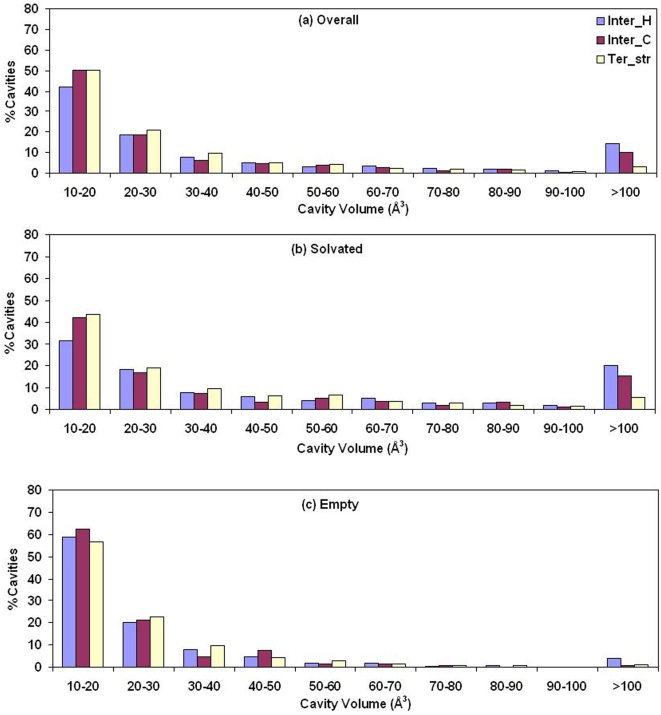
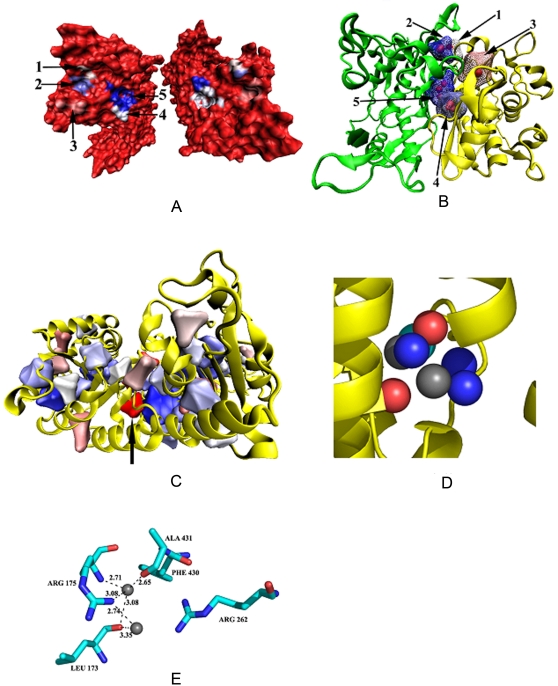
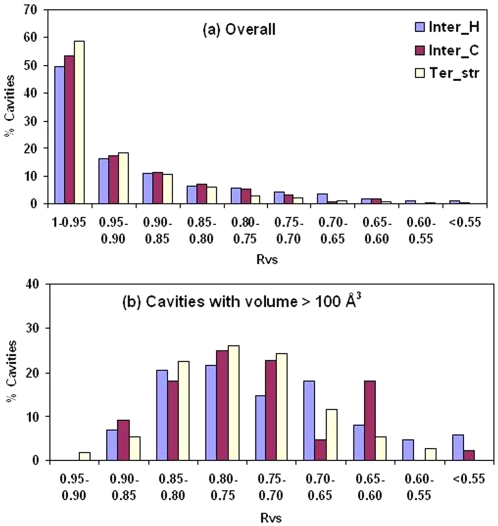
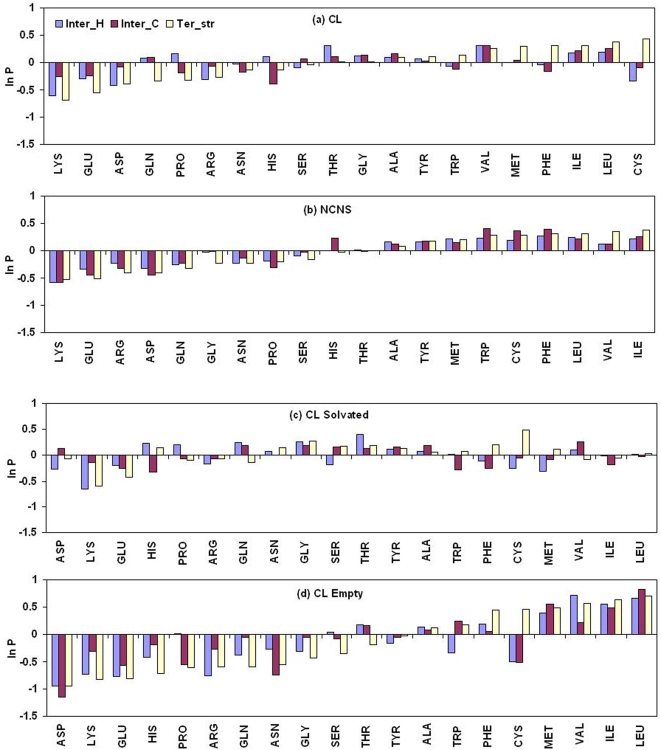
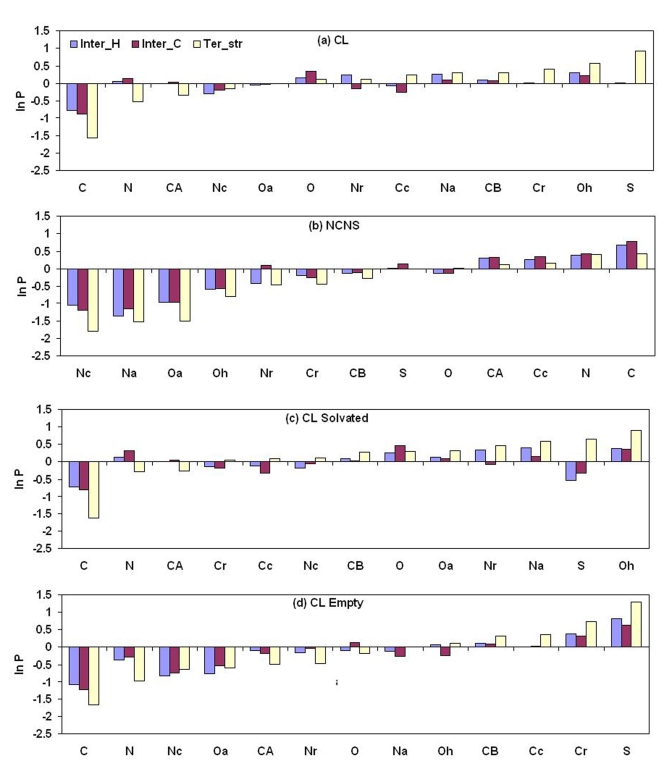
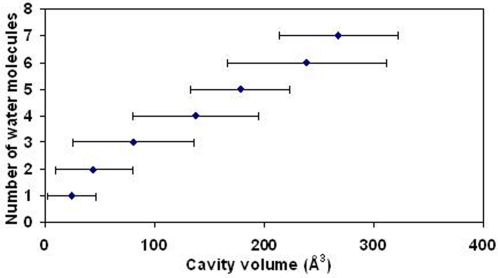
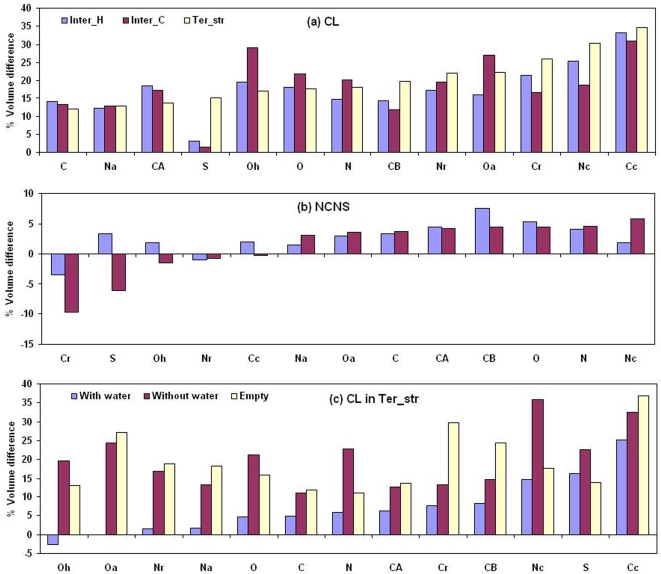
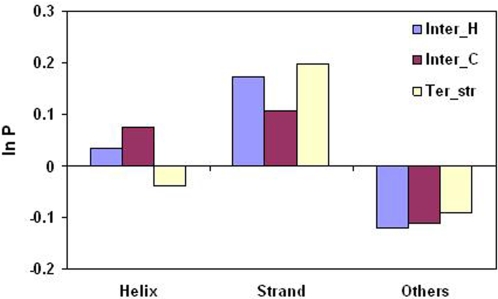
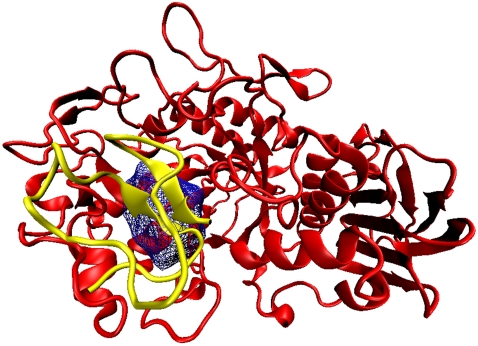
A comparative analysis of cavities enclosed in a tertiary structure of proteins and interfaces formed by the interaction of two protein subunits in obligate and non-obligate categories (represented by homodimeric molecules and heterocomplexes, respectively) is presented. The total volume of cavities increases with the size of the protein (or the interface), though the exact relationship may vary in different cases. Likewise, for individual cavities also there is quantitative dependence of the volume on the number of atoms (or residues) lining the cavity. The larger cavities tend to be less spherical, solvated, and the interfaces are enriched in these. On average 15 A(3) of cavity volume is found to accommodate single water, with another 40-45 A(3) needed for each additional solvent molecule. Polar atoms/residues have a higher propensity to line solvated cavities. Relative to the frequency of occurrence in the whole structure (or interface), residues in beta-strands are found more often lining the cavities, and those in turn and loop the least. Any depression in one chain not complemented by a protrusion in the other results in a cavity in the protein-protein interface. Through the use of the Voronoi volume, the packing of residues involved in protein-protein interaction has been compared to that in the protein interior. For a comparable number of atoms the interface has about twice the number of cavities relative to the tertiary structure.
本文对蛋白质三级结构中包含的腔以及由两个蛋白质亚基相互作用形成的界面进行了比较分析,这些腔和界面分别存在于专性和非专性类别中(分别由同二聚体分子和异源复合物代表)。腔的总体积随着蛋白质(或界面)的大小而增加,尽管在不同情况下确切关系可能有所不同。同样,对于单个腔来说,其体积也定量地依赖于构成腔壁的原子(或残基)数量。较大的腔往往不太呈球形,溶剂化程度较低,并且界面中富含这些腔。平均发现15埃³的腔体积可容纳单个水分子,每增加一个溶剂分子还需要另外40 - 45埃³。极性原子/残基更倾向于排列在溶剂化的腔壁上。相对于在整个结构(或界面)中的出现频率,β链中的残基更常排列在腔壁上,而转角和环中的残基排列在腔壁上的情况最少。一条链上的任何凹陷若未被另一条链上的突出部分互补,则会在蛋白质 - 蛋白质界面中形成一个腔。通过使用Voronoi体积,已将参与蛋白质 - 蛋白质相互作用的残基堆积情况与蛋白质内部的残基堆积情况进行了比较。对于数量相当的原子,相对于三级结构,界面中的腔数量约为其三倍。