Gao Wei, Zhu Hongtu, Lin Weili
Department of Biomedical Engineering, University of North Carolina at Chapel Hill, Chapel Hill, NC, USA.
Neuroimage. 2009 Feb 1;44(3):729-41. doi: 10.1016/j.neuroimage.2008.10.004. Epub 2008 Nov 1.
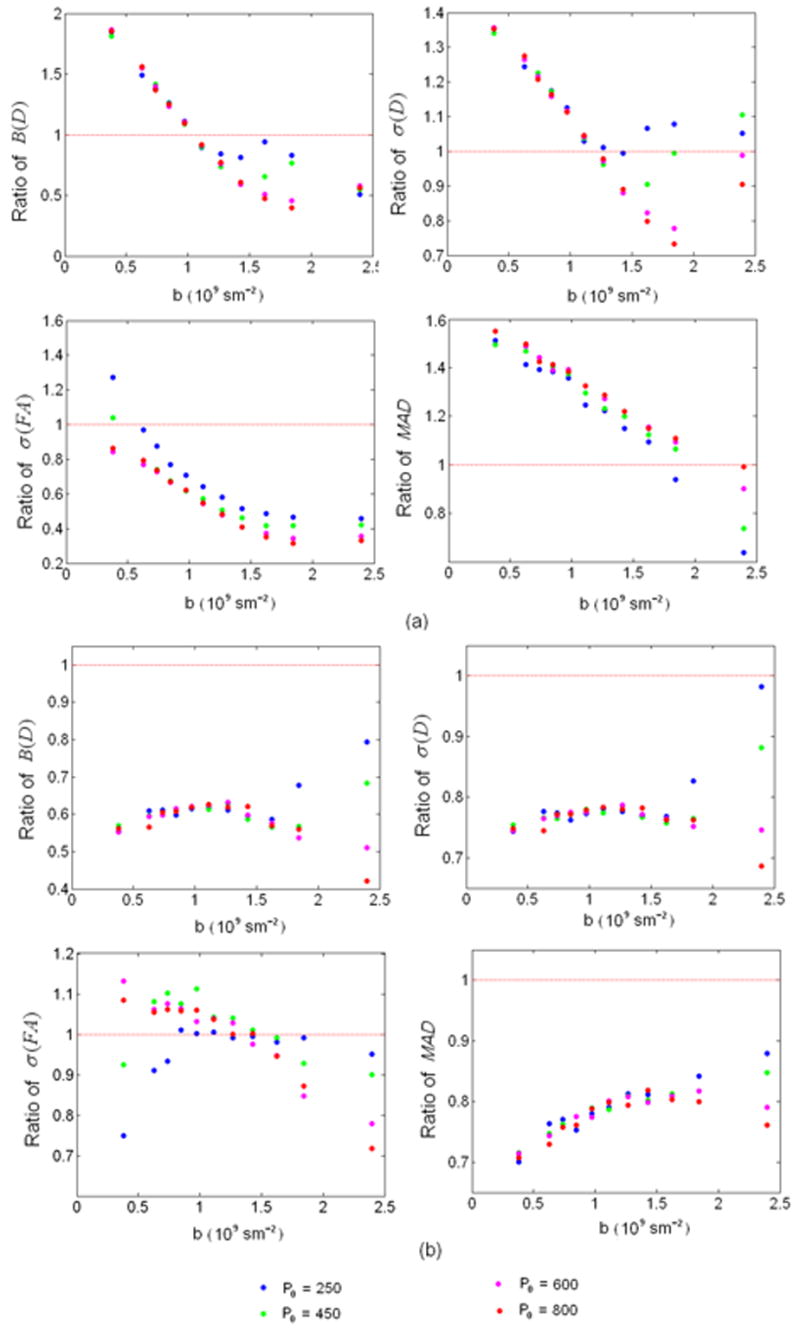
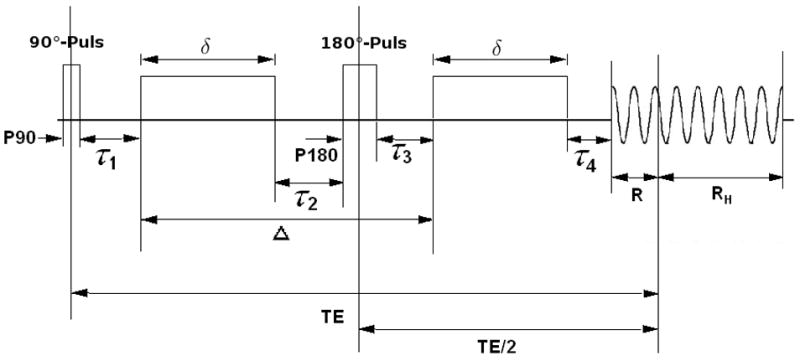
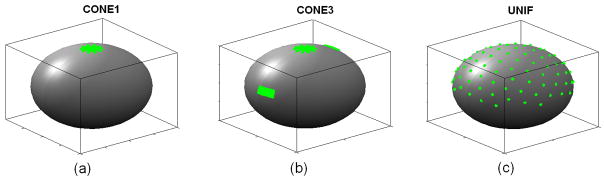
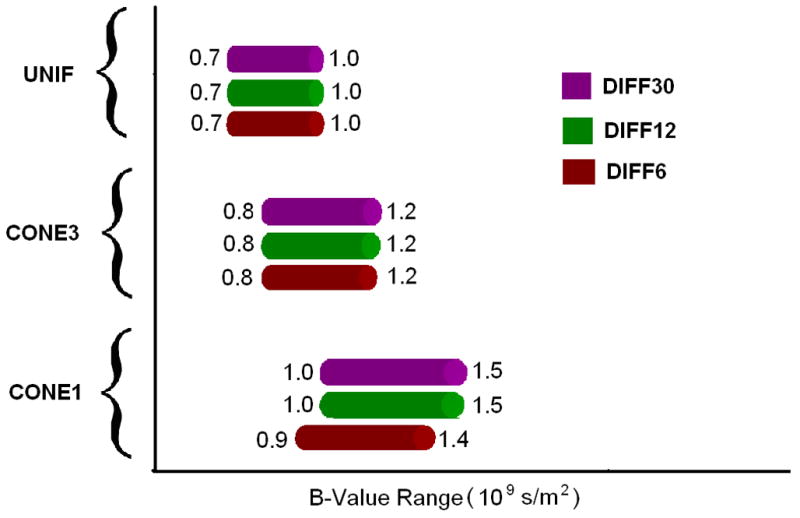
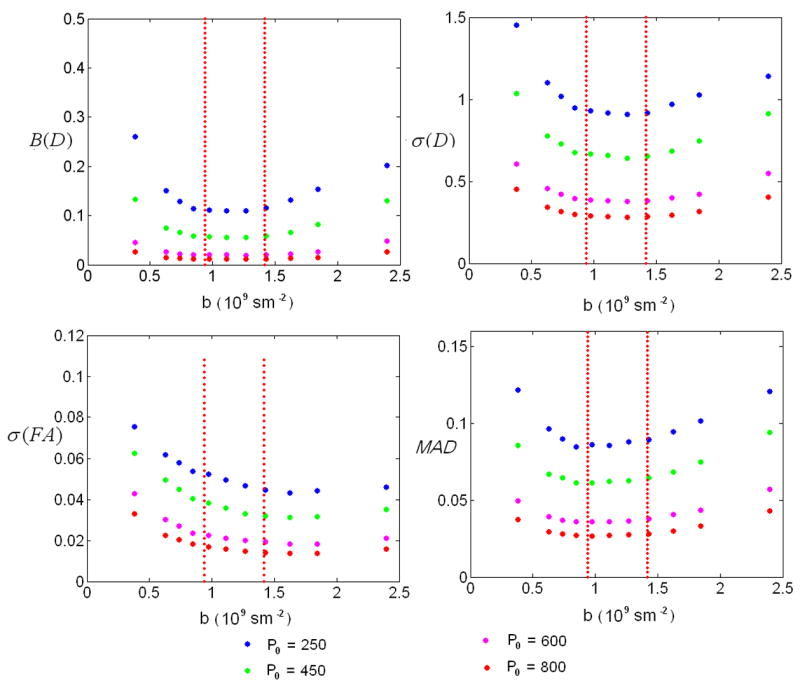
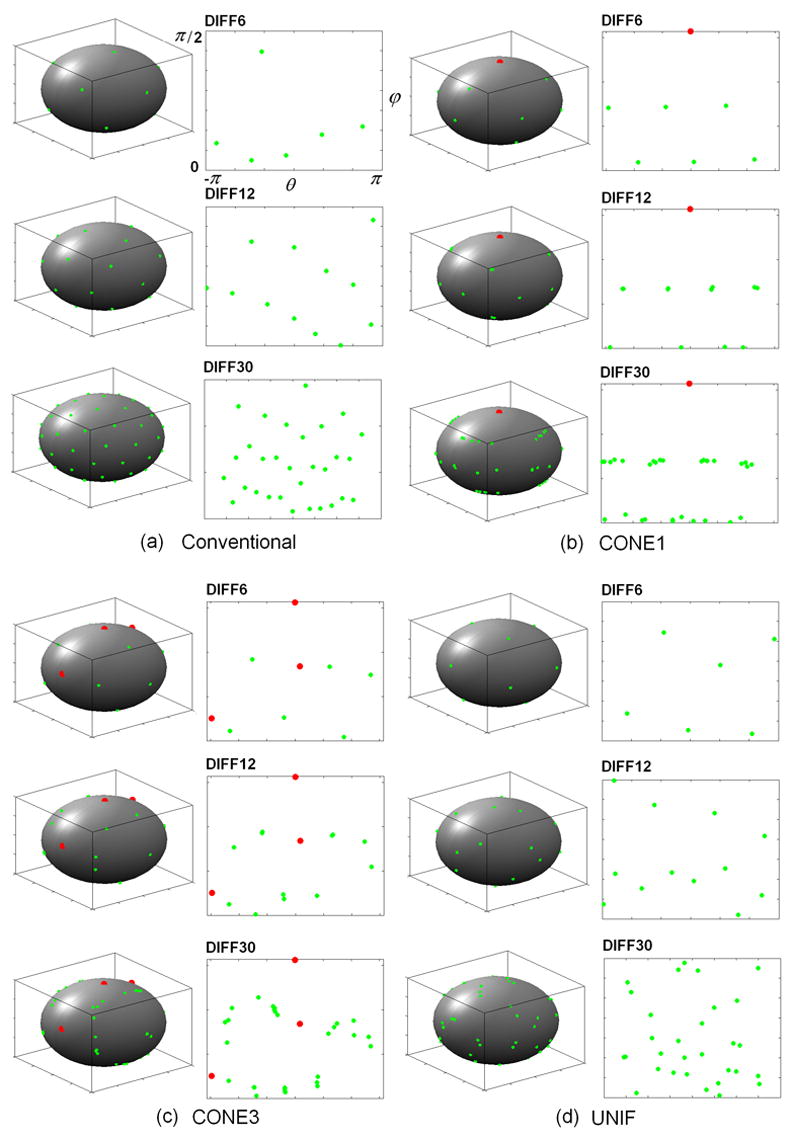
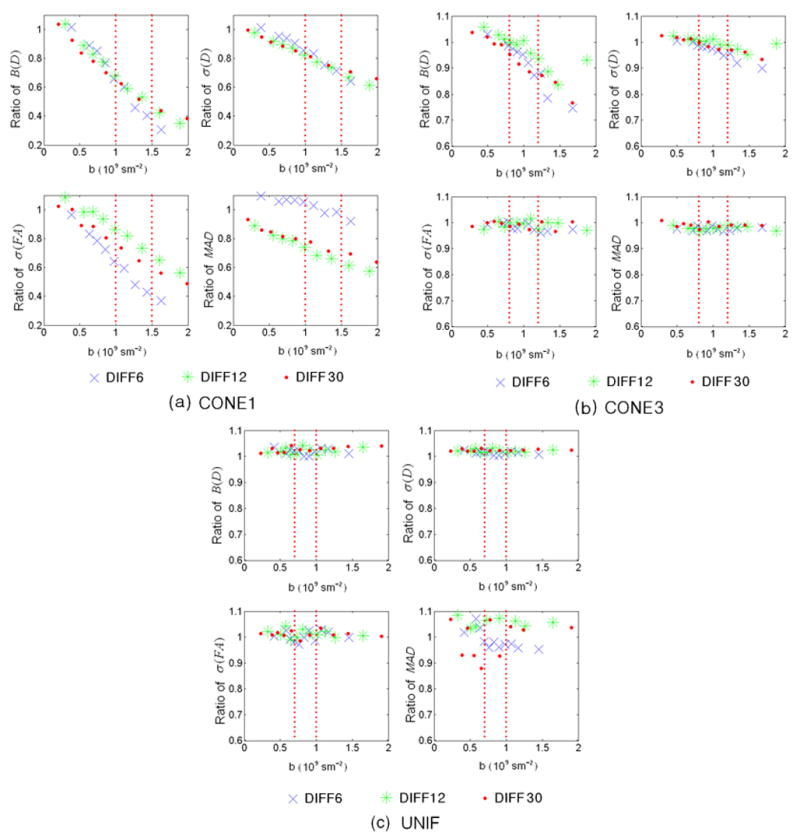
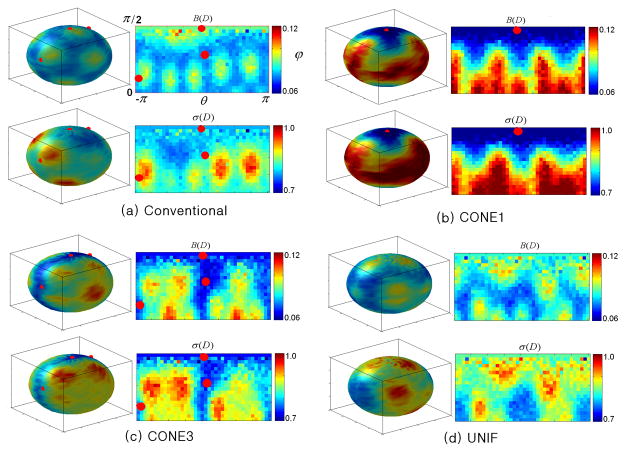
An optimization approach for diffusion tensor imaging (DTI) technique is proposed, aiming to improve the estimates of tensors, fractional anisotropy (FA), and fiber directions. With the simulated annealing algorithm, the proposed approach simultaneously optimizes imaging parameters (gradient duration/separation, read-out time, and TE), b-values, and diffusion gradient directions either with or without incorporating prior knowledge of tensor fields. In addition, the method through which tensors are estimated, least squares in our study, was also considered in the optimization procedures. Monte-Carlo simulations were performed for three different scenarios of prior fiber distributions including fibers orientated in 1 (CONE1) and 3 (CONE3) cone areas (50 tensors orderly oriented within a diverging angle of 20 degrees in each cone) and a uniform fiber distribution (UNIF). In addition, three imaging acquisition schemes together with different signal-to-noise ratios were tested, including M/N=1/6, 2/12, and 5/30 for each prior fiber distribution where M and N were the number of b=0 and b>0 images, respectively. Our results show that the optimal b-value ranges between 0.7 and 1.0 x 10(9) s/m(2) for UNIF. However, the optimal b-value ranges become both higher and wider for CONE1 and CONE3 than that of UNIF. In addition, the biases and standard deviations (SD) of tensors, and SD of FA are substantially reduced and the accuracy of fiber directional estimates is improved using the proposed approach particularly in CONE1 when compared with the conventional approaches. Together, the proposed unified optimization approach may offer a direct and simultaneous means to optimize DTI experiments.
提出了一种用于扩散张量成像(DTI)技术的优化方法,旨在改进张量、分数各向异性(FA)和纤维方向的估计。利用模拟退火算法,该方法在纳入或不纳入张量场先验知识的情况下,同时优化成像参数(梯度持续时间/间隔、读出时间和回波时间)、b值和扩散梯度方向。此外,在优化过程中还考虑了估计张量的方法,在我们的研究中是最小二乘法。针对三种不同的先验纤维分布情况进行了蒙特卡罗模拟,包括纤维定向在1个(CONE1)和3个(CONE3)圆锥区域(每个圆锥内50个张量以20度发散角有序定向)以及均匀纤维分布(UNIF)。此外,测试了三种成像采集方案以及不同的信噪比,对于每种先验纤维分布,M/N分别为1/6、2/12和5/30,其中M和N分别是b = 0和b>0图像的数量。我们的结果表明,对于UNIF,最佳b值范围在0.7至1.0×10(9) s/m(2)之间。然而,CONE1和CONE3的最佳b值范围比UNIF更高且更宽。此外,与传统方法相比,使用所提出的方法,张量的偏差和标准差(SD)以及FA的SD显著降低,并且纤维方向估计的准确性得到提高,特别是在CONE1中。总之,所提出的统一优化方法可能提供一种直接且同时优化DTI实验的手段。