• 文献检索
  • 文档翻译
  • 深度研究
  • 学术资讯
  • Suppr Zotero 插件Zotero 插件
  • 邀请有礼
  • 套餐&价格
  • 历史记录
应用&插件
Suppr Zotero 插件Zotero 插件浏览器插件Mac 客户端Windows 客户端微信小程序
定价
高级版会员购买积分包购买API积分包
服务
文献检索文档翻译深度研究API 文档MCP 服务
关于我们
关于 Suppr公司介绍联系我们用户协议隐私条款
关注我们

Suppr 超能文献

核心技术专利:CN118964589B侵权必究
粤ICP备2023148730 号-1Suppr @ 2026

文献检索

告别复杂PubMed语法,用中文像聊天一样搜索,搜遍4000万医学文献。AI智能推荐,让科研检索更轻松。

立即免费搜索

文件翻译

保留排版,准确专业,支持PDF/Word/PPT等文件格式,支持 12+语言互译。

免费翻译文档

深度研究

AI帮你快速写综述,25分钟生成高质量综述,智能提取关键信息,辅助科研写作。

立即免费体验

免疫刺激对蜜蜂(西方蜜蜂)工蜂社会行为的调节作用

Modulation of social interactions by immune stimulation in honey bee, Apis mellifera, workers.

作者信息

Richard F-J, Aubert A, Grozinger C M

机构信息

Department of Entomology, WM Keck Center for Behavioral Biology, Gardner Hall, North Carolina State University, Raleigh, NC 27695, USA.

出版信息

BMC Biol. 2008 Nov 17;6:50. doi: 10.1186/1741-7007-6-50.

DOI:10.1186/1741-7007-6-50
PMID:19014614
原文链接:https://pmc.ncbi.nlm.nih.gov/articles/PMC2596086/
Abstract

BACKGROUND

Immune response pathways have been relatively well-conserved across animal species, with similar systems in both mammals and invertebrates. Interestingly, honey bees have substantially reduced numbers of genes associated with immune function compared with solitary insect species. However, social species such as honey bees provide an excellent environment for pathogen or parasite transmission with controlled environmental conditions in the hive, high population densities, and frequent interactions. This suggests that honey bees may have developed complementary mechanisms, such as behavioral modifications, to deal with disease.

RESULTS

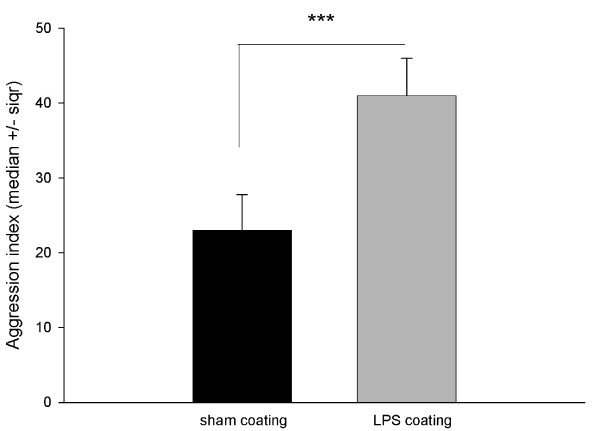
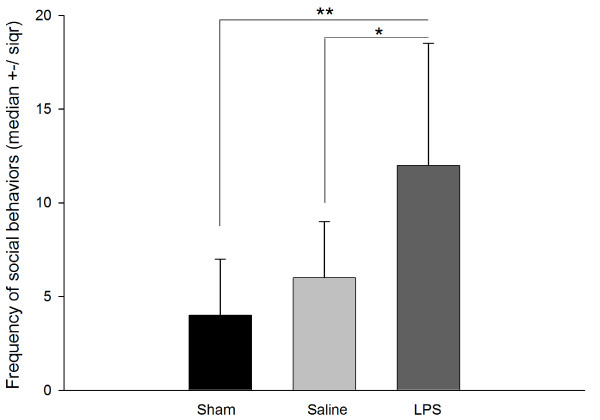
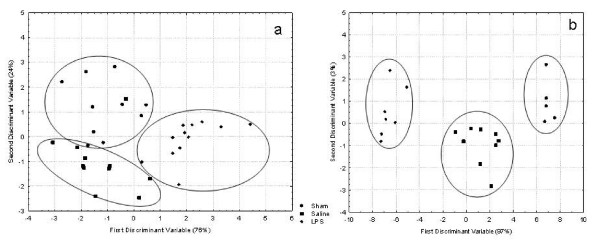
Here, we demonstrate that activation of the immune system in honey bees (using bacterial lipopolysaccharides as a non-replicative pathogen) alters the social responses of healthy nestmates toward the treated individuals. Furthermore, treated individuals expressed significant differences in overall cuticular hydrocarbon profiles compared with controls. Finally, coating healthy individuals with extracts containing cuticular hydrocarbons of immunostimulated individuals significantly increased the agonistic responses of nestmates.

CONCLUSION

Since cuticular hydrocarbons play a critical role in nestmate recognition and other social interactions in a wide variety of insect species, modulation of such chemical profiles by the activation of the immune system could play a crucial role in the social regulation of pathogen dissemination within the colony.

摘要

背景

免疫反应途径在动物物种中相对保守,在哺乳动物和无脊椎动物中都有类似的系统。有趣的是,与独居昆虫物种相比,蜜蜂与免疫功能相关的基因数量大幅减少。然而,像蜜蜂这样的社会性物种在蜂巢中提供了一个病原体或寄生虫传播的绝佳环境,蜂巢内环境条件可控、种群密度高且互动频繁。这表明蜜蜂可能已经发展出了互补机制,如行为改变,来应对疾病。

结果

在这里,我们证明了激活蜜蜂的免疫系统(使用细菌脂多糖作为非复制性病原体)会改变健康巢伴对接受处理个体的社会反应。此外,与对照组相比,接受处理的个体在整体表皮碳氢化合物谱方面表现出显著差异。最后,用含有免疫刺激个体表皮碳氢化合物的提取物涂抹健康个体,显著增加了巢伴的攻击反应。

结论

由于表皮碳氢化合物在多种昆虫物种的巢伴识别和其他社会互动中起着关键作用,通过激活免疫系统来调节此类化学特征可能在蜂群内病原体传播的社会调节中发挥关键作用。
https://cdn.ncbi.nlm.nih.gov/pmc/blobs/e233/2596086/39261f1d4b84/1741-7007-6-50-4.jpg
https://cdn.ncbi.nlm.nih.gov/pmc/blobs/e233/2596086/b51953449b24/1741-7007-6-50-1.jpg
https://cdn.ncbi.nlm.nih.gov/pmc/blobs/e233/2596086/7abff4d40f97/1741-7007-6-50-2.jpg
https://cdn.ncbi.nlm.nih.gov/pmc/blobs/e233/2596086/4fdfe0eb825d/1741-7007-6-50-3.jpg
https://cdn.ncbi.nlm.nih.gov/pmc/blobs/e233/2596086/39261f1d4b84/1741-7007-6-50-4.jpg
https://cdn.ncbi.nlm.nih.gov/pmc/blobs/e233/2596086/b51953449b24/1741-7007-6-50-1.jpg
https://cdn.ncbi.nlm.nih.gov/pmc/blobs/e233/2596086/7abff4d40f97/1741-7007-6-50-2.jpg
https://cdn.ncbi.nlm.nih.gov/pmc/blobs/e233/2596086/4fdfe0eb825d/1741-7007-6-50-3.jpg
https://cdn.ncbi.nlm.nih.gov/pmc/blobs/e233/2596086/39261f1d4b84/1741-7007-6-50-4.jpg

相似文献

1
Modulation of social interactions by immune stimulation in honey bee, Apis mellifera, workers.免疫刺激对蜜蜂(西方蜜蜂)工蜂社会行为的调节作用
BMC Biol. 2008 Nov 17;6:50. doi: 10.1186/1741-7007-6-50.
2
Effects of immunostimulation on social behavior, chemical communication and genome-wide gene expression in honey bee workers (Apis mellifera).免疫刺激对工蜂(Apis mellifera)社会行为、化学通讯和全基因组基因表达的影响。
BMC Genomics. 2012 Oct 16;13:558. doi: 10.1186/1471-2164-13-558.
3
Immunosenescence in honey bees (Apis mellifera L.) is caused by intrinsic senescence and behavioral physiology.蜜蜂(Apis mellifera L.)的免疫衰老由内在衰老和行为生理学引起。
Exp Gerontol. 2019 May;119:174-183. doi: 10.1016/j.exger.2019.02.005. Epub 2019 Feb 8.
4
Silencing the Honey Bee (Apis mellifera) Naked Cuticle Gene (nkd) Improves Host Immune Function and Reduces Nosema ceranae Infections.沉默蜜蜂(西方蜜蜂)的裸表皮基因(nkd)可改善宿主免疫功能并减少蜜蜂微孢子虫感染。
Appl Environ Microbiol. 2016 Oct 27;82(22):6779-6787. doi: 10.1128/AEM.02105-16. Print 2016 Nov 15.
5
The cuticular hydrocarbon profiles of honey bee workers develop via a socially-modulated innate process.工蜂的表皮碳氢化合物图谱是通过一种社会调节的先天过程发展而来的。
Elife. 2019 Feb 5;8:e41855. doi: 10.7554/eLife.41855.
6
Honey bee () sociability and nestmate affiliation are dependent on the social environment experienced post-eclosion.蜜蜂的社交性和对同巢伙伴的亲近感取决于羽化后所经历的社会环境。
J Exp Biol. 2018 Feb 13;221(Pt 3):jeb173054. doi: 10.1242/jeb.173054.
7
Flight behavior and pheromone changes associated to Nosema ceranae infection of honey bee workers (Apis mellifera) in field conditions.在田间条件下与蜜蜂工蜂感染绵绒茧蜂(Nosema ceranae)相关的飞行行为和信息素变化。
J Invertebr Pathol. 2013 May;113(1):42-51. doi: 10.1016/j.jip.2013.01.002. Epub 2013 Jan 23.
8
Honey bee virus causes context-dependent changes in host social behavior.蜜蜂病毒导致宿主社会行为的上下文相关变化。
Proc Natl Acad Sci U S A. 2020 May 12;117(19):10406-10413. doi: 10.1073/pnas.2002268117. Epub 2020 Apr 27.
9
Context affects nestmate recognition errors in honey bees and stingless bees.环境会影响蜜蜂和无刺蜂的同巢伙伴识别错误。
J Exp Biol. 2013 Aug 15;216(Pt 16):3055-61. doi: 10.1242/jeb.085324. Epub 2013 Apr 25.
10
Social apoptosis in honey bee superorganisms.蜜蜂超个体中的社会性细胞凋亡。
Sci Rep. 2016 Jun 6;6:27210. doi: 10.1038/srep27210.

引用本文的文献

1
Unravelling pollen diet and microbiome influence on honey bee health.揭示花粉饮食和微生物群对蜜蜂健康的影响。
Sci Rep. 2025 Apr 18;15(1):13474. doi: 10.1038/s41598-025-96649-5.
2
Centrality of Hygienic Honey Bee Workers in Colony Social Networks.卫生型蜜蜂工蜂在蜂群社会网络中的中心地位。
Insects. 2025 Jan 10;16(1):58. doi: 10.3390/insects16010058.
3
Spermidine supplementation influence on protective enzymes of Apis mellifera (Hymenoptera: Apidae).亚精胺对蜜蜂(膜翅目:蜜蜂科)保护酶的影响。

本文引用的文献

1
Parasites, pathogens, and polyandry in honey bees.蜜蜂中的寄生虫、病原体与一妻多夫制
Am Nat. 1998 Apr;151(4):392-6. doi: 10.1086/286127.
2
Social management of LPS-induced inflammation in Formica polyctena ants.聚纹蚁中脂多糖诱导炎症的社会管理
Brain Behav Immun. 2008 Aug;22(6):833-7. doi: 10.1016/j.bbi.2008.01.010. Epub 2008 Mar 10.
3
Specificity in chemical profiles of workers, brood and mutualistic fungi in Atta, Acromyrmex, and Sericomyrmex fungus-growing ants.切叶蚁属、顶切叶蚁属和丝切叶蚁属切叶蚁中工蚁、蚁蛹和共生真菌化学特征的特异性。
J Insect Sci. 2024 Sep 1;24(5). doi: 10.1093/jisesa/ieae098.
4
Honey bee colony behavior and ontogeny are adversely affected when exposed to a pesticide-contaminated environment.当蜜蜂暴露在受农药污染的环境中时,其群体行为和个体发生会受到不利影响。
J Insect Sci. 2024 May 1;24(3). doi: 10.1093/jisesa/ieae034.
5
Gut Microbiota of at Selected Ontogenetic Stages and Their Immunogenic Potential during Summer.夏季特定发育阶段的肠道微生物群及其免疫原性潜力
Pathogens. 2024 Jan 28;13(2):122. doi: 10.3390/pathogens13020122.
6
Phospholipase A2 activity is required for immune defense of European (Apis mellifera) and Asian (Apis cerana) honeybees against American foulbrood pathogen, Paenibacillus larvae.磷脂酶 A2 活性对于欧洲蜜蜂(Apis mellifera)和亚洲蜜蜂(Apis cerana)抵御美洲幼虫腐臭病病原体 Paenibacillus larvae 的免疫防御至关重要。
PLoS One. 2024 Feb 6;19(2):e0290929. doi: 10.1371/journal.pone.0290929. eCollection 2024.
7
Defensive behavior is linked to altered surface chemistry following infection in a termite society.防御行为与白蚁社会中感染后的表面化学变化有关。
Sci Rep. 2023 Nov 23;13(1):20606. doi: 10.1038/s41598-023-42947-9.
8
Resilin Distribution and Abundance in across Biological Age Classes and Castes.跨生物年龄组和种姓的节肢弹性蛋白分布与丰度
Insects. 2023 Sep 13;14(9):764. doi: 10.3390/insects14090764.
9
Viral Co-Infections and Antiviral Immunity in Honey Bees.蜜蜂中的病毒共感染与抗病毒免疫
Viruses. 2023 May 22;15(5):1217. doi: 10.3390/v15051217.
10
Pathogen evasion of social immunity.病原体逃避社会免疫。
Nat Ecol Evol. 2023 Mar;7(3):450-460. doi: 10.1038/s41559-023-01981-6. Epub 2023 Feb 2.
J Chem Ecol. 2007 Dec;33(12):2281-92. doi: 10.1007/s10886-007-9385-z. Epub 2007 Nov 27.
4
Social immunity.社会免疫
Curr Biol. 2007 Aug 21;17(16):R693-702. doi: 10.1016/j.cub.2007.06.008.
5
Invertebrate studies and the evolution of comparative psychoneuroimmunology.无脊椎动物研究与比较心理神经免疫学的演变
Brain Behav Immun. 2007 Mar;21(3):290-1. doi: 10.1016/j.bbi.2007.01.006.
6
Endocrine modulation of a pheromone-responsive gene in the honey bee brain.蜜蜂大脑中一种信息素反应基因的内分泌调节。
J Comp Physiol A Neuroethol Sens Neural Behav Physiol. 2007 Apr;193(4):461-70. doi: 10.1007/s00359-006-0202-x. Epub 2006 Dec 28.
7
Defending against parasites: fungus-growing ants combine specialized behaviours and microbial symbionts to protect their fungus gardens.抵御寄生虫:切叶蚁结合特殊行为与微生物共生体来保护它们的菌圃。
Biol Lett. 2006 Mar 22;2(1):12-6. doi: 10.1098/rsbl.2005.0371.
8
Immune pathways and defence mechanisms in honey bees Apis mellifera.蜜蜂(西方蜜蜂)的免疫途径和防御机制
Insect Mol Biol. 2006 Oct;15(5):645-56. doi: 10.1111/j.1365-2583.2006.00682.x.
9
Experimentally induced change in infectious period affects transmission dynamics in a social group.实验诱导的感染期变化会影响社会群体中的传播动态。
Proc Biol Sci. 2007 Jan 7;274(1606):61-5. doi: 10.1098/rspb.2006.3695.
10
Inbreeding and disease resistance in a social insect: effects of heterozygosity on immunocompetence in the termite Zootermopsis angusticollis.一种社会性昆虫的近亲繁殖与抗病性:杂合性对白蚁窄颈土白蚁免疫能力的影响
Proc Biol Sci. 2006 Oct 22;273(1601):2633-40. doi: 10.1098/rspb.2006.3622.