Li Xingyi, Kong XiangYe, Shi Shuai, Zheng XiuLing, Guo Gang, Wei YuQuan, Qian ZhiYong
State Key Laboratory of Biotherapy, West China Hospital, West China Medical School, Sichuan University, Chengdu, 610041, PR China.
BMC Biotechnol. 2008 Nov 19;8:89. doi: 10.1186/1472-6750-8-89.
Absorption of antigens onto chitosan microparticles via electrostatic interaction is a common and relatively mild process suitable for mucosal vaccine. In order to increase the stability of antigens and prevent an immediate desorption of antigens from chitosan carriers in gastrointestinal tract, coating onto BSA loaded chitosan microparticles with sodium alginate was performed by layer-by-layer technology to meet the requirement of mucosal vaccine.
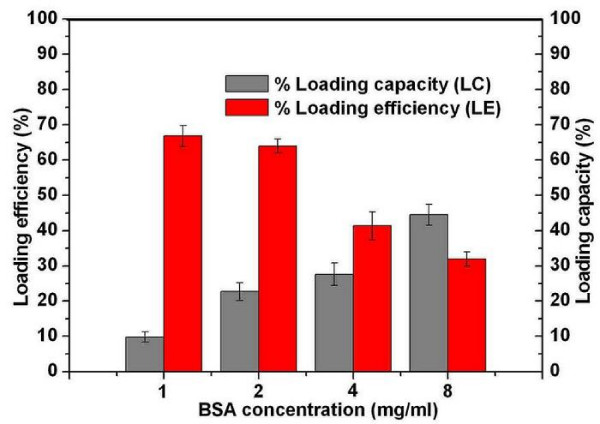
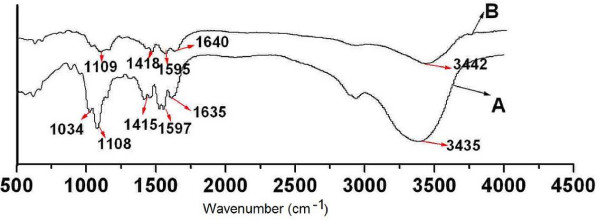
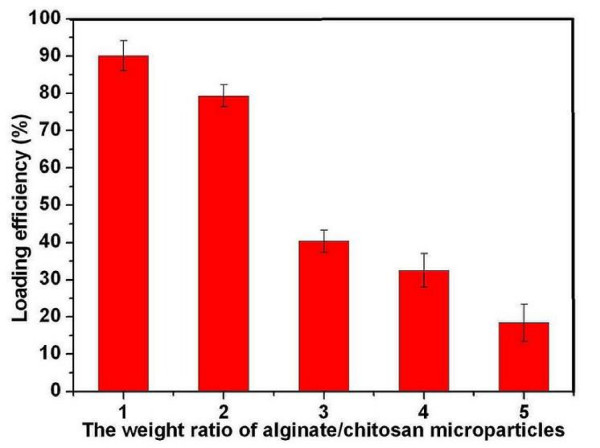
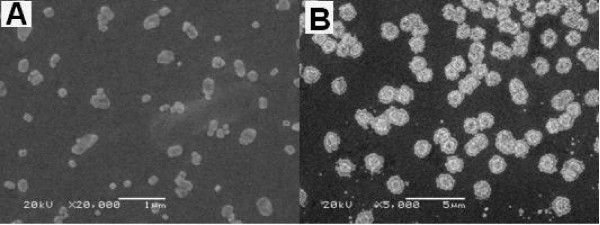
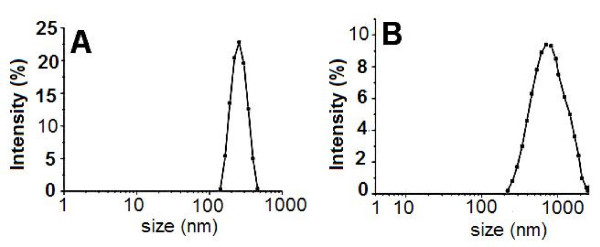
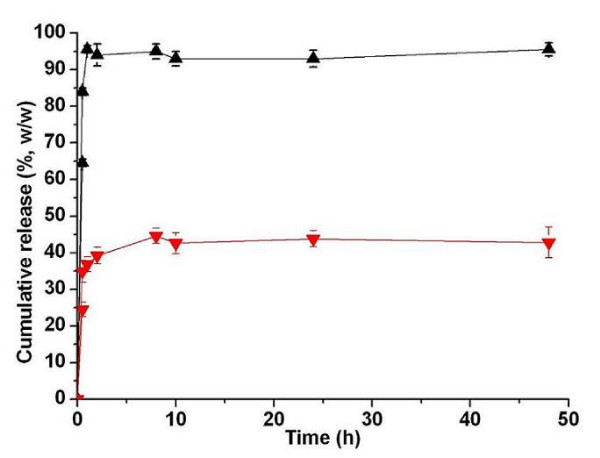
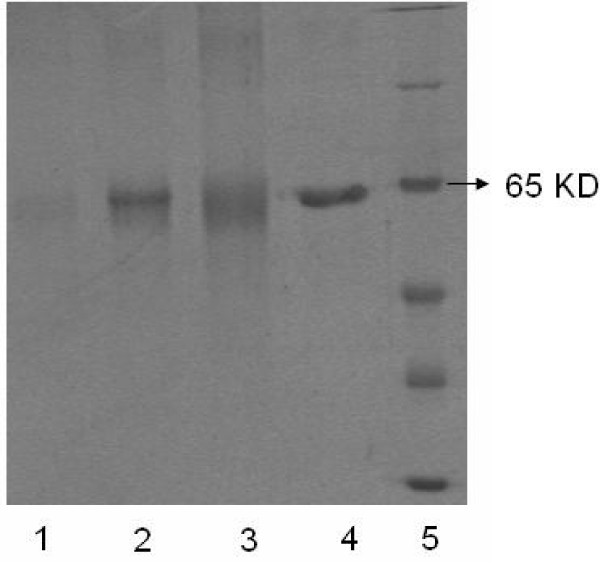
The prepared alginate coated BSA loaded chitosan microparticles had loading efficiency (LE) of 60% and loading capacity (LC) of 6% with mean diameter of about 1 mum. When the weight ratio of alginate/chitosan microparticles was greater than 2, the stable system could be obtained. The rapid charge inversion of BSA loaded chitosan microparticles (from +27 mv to -27.8 mv) was observed during the coating procedure which indicated the presence of alginate layer on the chitosan microparticles surfaces. According to the results obtained by scanning electron microscopy (SEM), the core-shell structure of BSA loaded chitosan microparticles was observed. Meanwhile, in vitro release study indicated that the initial burst release of BSA from alginate coated chitosan microparticles was lower than that observed from uncoated chitosan microparticles (40% in 8 h vs. about 84% in 0.5 h). SDS-polyacrylamide gel electrophoresis (SDS-PAGE) assay showed that alginate coating onto chitosan microparticles could effectively protect the BSA from degradation or hydrolysis in acidic condition for at least 2 h. The structural integrity of alginate modified chitosan microparticles incubated in PBS for 24 h was investigated by FTIR.
The prepared alginate coated chitosan microparticles, with mean diameter of about 1 mum, was suitable for oral mucosal vaccine. Moreover, alginate coating onto the surface of chitosan microparticles could modulate the release behavior of BSA from alginate coated chitosan microparticles and could effectively protect model protein (BSA) from degradation in acidic medium in vitro for at least 2 h. In all, the prepared alginate coated chitosan microparticles might be an effective vehicle for oral administration of antigens.
通过静电相互作用将抗原吸附到壳聚糖微粒上是一种常见且相对温和的方法,适用于黏膜疫苗。为了提高抗原的稳定性并防止抗原在胃肠道中从壳聚糖载体上立即解吸,采用层层技术在负载牛血清白蛋白(BSA)的壳聚糖微粒上包覆海藻酸钠,以满足黏膜疫苗的要求。
制备的海藻酸钠包覆负载BSA的壳聚糖微粒的负载效率(LE)为60%,负载量(LC)为6%,平均直径约为1μm。当海藻酸钠/壳聚糖微粒的重量比大于2时,可获得稳定的体系。在包覆过程中观察到负载BSA的壳聚糖微粒的电荷快速反转(从+27mV变为-27.8mV),这表明壳聚糖微粒表面存在海藻酸钠层。根据扫描电子显微镜(SEM)获得的结果,观察到负载BSA的壳聚糖微粒的核壳结构。同时,体外释放研究表明,海藻酸钠包覆的壳聚糖微粒中BSA的初始突释低于未包覆的壳聚糖微粒(8小时内为40%,而在0.5小时内约为84%)。十二烷基硫酸钠-聚丙烯酰胺凝胶电泳(SDS-PAGE)分析表明,在壳聚糖微粒上包覆海藻酸钠可有效保护BSA在酸性条件下至少2小时不被降解或水解。通过傅里叶变换红外光谱(FTIR)研究了在磷酸盐缓冲液(PBS)中孵育24小时的海藻酸钠改性壳聚糖微粒的结构完整性。
制备的平均直径约为1μm的海藻酸钠包覆壳聚糖微粒适用于口服黏膜疫苗。此外,在壳聚糖微粒表面包覆海藻酸钠可调节海藻酸钠包覆壳聚糖微粒中BSA的释放行为,并可有效保护模型蛋白(BSA)在体外酸性介质中至少2小时不被降解。总之,制备的海藻酸钠包覆壳聚糖微粒可能是口服抗原的有效载体。