Kitambi Satish S, Malicki Jarema J
School of Life Sciences, Södertörns University College, Stockholm, Sweden.
Dev Dyn. 2008 Dec;237(12):3870-81. doi: 10.1002/dvdy.21797.
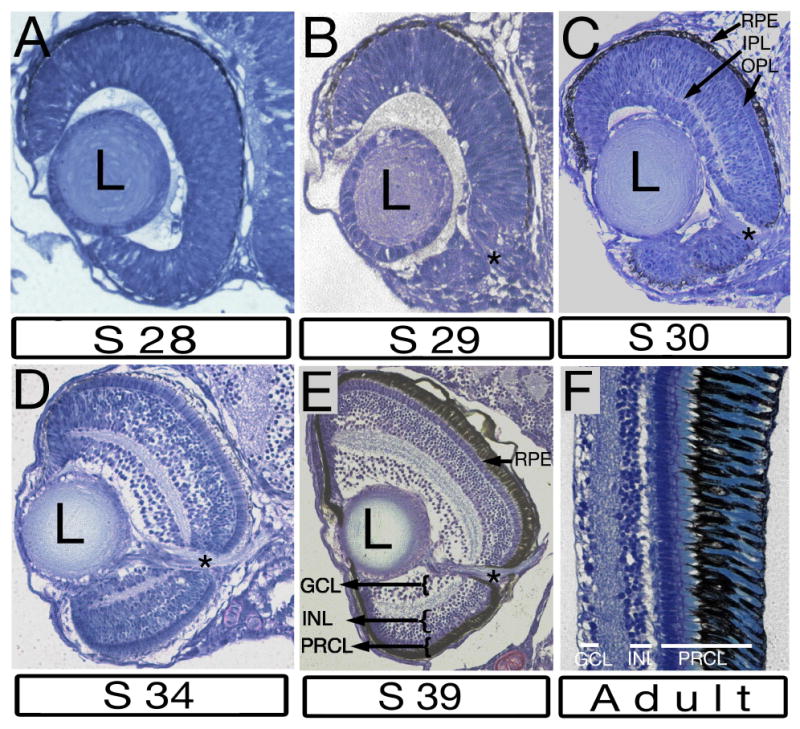
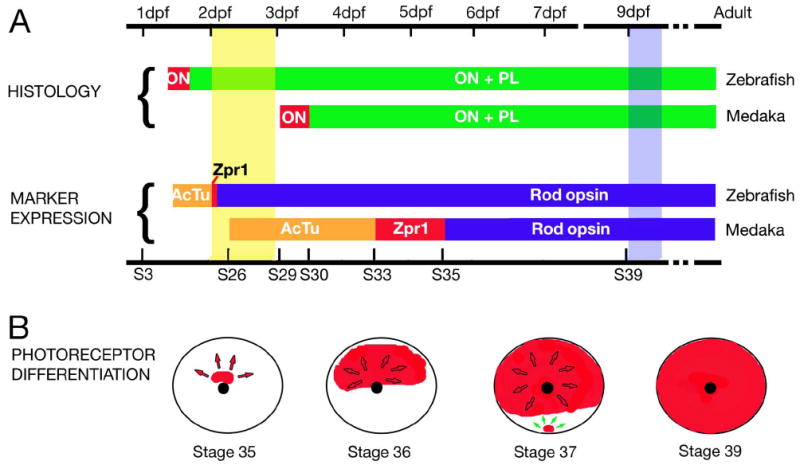
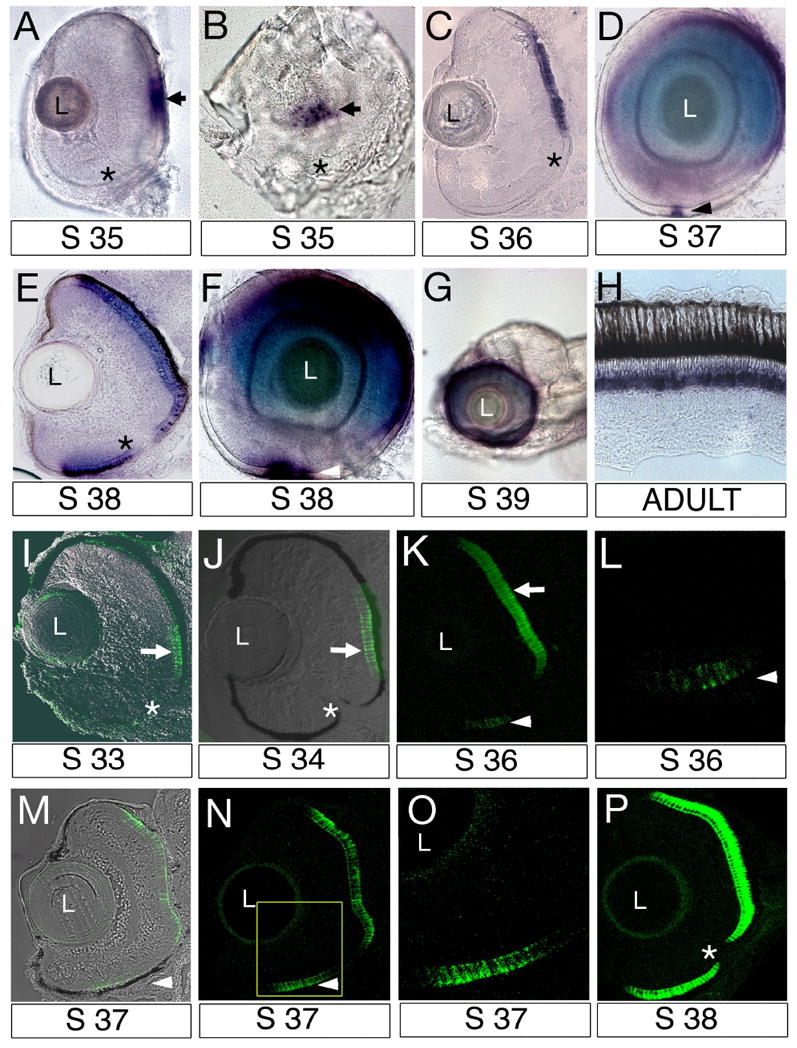
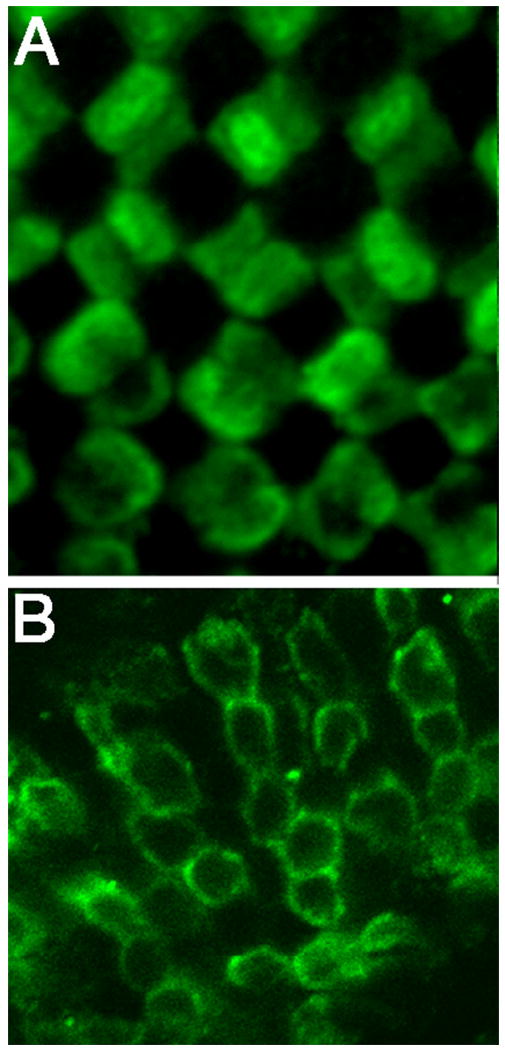
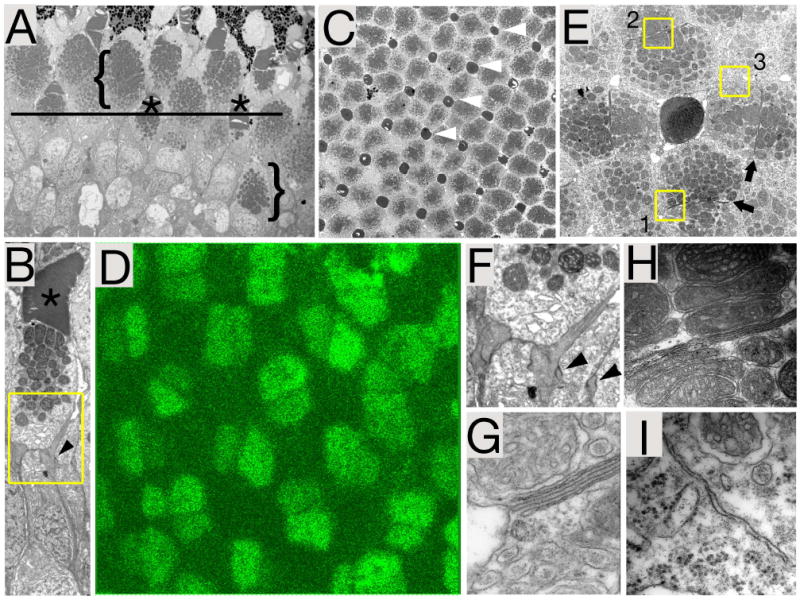
The vertebrate retina is very well conserved in evolution. Its structure and functional features are very similar in phyla as different as primates and teleost fish. Here, we describe the spatiotemporal characteristics of neurogenesis in the retina of a teleost, medaka, and compare them with other species, primarily the zebrafish. Several intriguing differences are observed between medaka and zebrafish. For example, photoreceptor differentiation in the medaka retina starts independently in two different areas, and at more advanced stages of differentiation, medaka and zebrafish retinae display obviously different patterns of the photoreceptor cell mosaic. Medaka and zebrafish evolutionary lineages are thought to have separated from each other 110 million years ago, and so the differences between these species are not unexpected, and may be exploited to gain insight into the architecture of developmental pathways. Importantly, this work highlights the benefits of using multiple teleost models in parallel to understand a developmental process.
脊椎动物的视网膜在进化过程中得到了很好的保留。其结构和功能特征在灵长类动物和硬骨鱼等不同门类中非常相似。在这里,我们描述了硬骨鱼青鳉视网膜神经发生的时空特征,并将它们与其他物种(主要是斑马鱼)进行比较。在青鳉和斑马鱼之间观察到了几个有趣的差异。例如,青鳉视网膜中的光感受器分化在两个不同区域独立开始,并且在分化的更高级阶段,青鳉和斑马鱼的视网膜显示出明显不同的光感受器细胞镶嵌模式。青鳉和斑马鱼的进化谱系被认为在1.1亿年前彼此分离,因此这些物种之间的差异并不意外,并且可以利用这些差异来深入了解发育途径的结构。重要的是,这项工作强调了并行使用多种硬骨鱼模型来理解发育过程的好处。