Fredman Steffany J, Baucom Donald H, Gremore Tina M, Castellani Angela M, Kallman Theresa A, Porter Laura S, Kirby Jennifer S, Dees E Claire, Klauber-Demore Nancy, Peppercorn Jeffrey, Carey Lisa A
University of North Carolina at Chapel Hill, Chapel Hill, NC, USA.
Psychooncology. 2009 Jun;18(6):667-73. doi: 10.1002/pon.1477.
Despite mounting evidence supporting the use of psychosocial interventions to promote adaptation to cancer, enrolling participants into these interventions is challenging. This is particularly salient for couple-based interventions, and newer, more targeted recruitment strategies to increase enrollment are needed. However, there have been few published empirical studies focused specifically on recruitment-related variables associated with enrollment into these types of interventions. To better understand how to encourage participation in couple-based psychosocial interventions for cancer, we examined facilitating and impeding factors to enrollment into a couple-based intervention for women with early-stage breast cancer.
In this sample of 99 women diagnosed with early-stage breast cancer, patient demographic variables and method of approaching eligible patients were examined as predictors of enrollment into a randomized controlled trial comparing couple-based relationship enhancement with treatment as usual.
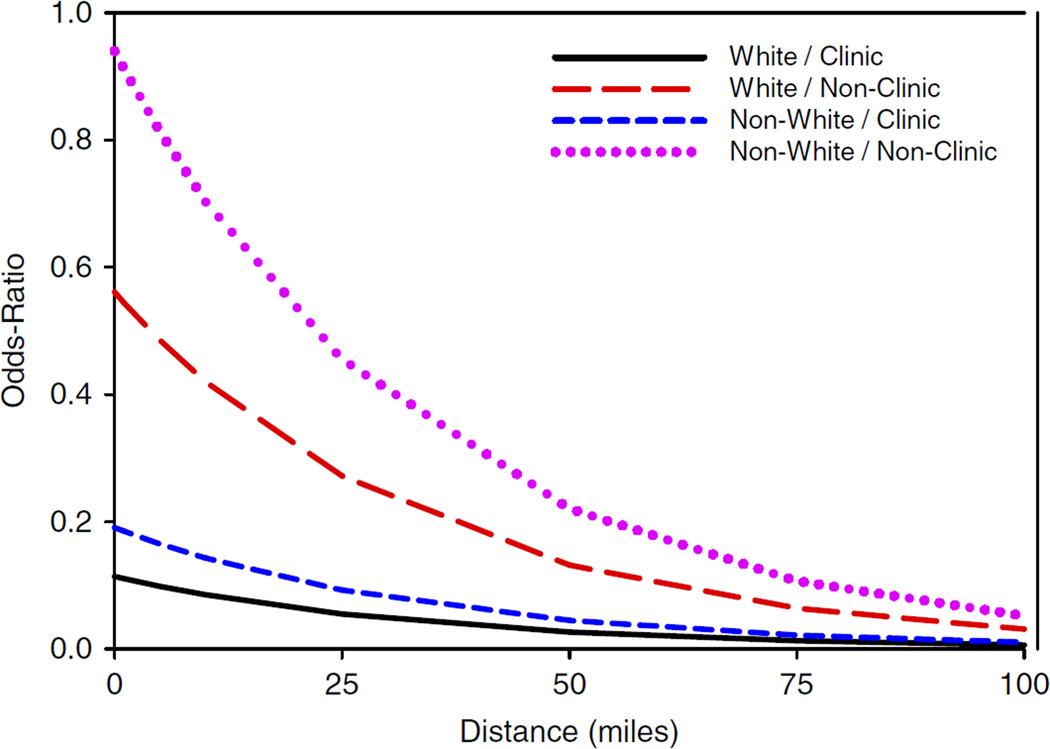
Results indicated that women were more likely to enroll if they were contacted at home or at a follow-up medical appointment rather than when first diagnosed at a busy multidisciplinary clinic; they were also more likely to enroll the closer they lived to the research facility.
In addition to decreasing participant burden, timing and setting of recruitment efforts may have important implications for enhancing participation rates in couple-based intervention studies for cancer.
尽管越来越多的证据支持使用心理社会干预措施来促进对癌症的适应,但让参与者加入这些干预措施具有挑战性。这对于基于夫妻的干预措施尤为突出,因此需要更新的、更有针对性的招募策略来增加参与人数。然而,很少有已发表的实证研究专门关注与参与这类干预措施相关的招募变量。为了更好地理解如何鼓励参与针对癌症患者夫妻的心理社会干预,我们研究了影响参与一项针对早期乳腺癌女性的夫妻干预措施的促进因素和阻碍因素。
在这个由99名被诊断为早期乳腺癌的女性组成的样本中,研究了患者的人口统计学变量以及联系符合条件患者的方式,以此作为参与一项随机对照试验(该试验比较了基于夫妻关系增强干预与常规治疗)的预测因素。
结果表明,如果女性是在家中或后续医疗预约时被联系,而不是在繁忙的多学科诊所首次诊断时被联系,她们更有可能参与;她们住得离研究机构越近,参与的可能性也越大。
除了减轻参与者负担外,招募工作的时间和地点对于提高针对癌症患者夫妻的干预研究的参与率可能具有重要意义。