Centre for Infectious Disease, College of Medicine and Veterinary Medicine, The University of Edinburgh, Edinburgh, United Kingdom.
PLoS Negl Trop Dis. 2008;2(12):e347. doi: 10.1371/journal.pntd.0000347. Epub 2008 Dec 9.
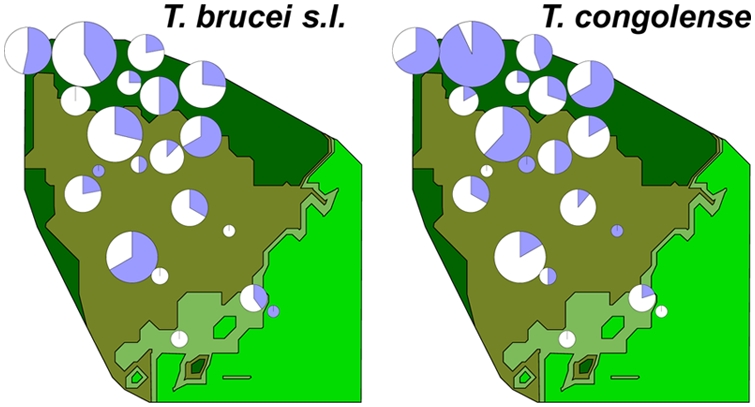
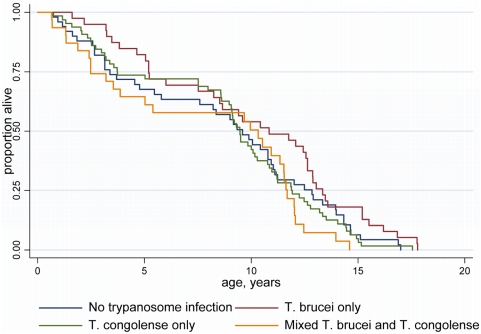
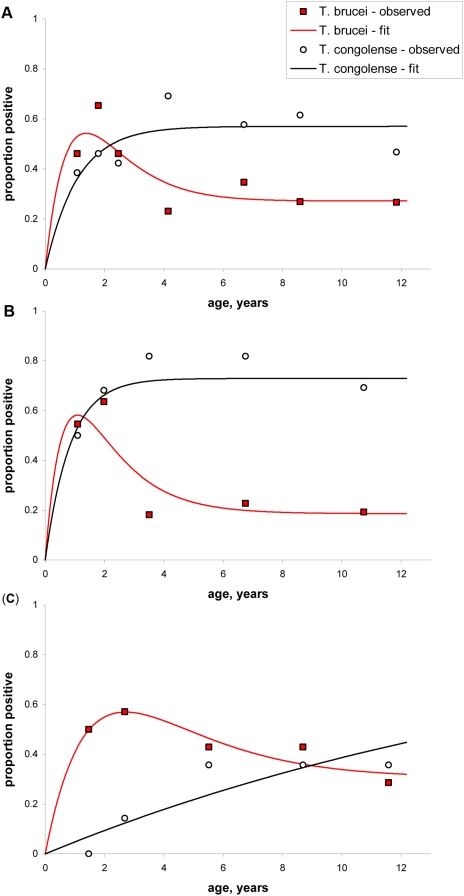
Trypanosomes cause disease in humans and livestock throughout sub-Saharan Africa. Although various species show evidence of clinical tolerance to trypanosomes, until now there has been no evidence of acquired immunity to natural infections. We discovered a distinct peak and decrease in age prevalence of T. brucei s.l. infection in wild African lions that is consistent with being driven by an exposure-dependent increase in cross-immunity following infections with the more genetically diverse species, T. congolense sensu latu. The causative agent of human sleeping sickness, T. brucei rhodesiense, disappears by 6 years of age apparently in response to cross-immunity from other trypanosomes, including the non-pathogenic subspecies, T. brucei brucei. These findings may suggest novel pathways for vaccinations against trypanosomiasis despite the notoriously complex antigenic surface proteins in these parasites.
锥虫会在整个撒哈拉以南非洲地区的人类和家畜中引发疾病。尽管各种物种都表现出对锥虫具有临床耐受性的证据,但直到现在,还没有对自然感染产生获得性免疫的证据。我们在野生非洲狮中发现了一种明显的、与年龄相关的 T. brucei s.l.感染率的峰值和下降,这与在感染了遗传上更为多样化的物种 T. congolense sensu latu 后,依赖于暴露的交叉免疫的增加相一致。导致人类昏睡病的病原体 T. brucei rhodesiense 在 6 岁时就明显消失,显然是由于来自其他锥虫的交叉免疫,包括非致病性亚种 T. brucei brucei。尽管这些寄生虫的抗原表面蛋白非常复杂,但这些发现可能为锥虫病疫苗接种提供了新途径。