Aram Ghazaleh, Potter James J, Liu Xiaopu, Wang Lan, Torbenson Michael S, Mezey Esteban
Department of Medicine, The Johns Hopkins University School of Medicine, Baltimore, Maryland, USA.
Hepatology. 2009 Mar;49(3):911-9. doi: 10.1002/hep.22708.
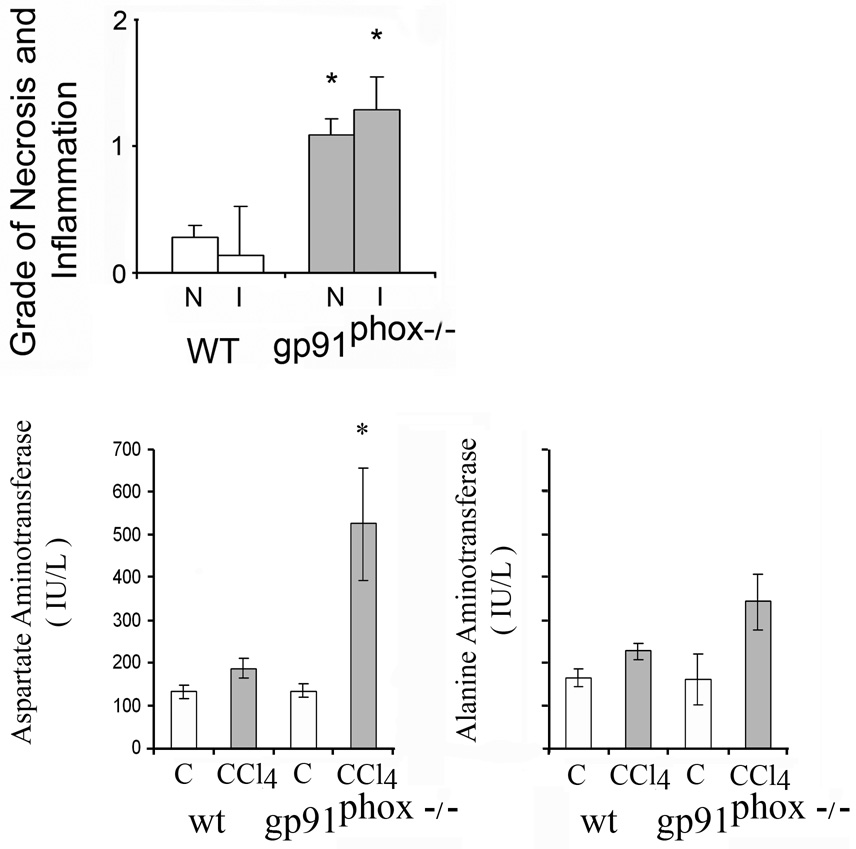
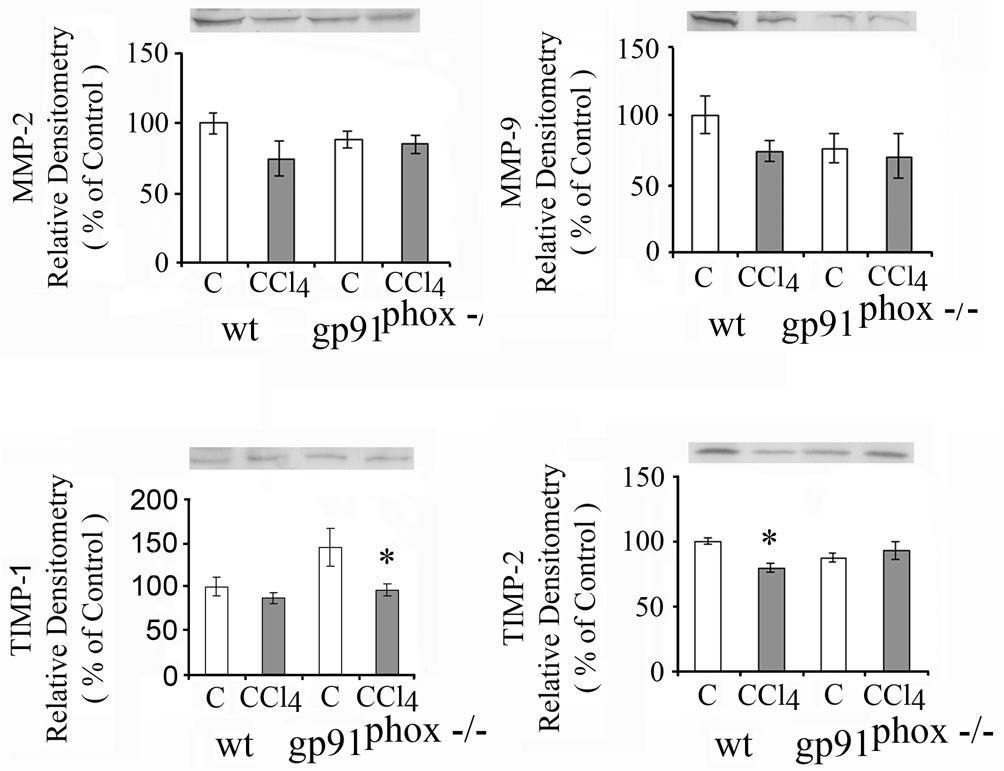
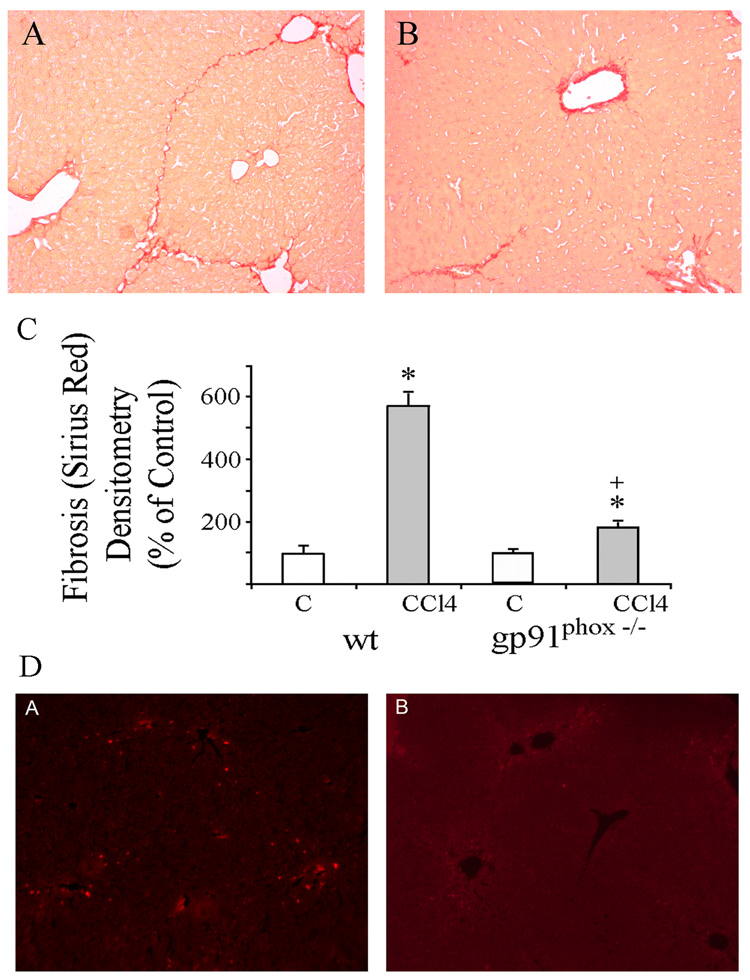
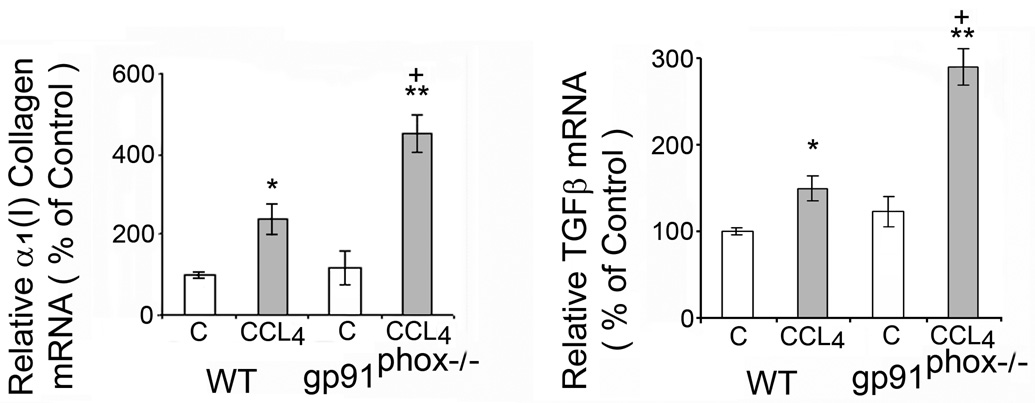
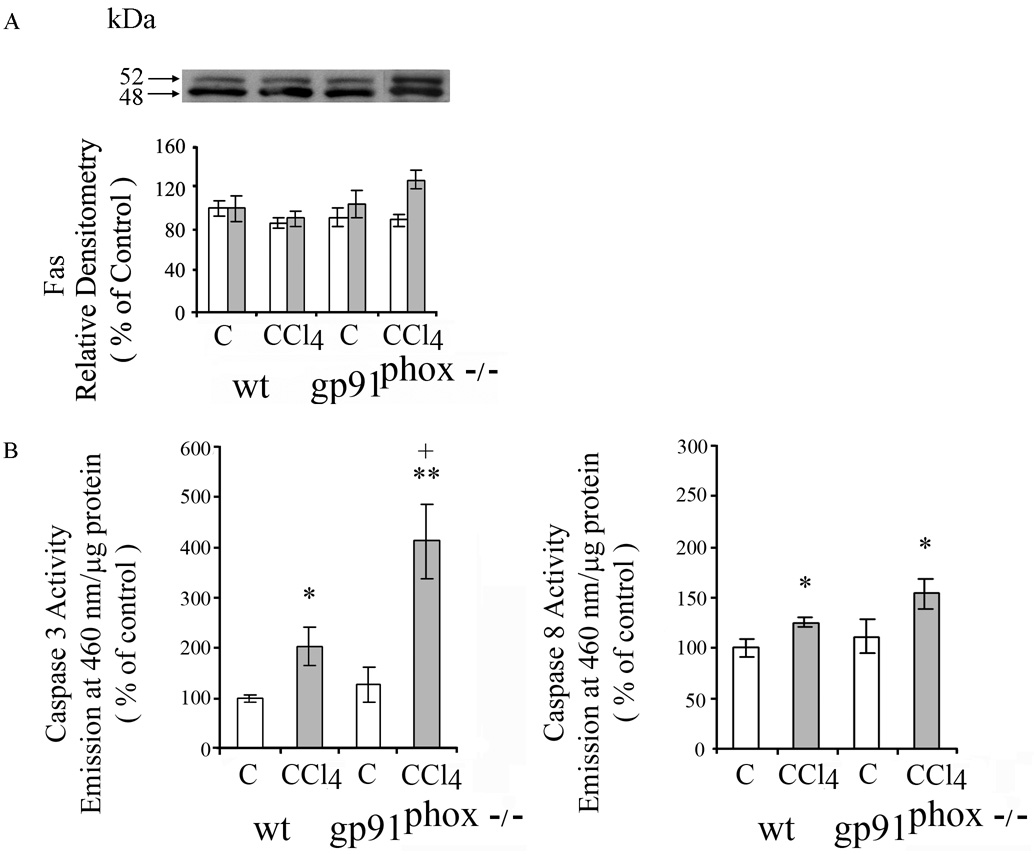
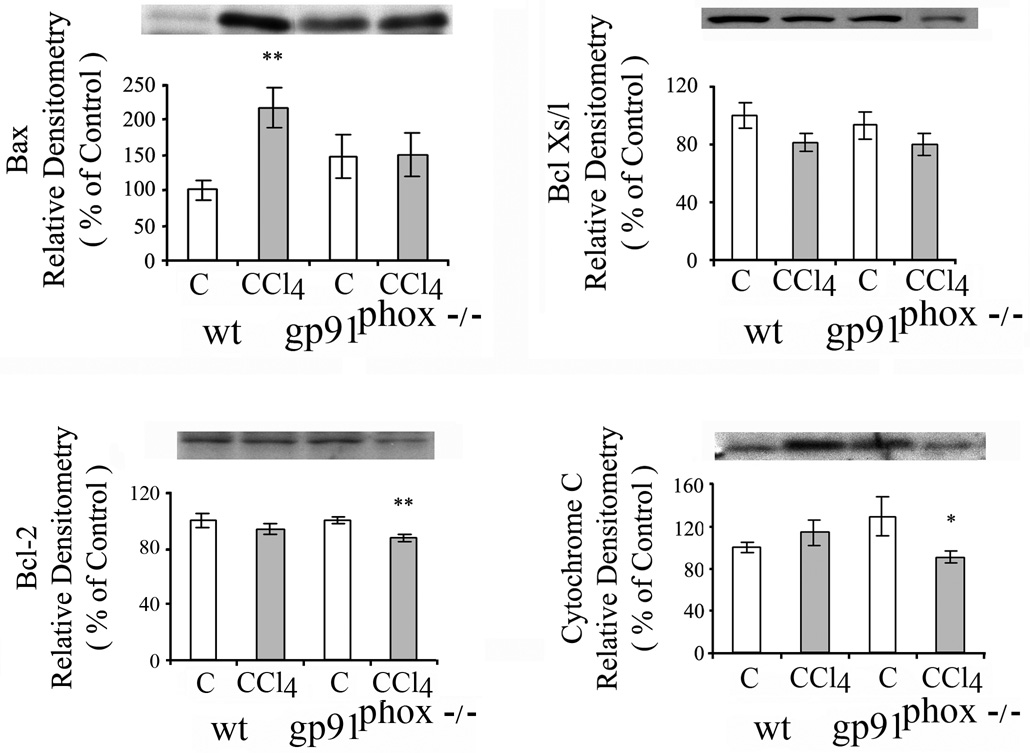
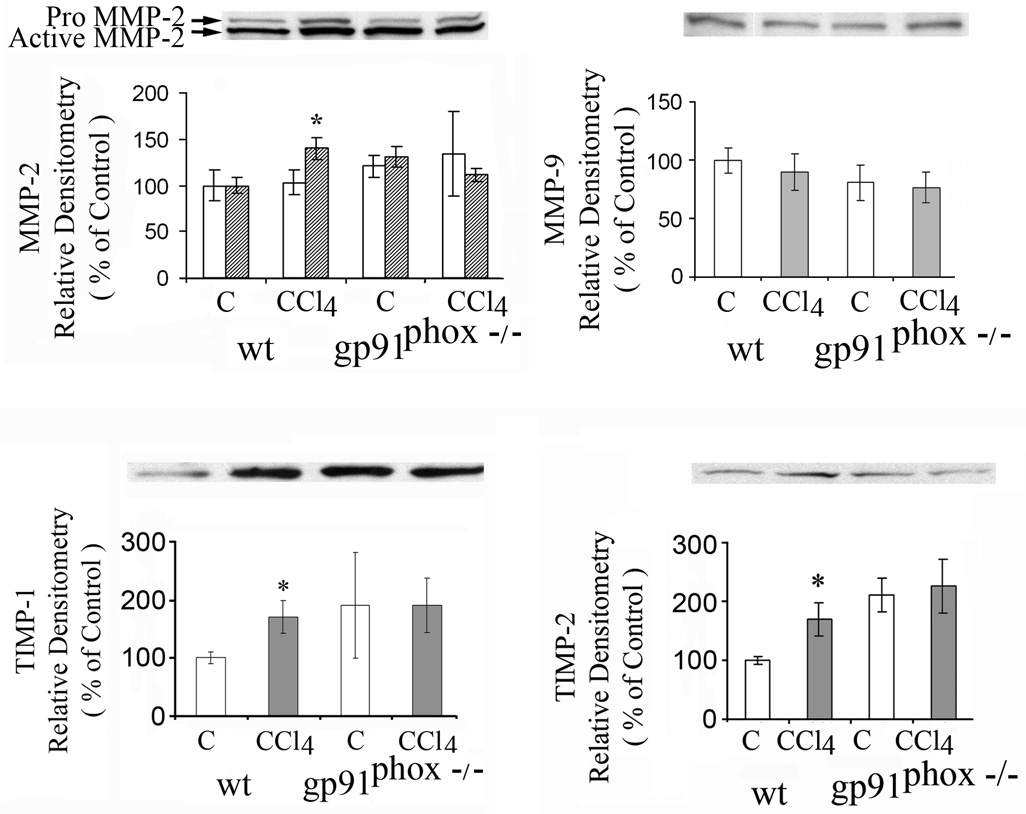
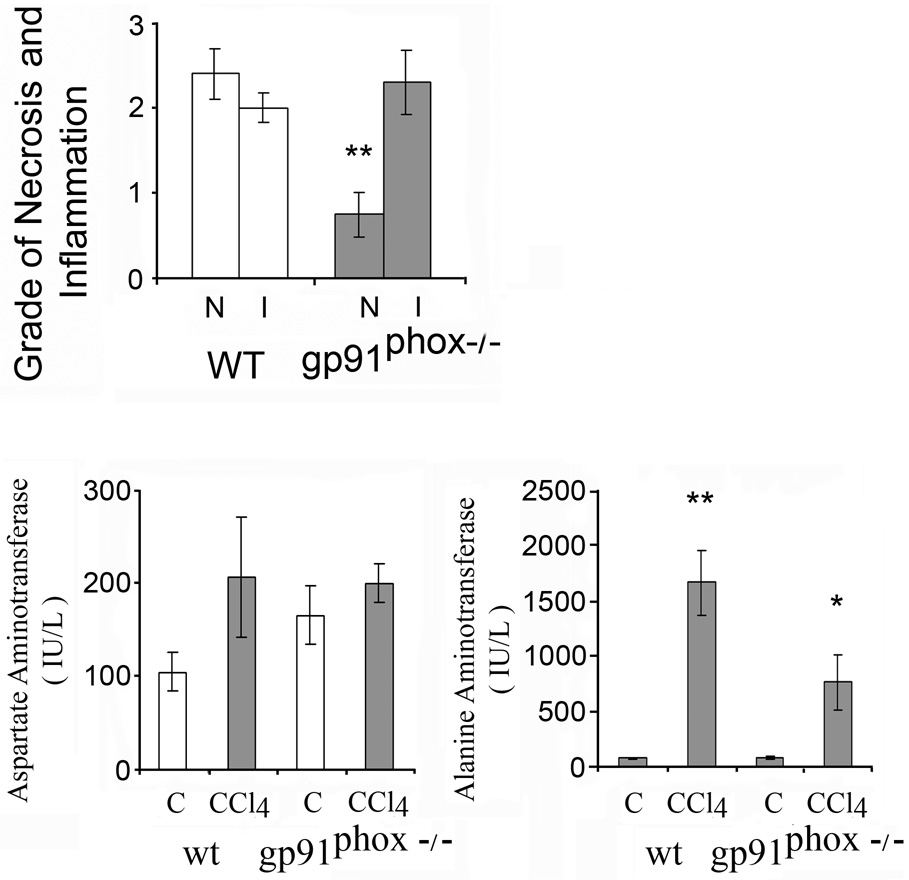
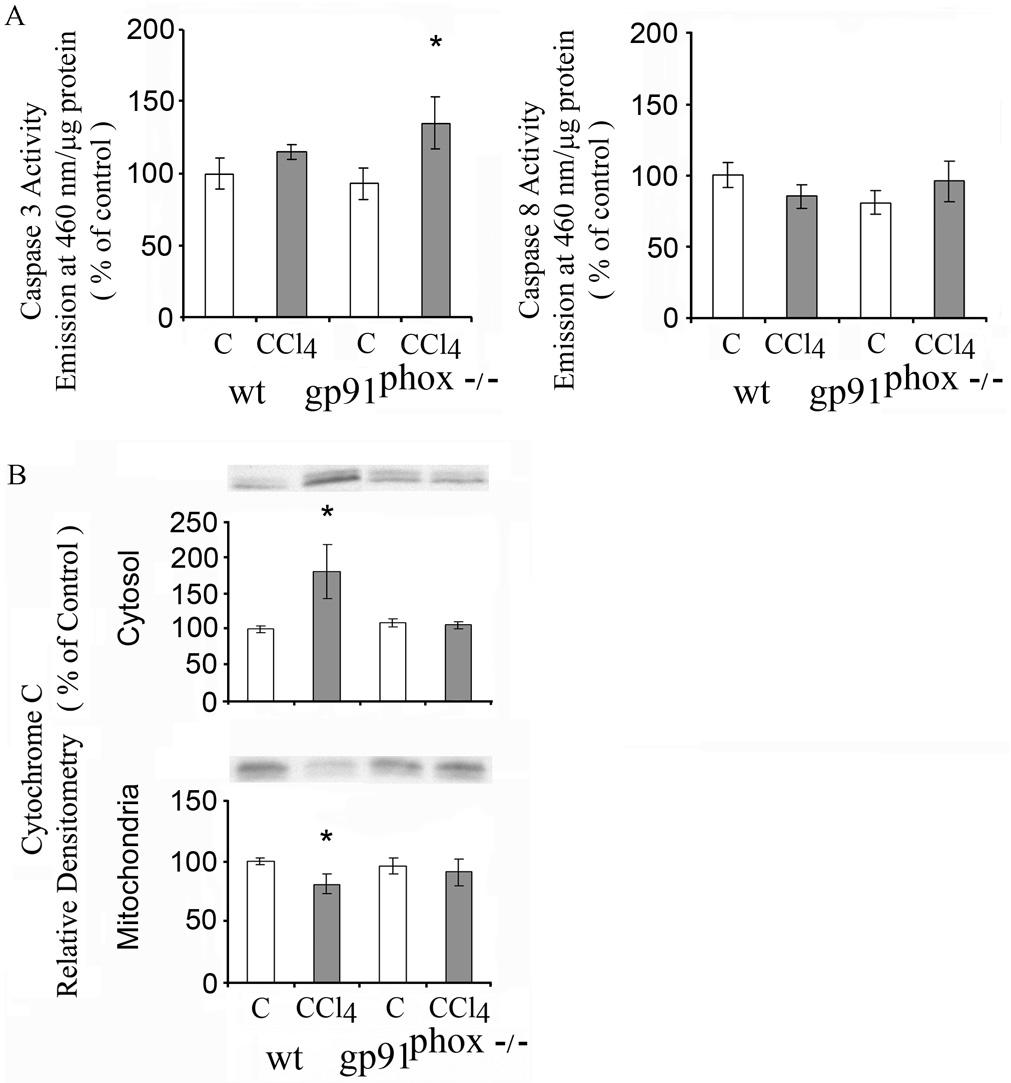
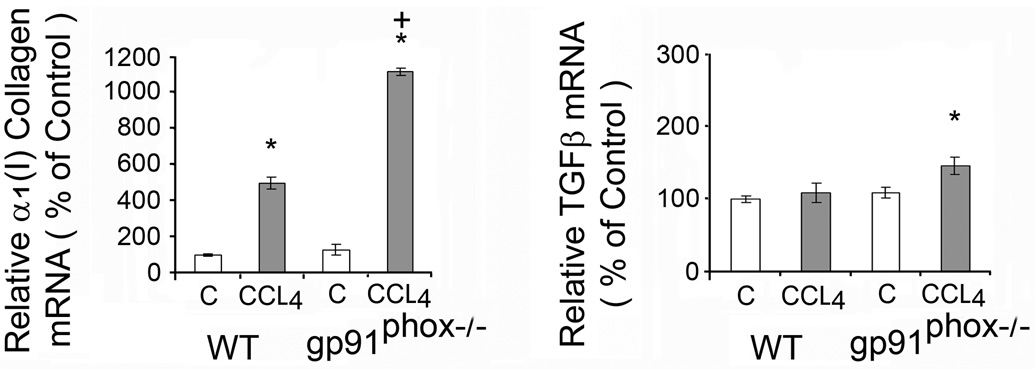
Reactive oxygen species (ROS) activate hepatic stellate cells and enhance fibrogenesis. This study determined the role of nicotinamide adenine dinucleotide phosphate, reduced form (NADPH) oxidase deficiency in the development of hepatocellular necrosis, inflammation, and apoptosis in relation to fibrosis produced by chronic carbon tetrachloride (CCl(4)) administration. Wild-type (WT) mice or mice with deficiency of the gp91(phox) subunit of NADPH complex (gp91(phox(-/-) )) were subjected to biweekly CCl(4) injections over 8 weeks, whereas controls were given isovolumetric injections of olive oil. Serum aspartate aminotransferase (AST) was higher after CCl(4) administration in gp91(phox(-/-) ) than in WT mice, correlating with increased necrosis on liver histology. By contrast, more hepatocyte apoptosis was found after CCl(4) in the WT than in the gp91(phox(-/-) ) mice, which was associated with changes in components of the mitochondrial pathway of apoptosis, namely, an increase in the pro-apoptotic BAX protein in the WT, but not in the gp91(phox(-/-) ) mice and also a lower cytosolic cytochrome c in the gp91(phox(-/-) ) mice. There were fewer stellate cells and less fibrosis after CCl(4) in the gp91(phox(-/-) ) as compared with the WT mice. The increase in alpha(1)(I) collagen messenger RNA (mRNA), however, was greater after CCl(4) in the gp91(phox(-/-) ) mice. Matrix metalloproteinase-2 (MMP-2) and MMP-9 mRNA increased more in the gp91(phox(-/-) ) than in WT mice after CCl(4.) Tissue inhibitor of metalloproteinase 1 (TIMP-1) and TIMP-2 increased after CCl(4) only in the gp91(phox(-/-) ) mice.
Decreased hepatic fibrosis after chronic CCl(4) administration in mice with NADPH oxidase deficiency occurs in the setting of greater necrosis and inflammation but decreased apoptosis.
活性氧(ROS)可激活肝星状细胞并增强纤维化形成。本研究确定了还原型烟酰胺腺嘌呤二核苷酸磷酸(NADPH)氧化酶缺乏在慢性四氯化碳(CCl₄)给药所致纤维化相关的肝细胞坏死、炎症及凋亡发展过程中的作用。野生型(WT)小鼠或NADPH复合物gp91(phox)亚基缺乏的小鼠(gp91(phox⁻/⁻))接受为期8周的每两周一次CCl₄注射,而对照组给予等体积的橄榄油注射。CCl₄给药后,gp91(phox⁻/⁻)小鼠血清天冬氨酸转氨酶(AST)高于WT小鼠,这与肝脏组织学上坏死增加相关。相比之下,CCl₄处理后WT小鼠的肝细胞凋亡比gp91(phox⁻/⁻)小鼠更多,这与凋亡线粒体途径成分的变化有关,即WT小鼠促凋亡BAX蛋白增加,而gp91(phox⁻/⁻)小鼠未增加,且gp91(phox⁻/⁻)小鼠胞质细胞色素c较低。与WT小鼠相比,CCl₄处理后gp91(phox⁻/⁻)小鼠的星状细胞更少,纤维化也更少。然而,CCl₄处理后gp91(phox⁻/⁻)小鼠α1(I)型胶原信使核糖核酸(mRNA)的增加更大。CCl₄处理后,gp91(phox⁻/⁻)小鼠基质金属蛋白酶-2(MMP-2)和MMP-9 mRNA的增加比WT小鼠更多。金属蛋白酶组织抑制剂1(TIMP-1)和TIMP-2仅在CCl₄处理后的gp91(phox⁻/⁻)小鼠中增加。
NADPH氧化酶缺乏的小鼠在慢性CCl₄给药后肝纤维化减少,这发生在坏死和炎症增加但凋亡减少的情况下。