Schnoor M, Betanzos A, Weber D A, Parkos C A
Epithelial Pathobiology Unit, Department for Pathology and Laboratory Medicine, Emory University, Atlanta, Georgia, USA.
Mucosal Immunol. 2009 Jan;2(1):33-42. doi: 10.1038/mi.2008.62. Epub 2008 Sep 17.
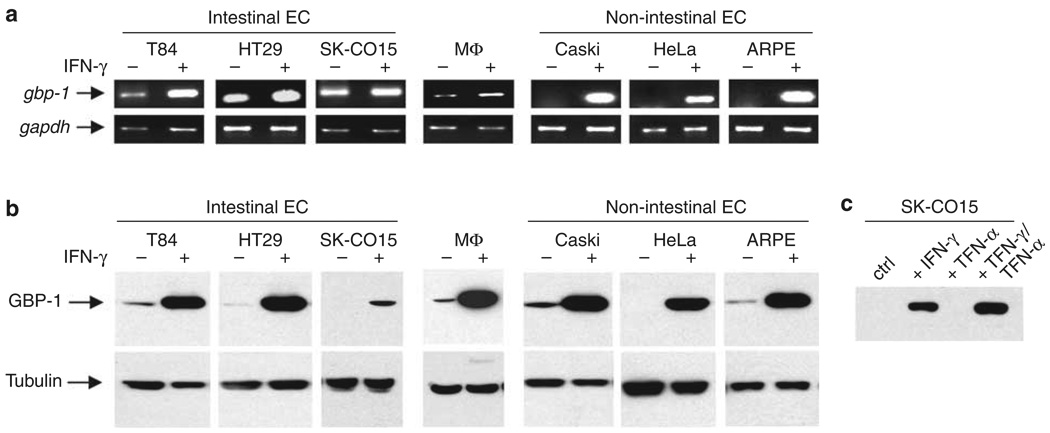
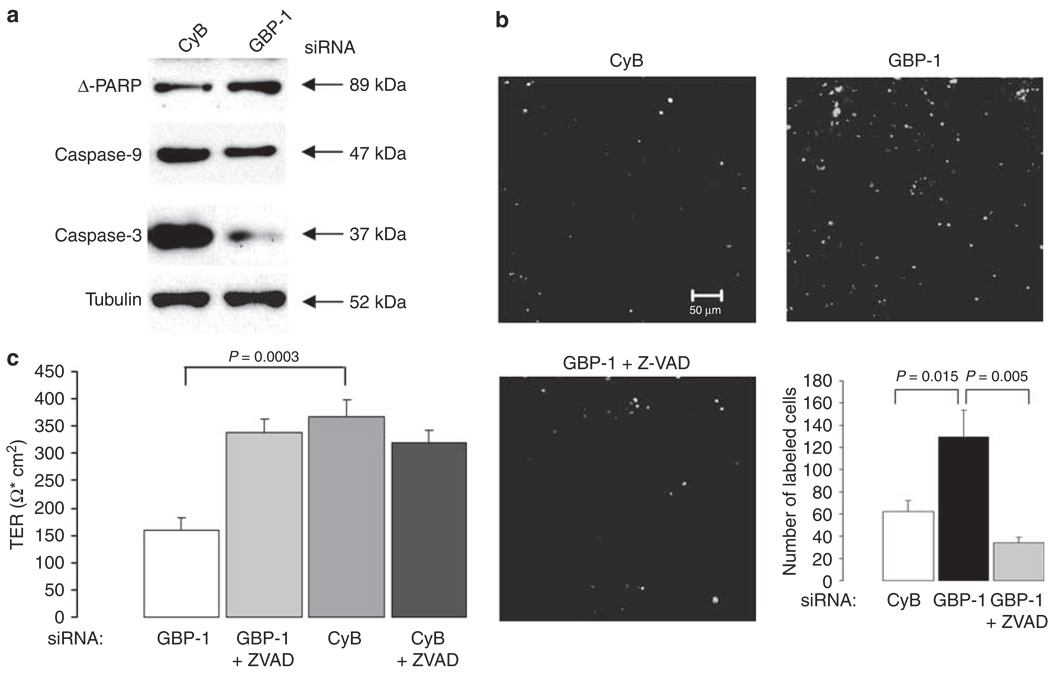
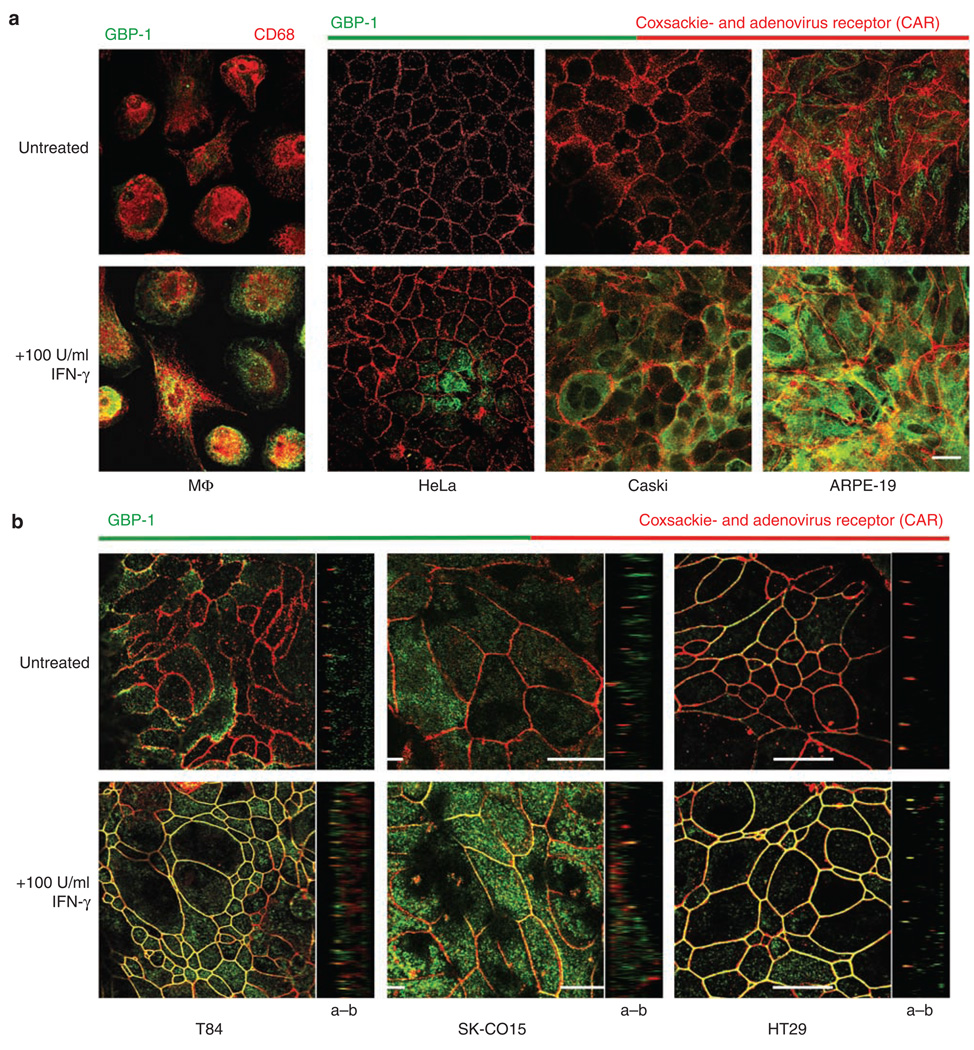
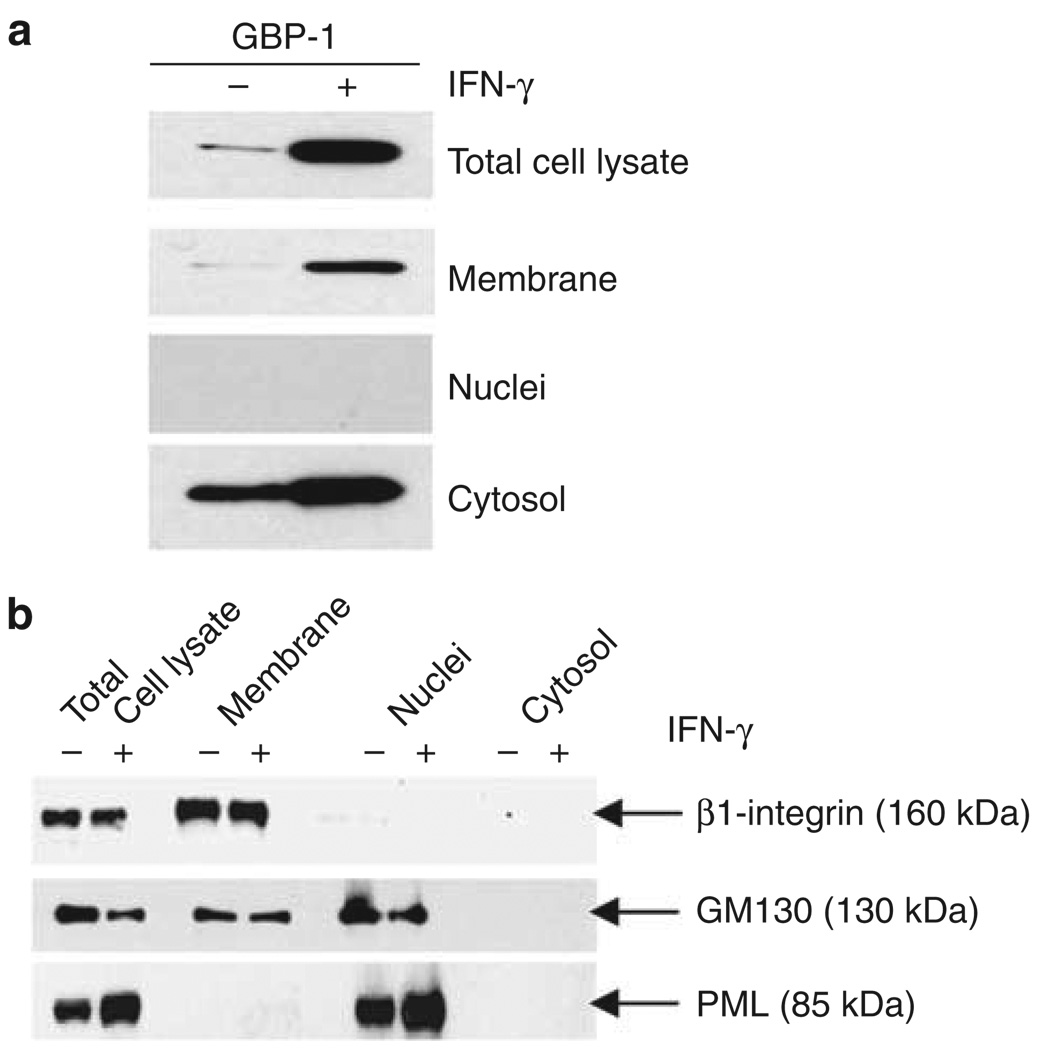
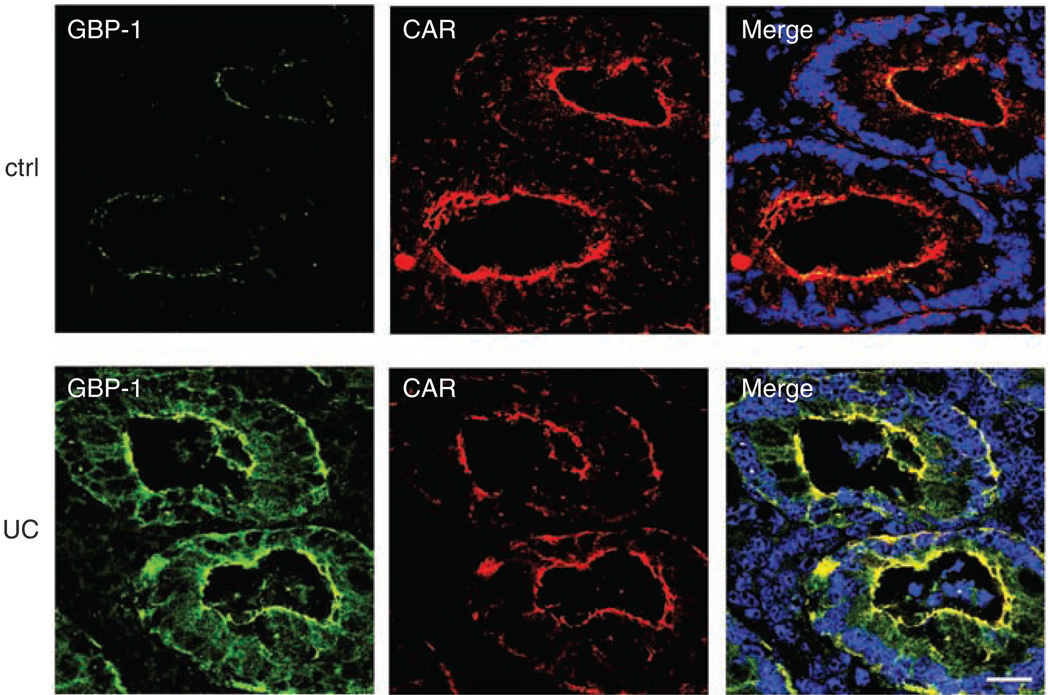
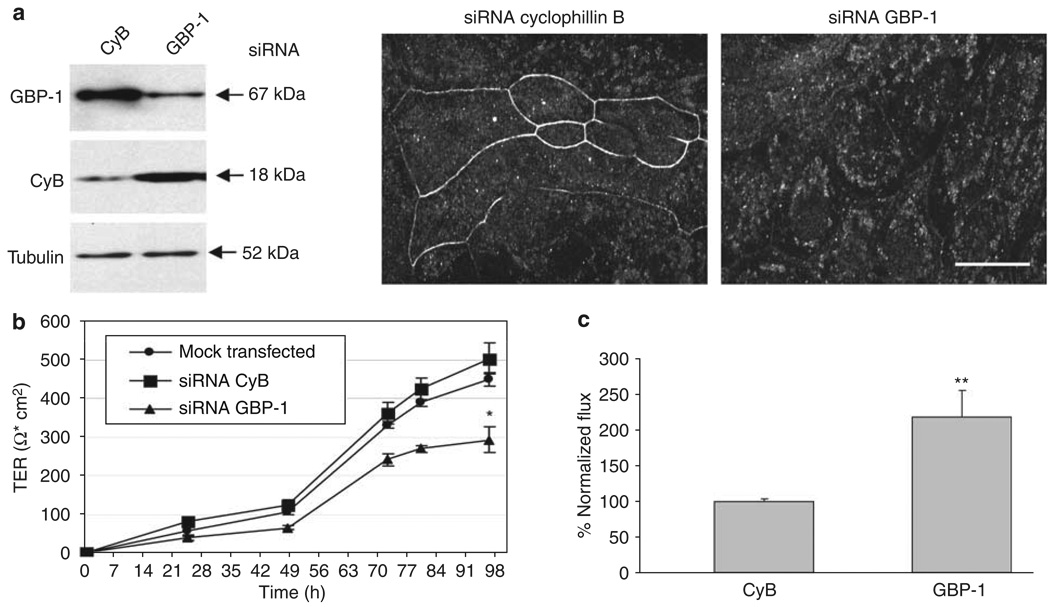
Guanylate-binding protein-1 (GBP-1) is an interferon inducible large GTPase involved in endothelial cell proliferation and invasion. In this report, expression and function of GBP-1 were investigated in vitro in intestinal epithelia after exposure to interferon-gamma and in human colonic mucosa from individuals with inflammatory bowel disease (IBD). Interestingly, in contrast to other epithelia, GBP-1 distributed to the plasma membrane in intestinal epithelial cells where it colocalized with the tight junction protein coxsackie- and adenovirus receptor. In addition, expression of GBP-1 was upregulated in colonic epithelia of individuals with IBD. Downregulation of GBP-1 by siRNA resulted in enhanced permeability that correlated with increased apoptosis. Indeed, inhibition of caspase activity prevented the inhibition of barrier formation induced by the loss of GBP-1. These data suggest that GBP-1 is a novel marker of intestinal mucosal inflammation that may protect against epithelial apoptosis induced by inflammatory cytokines and subsequent loss of barrier function.
鸟苷酸结合蛋白-1(GBP-1)是一种干扰素诱导的大型GTP酶,参与内皮细胞增殖和侵袭。在本报告中,研究了GBP-1在体外经γ干扰素处理后的肠上皮细胞以及炎症性肠病(IBD)患者的人结肠黏膜中的表达和功能。有趣的是,与其他上皮细胞不同,GBP-1在肠上皮细胞的质膜上分布,在那里它与紧密连接蛋白柯萨奇病毒和腺病毒受体共定位。此外,IBD患者结肠上皮中GBP-1的表达上调。通过小干扰RNA(siRNA)下调GBP-1导致通透性增强,这与细胞凋亡增加相关。事实上,抑制半胱天冬酶活性可防止因GBP-1缺失诱导的屏障形成抑制。这些数据表明,GBP-1是肠黏膜炎症的一种新标志物,可能保护免受炎症细胞因子诱导的上皮细胞凋亡及随后的屏障功能丧失。