Bréchot Nicolas, Gomez Elisa, Bignon Marine, Khallou-Laschet Jamila, Dussiot Michael, Cazes Aurélie, Alanio-Bréchot Cécile, Durand Mélanie, Philippe Josette, Silvestre Jean-Sébastien, Van Rooijen Nico, Corvol Pierre, Nicoletti Antonino, Chazaud Bénédicte, Germain Stéphane
INSERM, U833, Paris, France.
PLoS One. 2008;3(12):e3950. doi: 10.1371/journal.pone.0003950. Epub 2008 Dec 16.
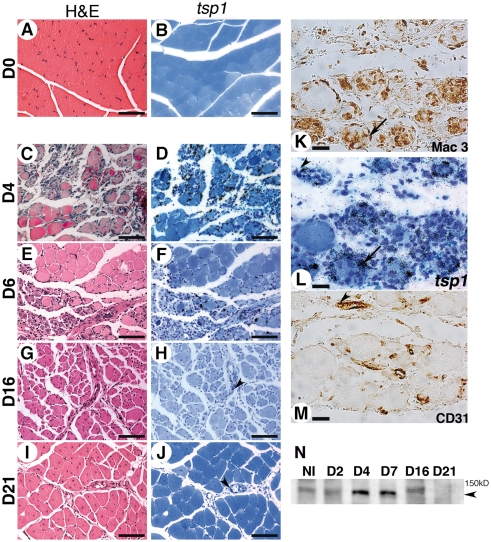
Macrophages, key regulators of healing/regeneration processes, strongly infiltrate ischemic tissues from patients suffering from critical limb ischemia (CLI). However pro-inflammatory markers correlate with disease progression and risk of amputation, suggesting that modulating macrophage activation state might be beneficial. We previously reported that thrombospondin-1 (TSP-1) is highly expressed in ischemic tissues during CLI in humans. TSP-1 is a matricellular protein that displays well-known angiostatic properties in cancer, and regulates inflammation in vivo and macrophages properties in vitro. We therefore sought to investigate its function in a mouse model of CLI.
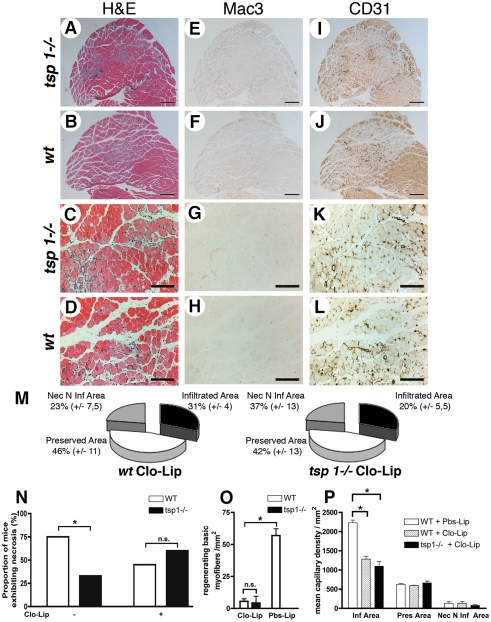
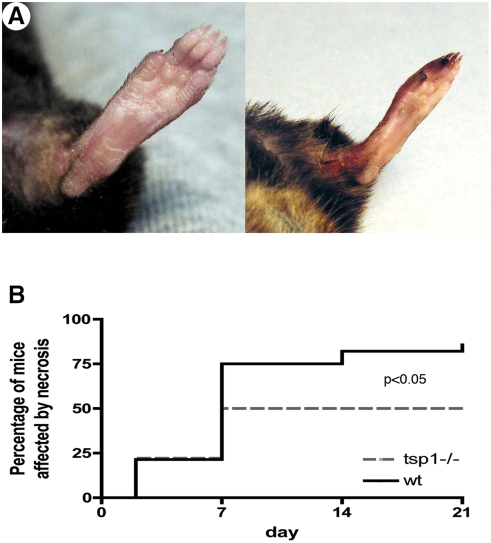
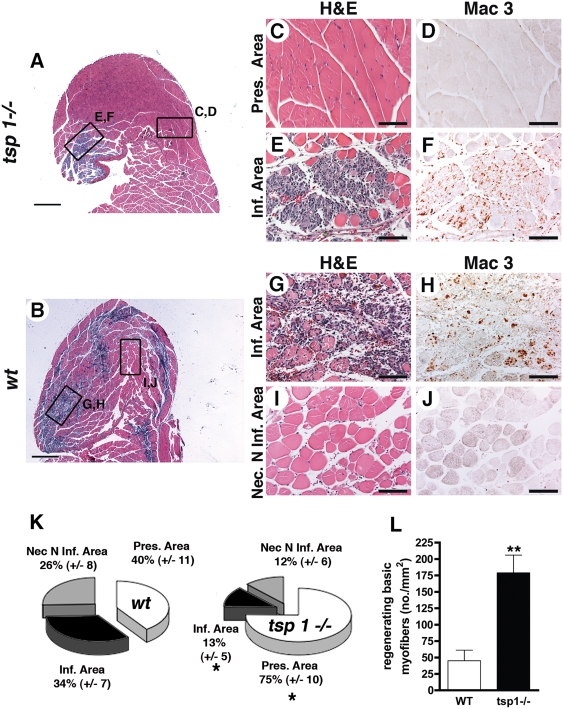
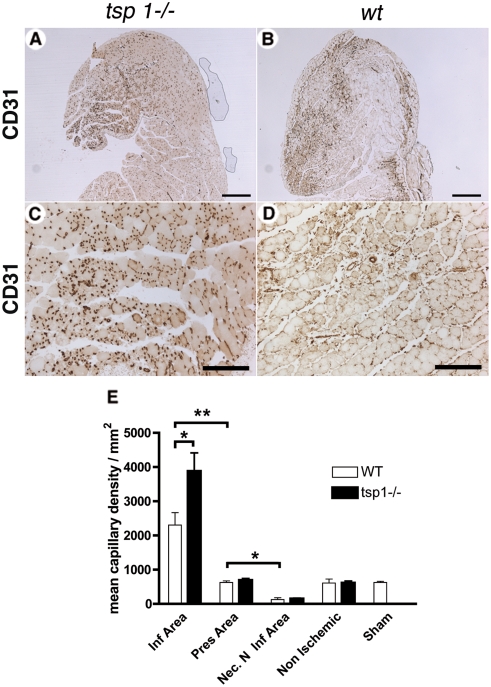
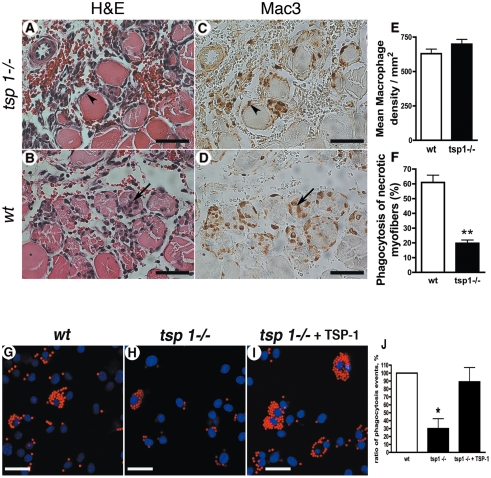
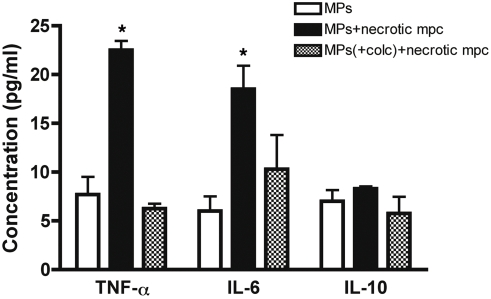
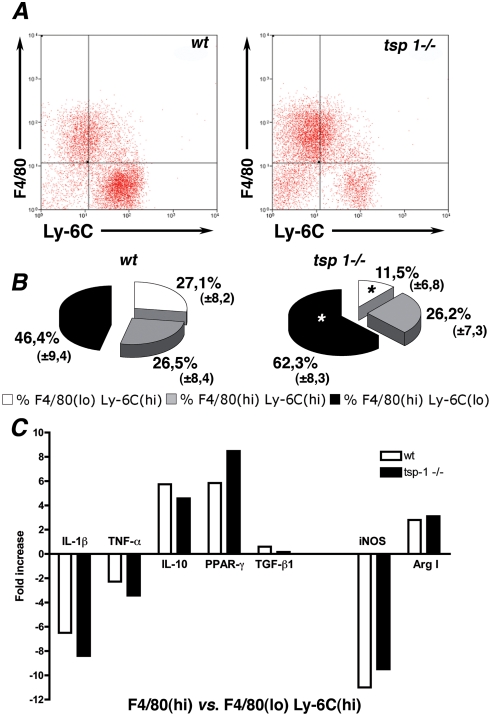
Using a genetic model of tsp-1(-/-) mice subjected to femoral artery excision, we report that tsp-1(-/-) mice were clinically and histologically protected from necrosis compared to controls. Tissue protection was associated with increased postischemic angiogenesis and muscle regeneration. We next showed that macrophages present in ischemic tissues exhibited distinct phenotypes in tsp-1(-/-) and wt mice. A strong reduction of necrotic myofibers phagocytosis was observed in tsp-1(-/-) mice. We next demonstrated that phagocytosis of muscle cell debris is a potent pro-inflammatory signal for macrophages in vitro. Consistently with these findings, macrophages that infiltrated ischemic tissues exhibited a reduced postischemic pro-inflammatory activation state in tsp-1(-/-) mice, characterized by a reduced Ly-6C expression and a less pro-inflammatory cytokine expression profile. Finally, we showed that monocyte depletion reversed clinical and histological protection from necrosis observed in tsp-1(-/-) mice, thereby demonstrating that macrophages mediated tissue protection in these mice.
This study defines targeting postischemic macrophage activation state as a new potential therapeutic approach to protect tissues from necrosis and promote tissue repair during CLI. Furthermore, our data suggest that phagocytosis plays a crucial role in promoting a deleterious intra-tissular pro-inflammatory macrophage activation state during critical injuries. Finally, our results describe TSP-1 as a new relevant physiological target during critical leg ischemia.
巨噬细胞是愈合/再生过程的关键调节因子,在患有严重肢体缺血(CLI)的患者的缺血组织中大量浸润。然而,促炎标志物与疾病进展和截肢风险相关,这表明调节巨噬细胞激活状态可能有益。我们之前报道,在人类CLI期间,血小板反应蛋白-1(TSP-1)在缺血组织中高表达。TSP-1是一种基质细胞蛋白,在癌症中具有众所周知的血管生成抑制特性,并在体内调节炎症以及在体外调节巨噬细胞特性。因此,我们试图在CLI小鼠模型中研究其功能。
使用股动脉切除的tsp-1(-/-)小鼠的遗传模型,我们报告与对照组相比,tsp-1(-/-)小鼠在临床和组织学上免受坏死影响。组织保护与缺血后血管生成增加和肌肉再生有关。接下来我们表明,缺血组织中的巨噬细胞在tsp-1(-/-)和野生型小鼠中表现出不同的表型。在tsp-1(-/-)小鼠中观察到坏死肌纤维吞噬作用显著降低。接下来我们证明,肌肉细胞碎片的吞噬作用在体外是巨噬细胞的一种强大的促炎信号。与这些发现一致,浸润缺血组织的巨噬细胞在tsp-1(-/-)小鼠中表现出缺血后促炎激活状态降低,其特征是Ly-6C表达降低和促炎细胞因子表达谱减弱。最后,我们表明单核细胞耗竭逆转了在tsp-1(-/-)小鼠中观察到的对坏死的临床和组织学保护,从而证明巨噬细胞介导了这些小鼠的组织保护。
本研究将靶向缺血后巨噬细胞激活状态定义为一种新的潜在治疗方法,以保护组织免受坏死并促进CLI期间的组织修复。此外,我们的数据表明吞噬作用在严重损伤期间促进有害的组织内促炎巨噬细胞激活状态中起关键作用。最后,我们的结果将TSP-1描述为严重腿部缺血期间一个新的相关生理靶点。