Center for Precision Medicine and Division of Cardiovascular Medicine, University of Missouri School of Medicine, Columbia, MO, USA.
Center for Precision Medicine and Division of Cardiovascular Medicine, University of Missouri School of Medicine, Columbia, MO, USA; Laboratory of Children's Cardiovascular Disease, Children's Hospital of Chongqing Medical University, Chongqing, China.
Eur J Pharmacol. 2020 Aug 15;881:173233. doi: 10.1016/j.ejphar.2020.173233. Epub 2020 May 31.
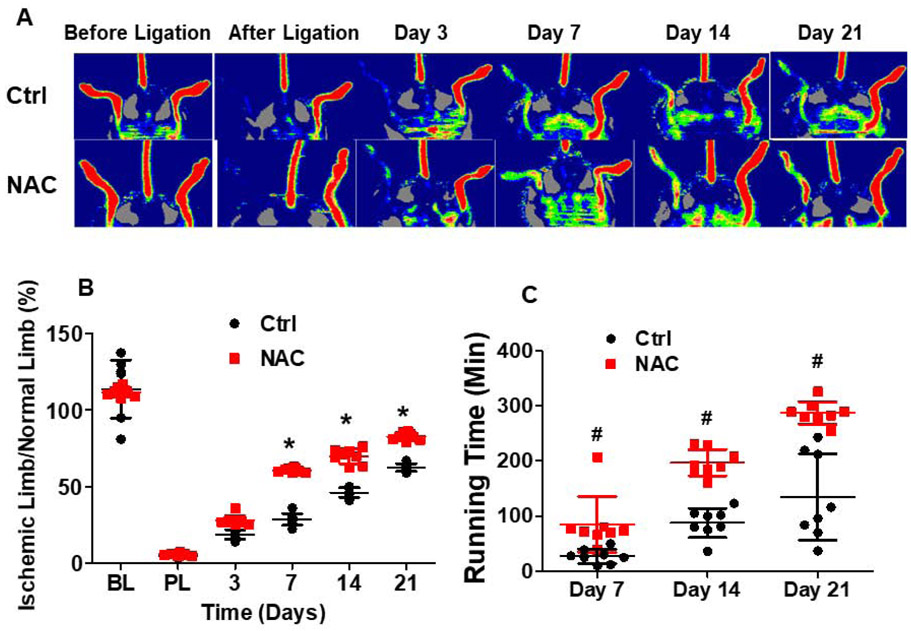
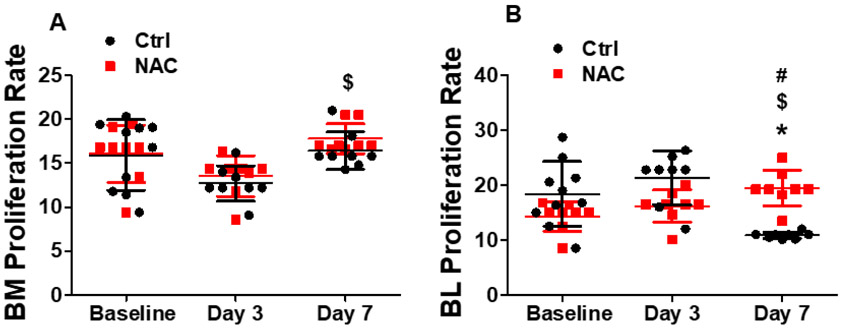
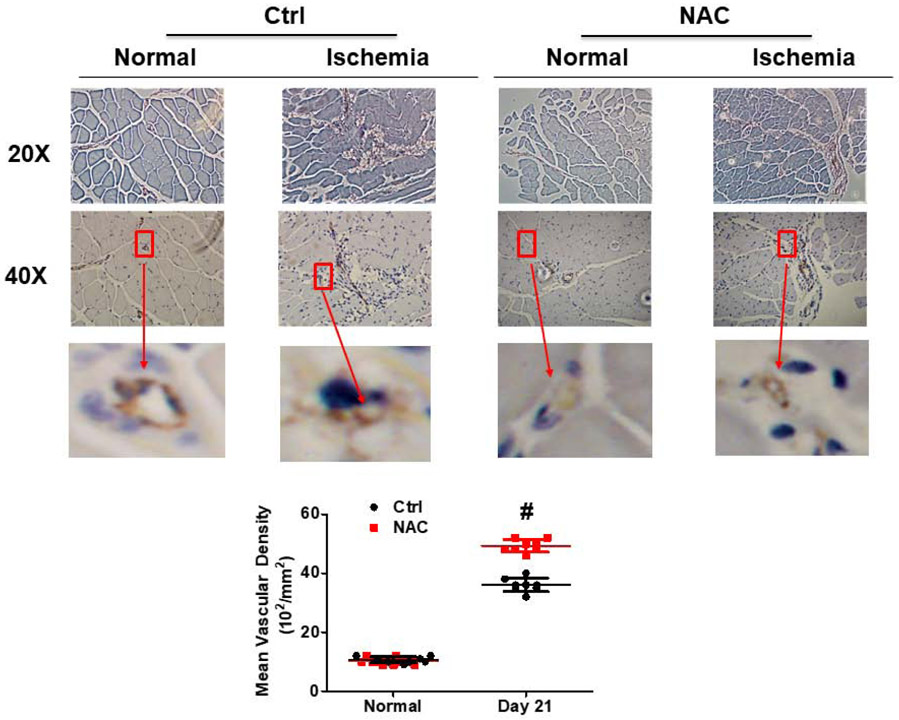
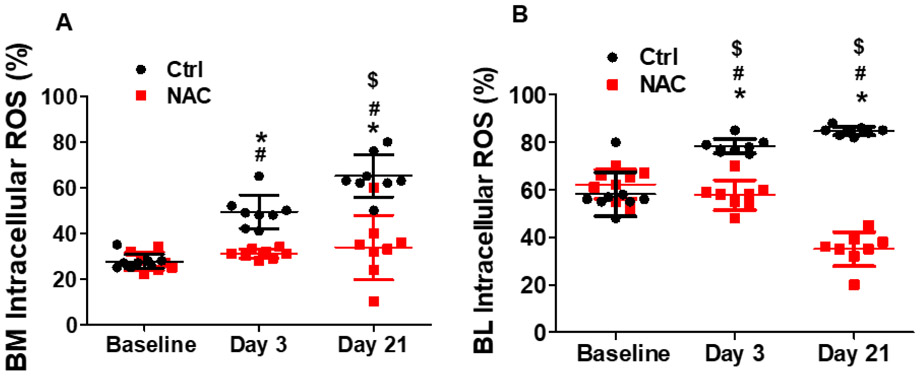
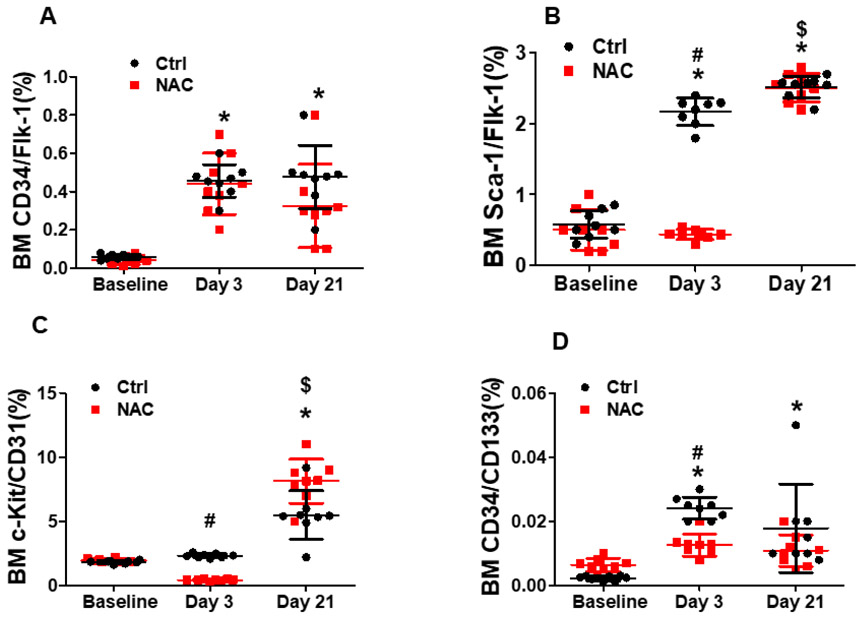
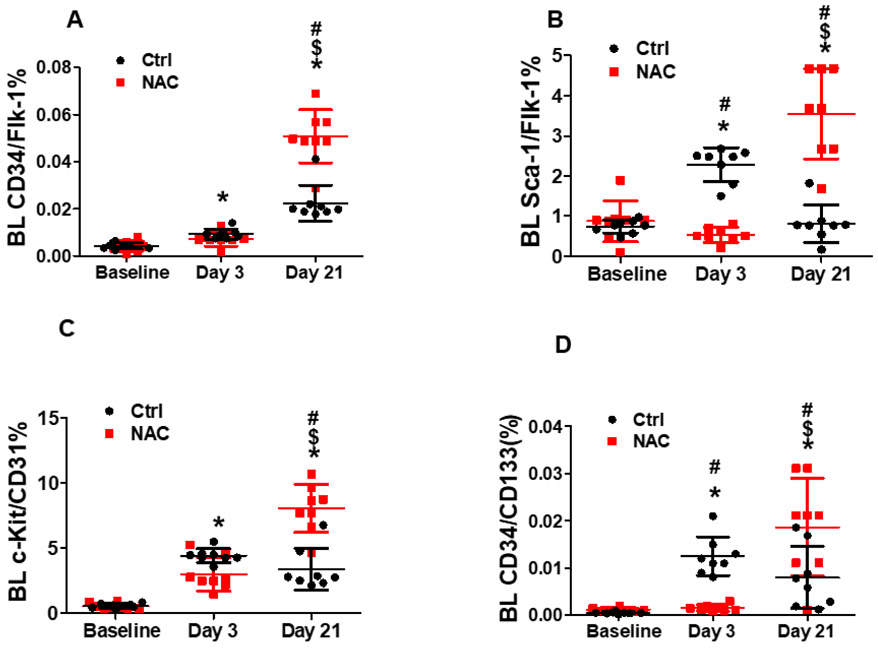
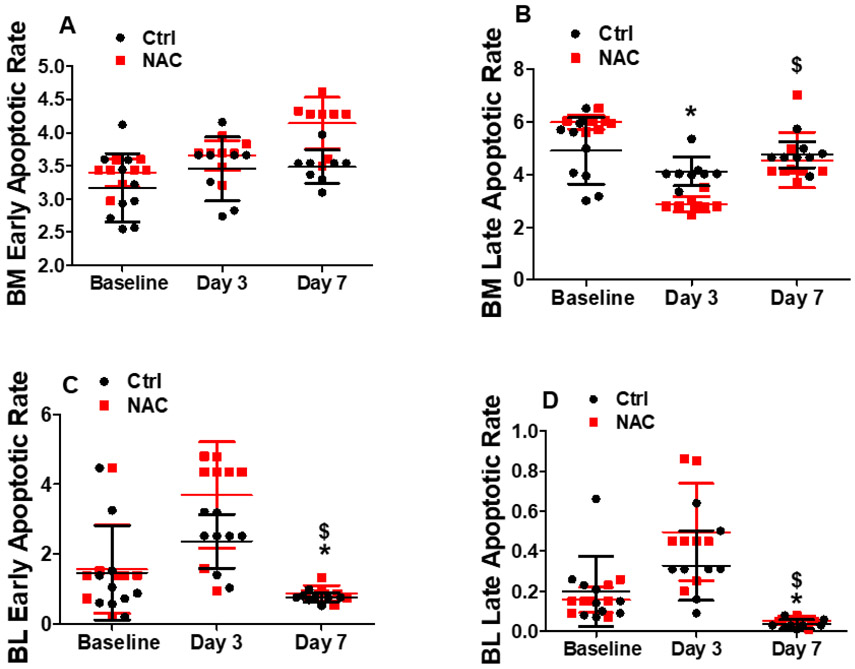
Endothelial progenitor cells (EPCs) are important to tissue repair and regeneration especially after ischemic injury, and very heterogeneous in phenotypes and biological features. Reactive oxygen species are involved in regulating EPC number and function. N-acetylcysteine (NAC) inhibits ischemia-induced reactive oxygen species formation and promotes ischemic limb recovery. This study was to evaluate the effect of NAC on EPC subpopulations in bone marrow (BM) and blood in mice with limb ischemia. Limb ischemia was induced by femoral artery ligation in male C57BL/6 mice with or without NAC treatment. EPC subpopulations, intracellular reactive oxygen species production, cell proliferation and apoptosis in BM and blood cells were analyzed at baseline, day 3 (acute ischemia) and 21 (chronic) after ligation. c-Kit+/CD31+, Sca-1+/Flk-1+, CD34+/CD133+, and CD34+/Flk-1+ were used to define EPC subpopulations. Limb blood flow, function, muscle structure, and capillary density were evaluated with laser Doppler perfusion imaging, treadmill test, and immunohistochemistry, respectively, at day 3, 7, 14 and 21 post ischemia. Reactive oxygen species production in circulating and BM mononuclear cells and EPCs populations were significantly increased in BM and blood in mice with acute and chronic ischemia. NAC treatment effectively blocked ischemia-induced reactive oxygen species production in circulating and BM mononuclear cells, and selectively increased EPC population in circulation, not BM, with preserved proliferation in mice with chronic ischemia, and enhanced limb blood flow and function recovery, while preventing acute ischemia-induced increase in BM and circulating EPCs. These data demonstrated that NAC selectively enhanced circulating EPC population in mice with chronic limb ischemia.
内皮祖细胞(EPCs)对于组织修复和再生非常重要,尤其是在缺血性损伤后,其表型和生物学特征非常多样化。活性氧参与调节 EPC 的数量和功能。N-乙酰半胱氨酸(NAC)可抑制缺血诱导的活性氧形成并促进缺血肢体恢复。本研究旨在评估 NAC 对缺血性肢体小鼠骨髓(BM)和血液中 EPC 亚群的影响。雄性 C57BL/6 小鼠通过股动脉结扎诱导肢体缺血,并用或不用 NAC 处理。在结扎后第 3 天(急性缺血)和第 21 天(慢性),分析 BM 和血液细胞中的 EPC 亚群、细胞内活性氧产生、细胞增殖和凋亡。c-Kit+/CD31+、Sca-1+/Flk-1+、CD34+/CD133+和 CD34+/Flk-1+用于定义 EPC 亚群。通过激光多普勒灌注成像、跑步机试验和免疫组织化学分别在第 3、7、14 和 21 天评估肢体血流、功能、肌肉结构和毛细血管密度。在急性和慢性缺血的小鼠中,循环和 BM 单核细胞以及 EPC 群体中的活性氧产生显著增加。NAC 治疗可有效阻断循环和 BM 单核细胞中的缺血诱导的活性氧产生,并选择性增加慢性缺血小鼠的循环 EPC 群体,而不增加 BM,同时保持增殖,并增强肢体血流和功能恢复,同时预防急性缺血诱导的 BM 和循环 EPC 增加。这些数据表明,NAC 选择性地增强了慢性肢体缺血小鼠的循环 EPC 群体。