Department of Economics 549 Evans Hall, #3880 University of California Berkeley Berkeley, CA 94720-3880
Am Econ Rev. 2008 Dec;98(5):2242-2258. doi: 10.1257/aer.98.5.2242.
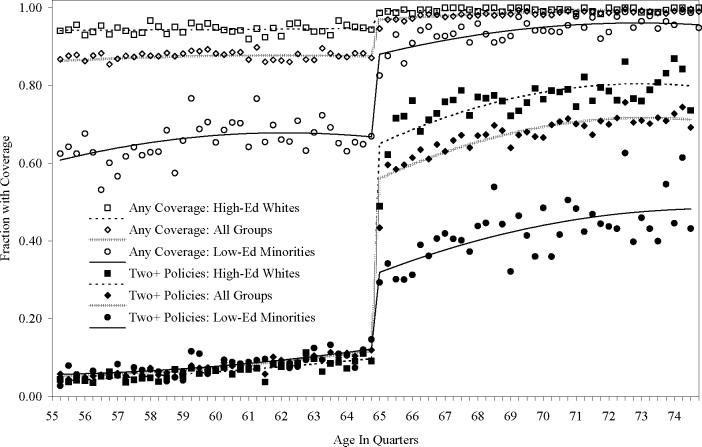
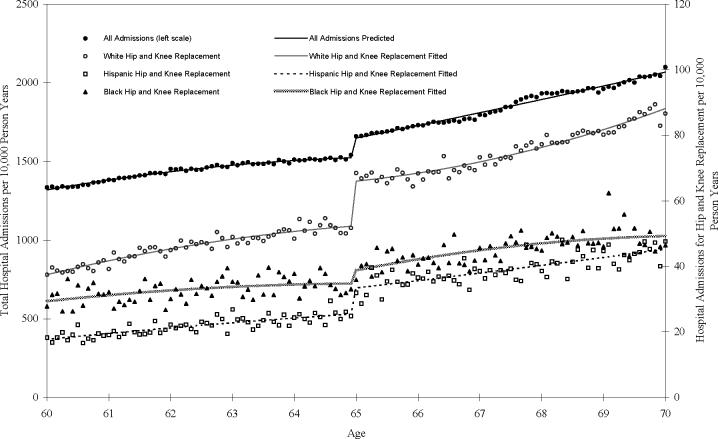
The onset of Medicare eligibility at age 65 leads to sharp changes in the health insurance coverage of the U.S. population. These changes lead to increases in the use of medical services, with a pattern of gains across socioeconomic groups that varies by type of service. While routine doctor visits increase more for groups that previously lacked insurance, hospital admissions for relatively expensive procedures like bypass surgery and joint replacement increase more for previously insured groups that are more likely to have supplementary coverage after 65, reflecting the relative generosity of their combined insurance package under Medicare.
医疗保险资格在 65 岁时开始,这导致了美国人口健康保险覆盖范围的急剧变化。这些变化导致医疗服务的使用增加,不同类型的服务在社会经济群体中的增加模式也有所不同。虽然对于以前没有保险的群体来说,常规医生就诊的增加幅度更大,但对于以前有保险的群体来说,像旁路手术和关节置换等相对昂贵的程序的住院治疗增加幅度更大,这是因为他们在 65 岁后更有可能获得补充保险,反映了他们在医疗保险下的综合保险计划的相对慷慨。