Sundfeld Renato Herman, Croll Theodore P, Mauro Silvio José, Briso André Luiz Fraga, de Alexandre Rodrigo Sversut, Sundefeld Maria Lúcia Marçal Mazza
Department of Restorative Dentistry of Araçatuba Dental School - São Paulo State University - UNESP - Araçatuba, São Paulo, Brazil.
J Appl Oral Sci. 2006 Jan;14(1):27-32. doi: 10.1590/s1678-77572006000100006.
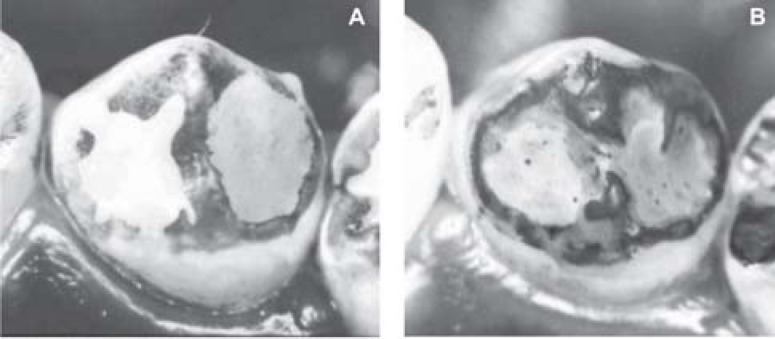
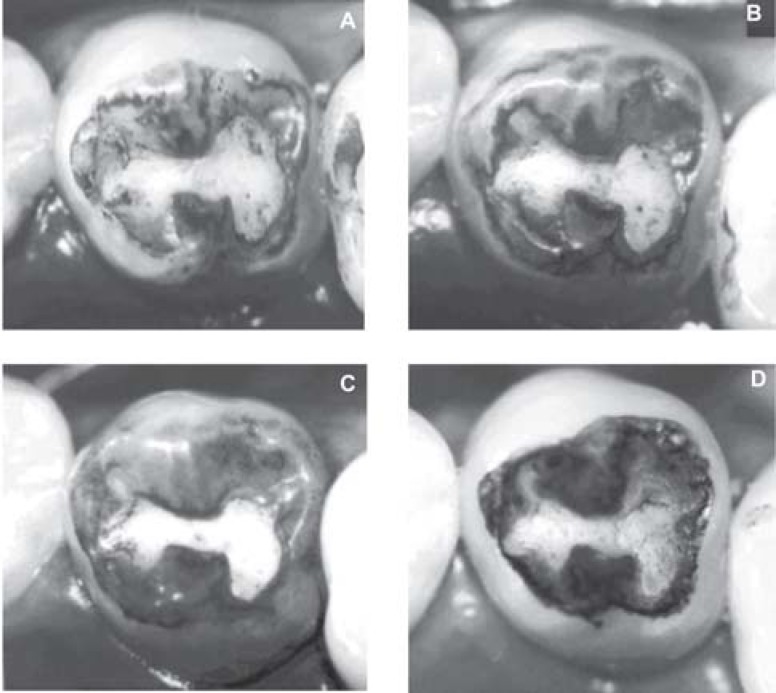
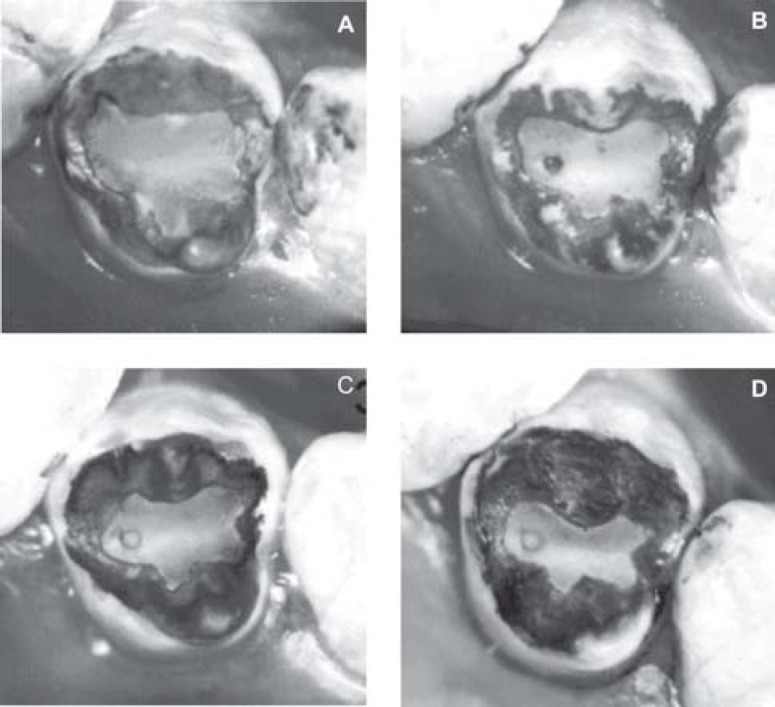
The purpose of this study was to employ photographic evaluation to observe the presence or absence of bubbles in pit and fissure sealants Concise and Prisma Shield, at 7 days, 18 months, 36 months and 11 years after accomplishment of treatment.
A hematoxylin-based staining solution was applied to the occlusal surface at the study periods, which allowed assessment of the sealing material on the surface. All occlusal surfaces were photographed and the photographs corresponding to each period were subjected to photographic evaluation.
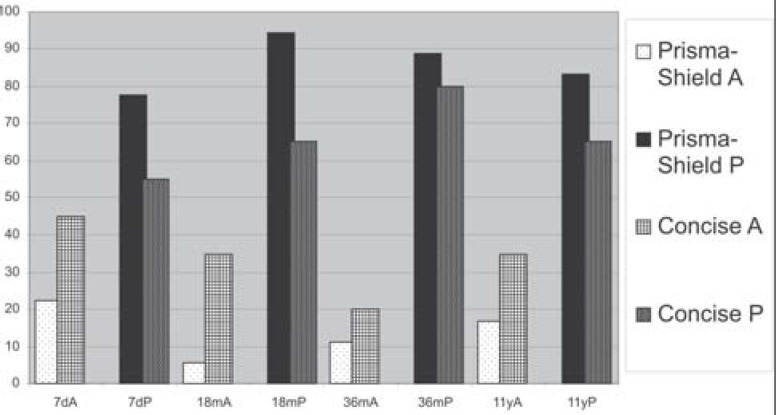
There was statistically significant difference only at 18 months, with a significantly higher number of specimens with bubbles for the Prisma Shield sealant compared to the Concise, whereas the groups were similar at all other study periods. On the other hand, separate analysis of subsequent periods of the sealants did not reveal any significant difference.
According to the results of the present longitudinal investigation, it may be concluded that the sealing materials showed that bubbles came into and went out with time. However, this fact did not interfere with its clinical purpose, provided the remaining material covers the expected region of pits and fissures.
本研究的目的是通过照片评估,观察在完成治疗后的7天、18个月、36个月和11年时,窝沟封闭剂Concise和Prisma Shield中是否存在气泡。
在研究期间,将基于苏木精的染色溶液应用于咬合面,以便评估表面的封闭材料。对所有咬合面进行拍照,并对每个时期对应的照片进行照片评估。
仅在18个月时存在统计学显著差异,与Concise封闭剂相比,Prisma Shield封闭剂有气泡的标本数量显著更多,而在所有其他研究时期,两组相似。另一方面,对封闭剂后续时期的单独分析未发现任何显著差异。
根据本纵向研究的结果,可以得出结论,封闭材料显示气泡随时间进出。然而,只要剩余材料覆盖预期的窝沟区域,这一事实并不影响其临床用途。