Cypriano Silvia, Hoffmann Rosana H S, de Sousa Maria da Luz R, Wada Ronaldo S
Department of Preventive Dentistry, Pontifical Catholic University, Campinas, SP, Brazil.
J Appl Oral Sci. 2008 Jul-Aug;16(4):286-92. doi: 10.1590/s1678-77572008000400011.
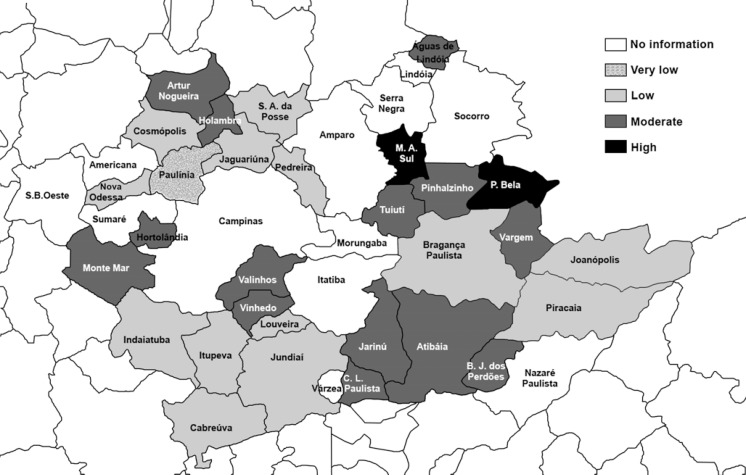
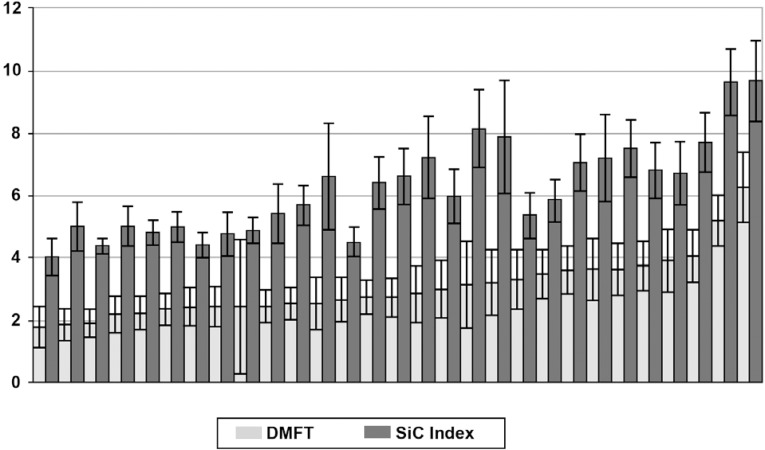
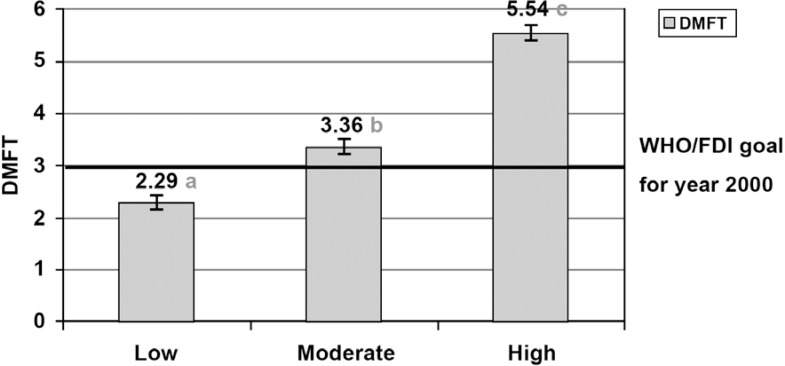
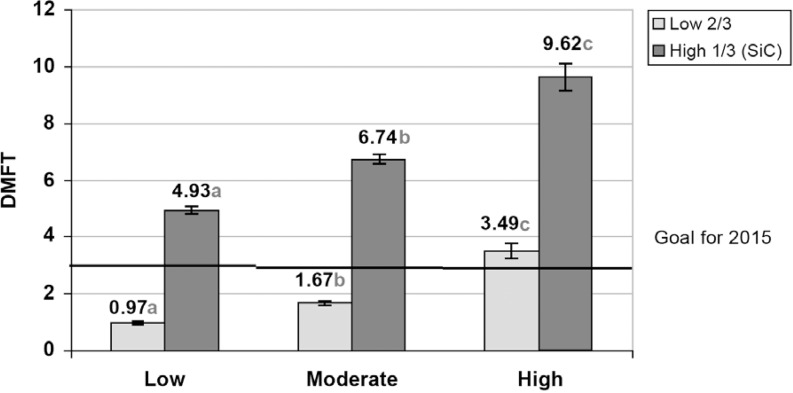
The aim of this study was to evaluate the prevalence of caries-free children using DMFT and significant caries (SiC) indexes in different caries prevalence groups in cities of the region of Campinas, São Paulo State, Brazil. The methodology proposed by the World Health Organization (1997) was used for caries diagnosis in 2,378 individuals. According to the DMFT index obtained in each evaluated city, 3 prevalence groups with representative samples were formed, being classified as low, moderate and high. SiC index was used to classify the one third of the population with the highest caries prevalence. In the low prevalence group, 32.4% of the children were caries free (DMFT=0), with mean DMFT of 2.29 and SiC index of 4.93. In the moderate prevalence group, 21.8% of the children were caries free, with mean DMFT of 3.36 and SiC of 6.74. Only 6.9% of the children in the high prevalence group were caries free and the mean DMFT was 5.54 (SiC=9.62). There was a great heterogeneity in dental caries distribution within the studied population, as well as a high caries prevalence considering the 3 classifications. Other indexes besides DMFT could be used to improve oral health assessment during establishment of the treatment plan and intervention.
本研究旨在利用乳牙龋失补牙面数(DMFT)和严重龋(SiC)指数,评估巴西圣保罗州坎皮纳斯地区不同龋病流行程度城市中无龋儿童的患病率。采用世界卫生组织(1997年)提出的方法对2378名个体进行龋病诊断。根据每个评估城市获得的DMFT指数,形成了具有代表性样本的3个流行程度组,分别归类为低、中、高。SiC指数用于对龋病患病率最高的三分之一人群进行分类。在低流行程度组中,32.4%的儿童无龋(DMFT = 0),平均DMFT为2.29,SiC指数为4.93。在中等流行程度组中,21.8%的儿童无龋,平均DMFT为3.36,SiC为6.74。在高流行程度组中,只有6.9%的儿童无龋,平均DMFT为5.54(SiC = 9.62)。在所研究的人群中,龋病分布存在很大的异质性,并且考虑到这3种分类,龋病患病率很高。在制定治疗计划和干预措施时,除了DMFT之外,还可以使用其他指数来改善口腔健康评估。