Douard Véronique, Brunet Frédéric, Boussau Bastien, Ahrens-Fath Isabelle, Vlaeminck-Guillem Virginie, Haendler Bernard, Laudet Vincent, Guiguen Yann
INRA-SCRIBE IFR 140, Campus de Beaulieu, 35042 Rennes Cedex, France.
BMC Evol Biol. 2008 Dec 18;8:336. doi: 10.1186/1471-2148-8-336.
Based on the observation of an increased number of paralogous genes in teleost fishes compared with other vertebrates and on the conserved synteny between duplicated copies, it has been shown that a whole genome duplication (WGD) occurred during the evolution of Actinopterygian fish. Comparative phylogenetic dating of this duplication event suggests that it occurred early on, specifically in teleosts. It has been proposed that this event might have facilitated the evolutionary radiation and the phenotypic diversification of the teleost fish, notably by allowing the sub- or neo-functionalization of many duplicated genes.
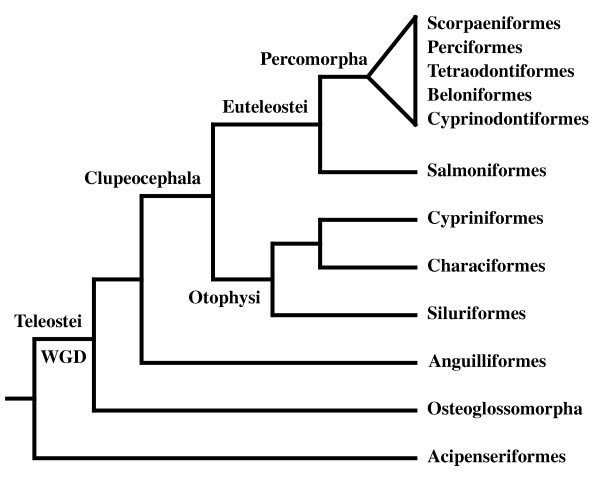
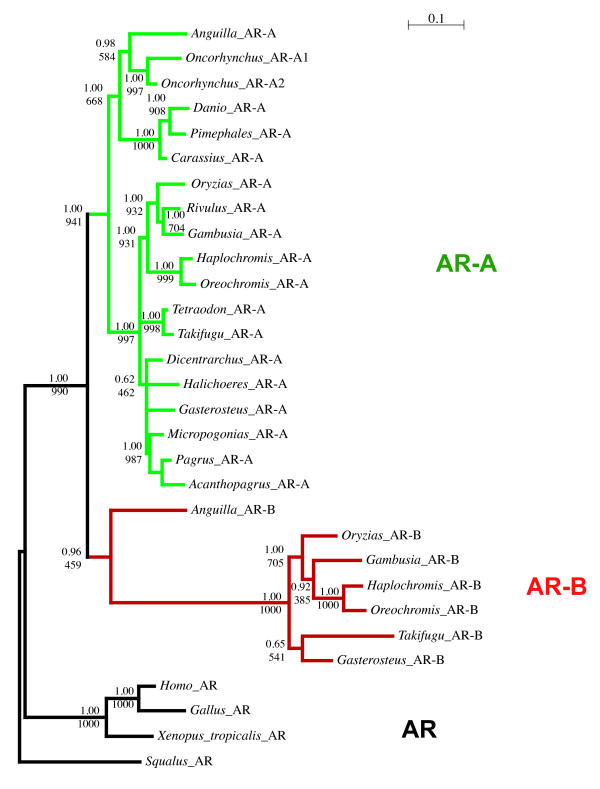
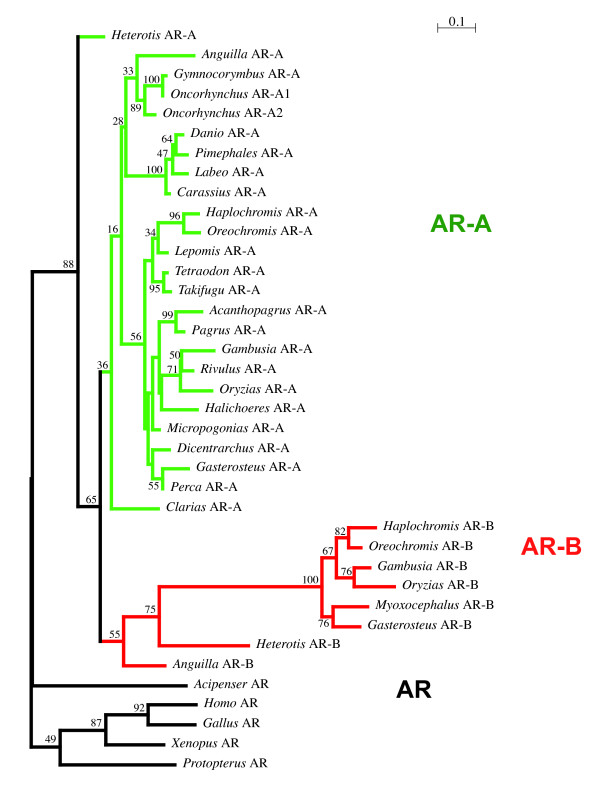
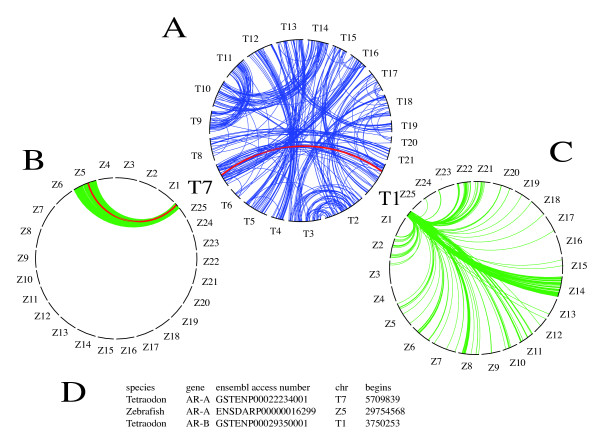
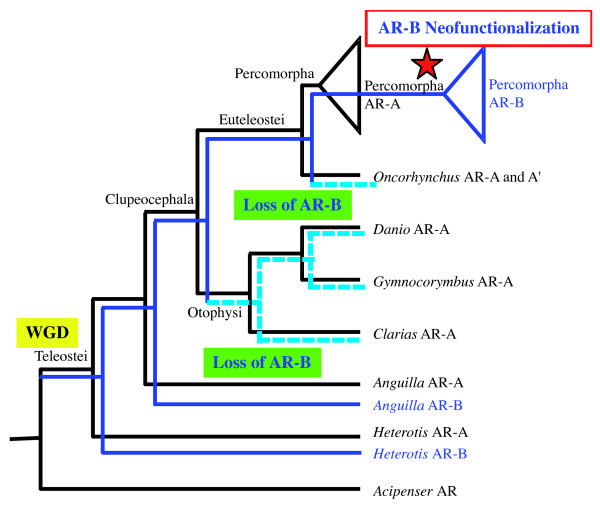
In this paper, we studied in a wide range of Actinopterygians the duplication and fate of the androgen receptor (AR, NR3C4), a nuclear receptor known to play a key role in sex-determination in vertebrates. The pattern of AR gene duplication is consistent with an early WGD event: it has been duplicated into two genes AR-A and AR-B after the split of the Acipenseriformes from the lineage leading to teleost fish but before the divergence of Osteoglossiformes. Genomic and syntenic analyses in addition to lack of PCR amplification show that one of the duplicated copies, AR-B, was lost in several basal Clupeocephala such as Cypriniformes (including the model species zebrafish), Siluriformes, Characiformes and Salmoniformes. Interestingly, we also found that, in basal teleost fish (Osteoglossiformes and Anguilliformes), the two copies remain very similar, whereas, specifically in Percomorphs, one of the copies, AR-B, has accumulated substitutions in both the ligand binding domain (LBD) and the DNA binding domain (DBD).
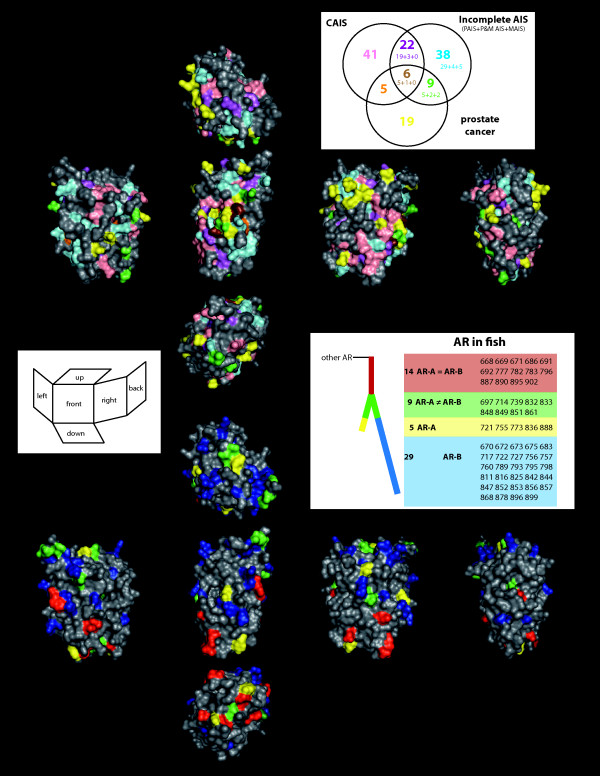
The comparison of the mutations present in these divergent AR-B with those known in human to be implicated in complete, partial or mild androgen insensitivity syndrome suggests that the existence of two distinct AR duplicates may be correlated to specific functional differences that may be connected to the well-known plasticity of sex determination in fish. This suggests that three specific events have shaped the present diversity of ARs in Actinopterygians: (i) early WGD, (ii) parallel loss of one duplicate in several lineages and (iii) putative neofunctionalization of the same duplicate in percomorphs, which occurred a long time after the WGD.
基于观察到硬骨鱼中旁系同源基因的数量相较于其他脊椎动物有所增加,以及复制拷贝之间保守的共线性,研究表明在辐鳍鱼的进化过程中发生了一次全基因组复制(WGD)。对这次复制事件进行比较系统发育年代测定表明,它发生在早期,特别是在硬骨鱼中。有人提出,这一事件可能促进了硬骨鱼的进化辐射和表型多样化,特别是通过允许许多复制基因的亚功能化或新功能化。
在本文中,我们研究了广泛的辐鳍鱼中雄激素受体(AR,NR3C4)的复制和命运,雄激素受体是一种已知在脊椎动物性决定中起关键作用的核受体。AR基因的复制模式与早期的WGD事件一致:在鲟形目从导致硬骨鱼的谱系中分化出来之后,但在骨舌鱼目分化之前,它已复制为两个基因AR - A和AR - B。除了缺乏PCR扩增外,基因组和共线性分析表明,复制拷贝之一AR - B在几个基础骨鳔总目(如鲤形目(包括模式物种斑马鱼)、鲇形目、脂鲤目和鲑形目)中丢失。有趣的是,我们还发现,在基础硬骨鱼(骨舌鱼目和鳗鲡目)中,这两个拷贝仍然非常相似,而特别是在鲈形目中,其中一个拷贝AR - B在配体结合域(LBD)和DNA结合域(DBD)中都积累了替换。
将这些不同的AR - B中存在的突变与人类中已知与完全、部分或轻度雄激素不敏感综合征相关的突变进行比较表明,两个不同的AR复制体的存在可能与特定的功能差异相关,这些差异可能与鱼类中众所周知的性决定可塑性有关。这表明有三个特定事件塑造了辐鳍鱼中ARs目前的多样性:(i)早期WGD,(ii)几个谱系中一个复制体的平行丢失,以及(iii)鲈形目中同一复制体的假定新功能化,这发生在WGD之后很长时间。