Ioannidi Eugenia, Kalamaki Mary S, Engineer Cawas, Pateraki Irene, Alexandrou Dimitris, Mellidou Ifigeneia, Giovannonni James, Kanellis Angelos K
Group of Biotechnology of Pharmaceutical Plants, Division of Pharmacognosy-Pharmacology, Department of Pharmaceutical Sciences, Aristotle University of Thessaloniki, 541 24 Thessaloniki, Greece.
J Exp Bot. 2009;60(2):663-78. doi: 10.1093/jxb/ern322. Epub 2009 Jan 6.
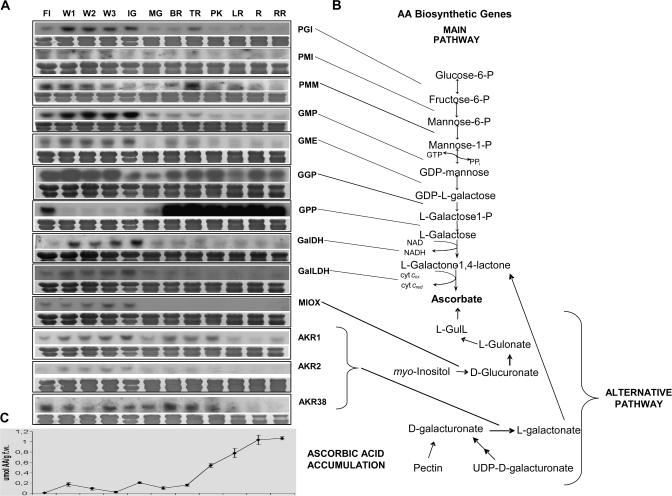
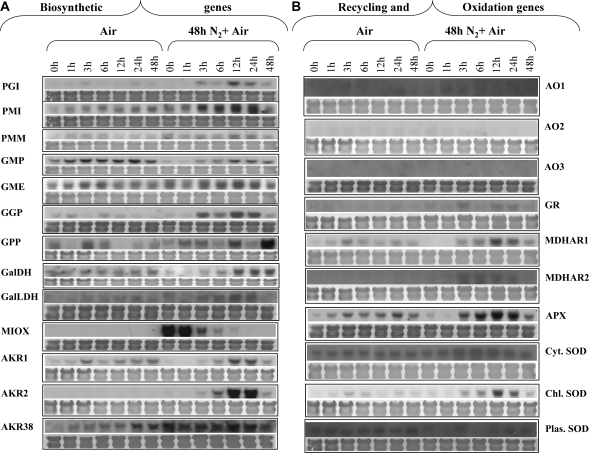
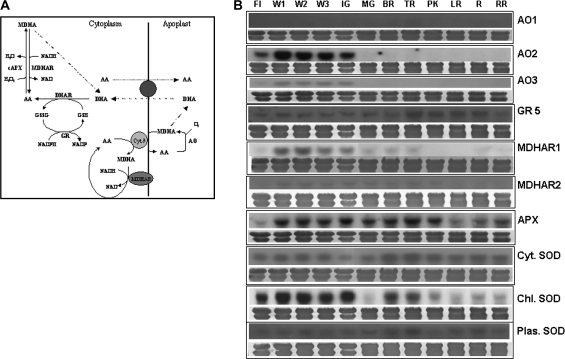
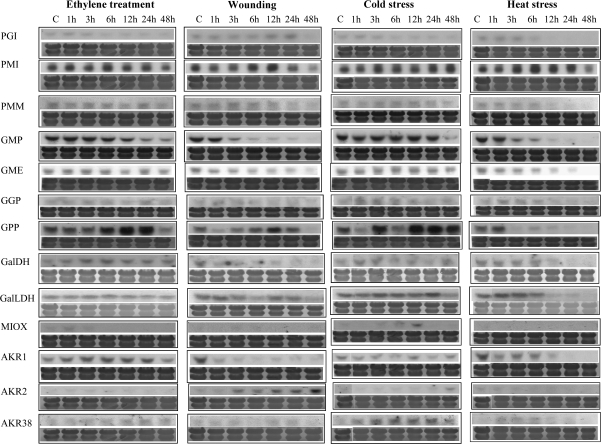
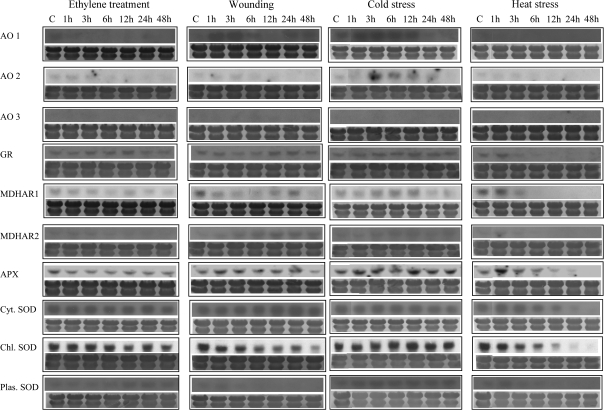
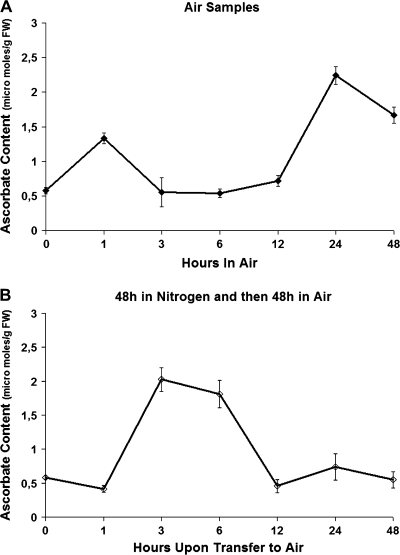
L-ascorbate (the reduced form of vitamin C) participates in diverse biological processes including pathogen defence mechanisms, and the modulation of plant growth and morphology, and also acts as an enzyme cofactor and redox status indicator. One of its chief biological functions is as an antioxidant. L-ascorbate intake has been implicated in the prevention/alleviation of varied human ailments and diseases including cancer. To study the regulation of accumulation of this important nutraceutical in fruit, the expression of 24 tomato (Solanum lycopersicon) genes involved in the biosynthesis, oxidation, and recycling of L-ascorbate during the development and ripening of fruit have been characterized. Taken together with L-ascorbate abundance data, the results show distinct changes in the expression profiles for these genes, implicating them in nodal regulatory roles during the process of L-ascorbate accumulation in tomato fruit. The expression of these genes was further studied in the context of abiotic and post-harvest stress, including the effects of heat, cold, wounding, oxygen supply, and ethylene. Important aspects of the hypoxic and post-anoxic response in tomato fruit are discussed. The data suggest that L-galactose-1-phosphate phosphatase could play an important role in regulating ascorbic acid accumulation during tomato fruit development and ripening.
L-抗坏血酸(维生素C的还原形式)参与多种生物过程,包括病原体防御机制、植物生长和形态的调节,还可作为酶辅因子和氧化还原状态指标。其主要生物学功能之一是作为抗氧化剂。摄入L-抗坏血酸与预防/缓解包括癌症在内的多种人类疾病有关。为了研究这种重要营养物质在果实中的积累调控,已对24个参与番茄(Solanum lycopersicon)果实发育和成熟过程中L-抗坏血酸生物合成、氧化和循环的基因表达进行了表征。结合L-抗坏血酸丰度数据,结果显示这些基因的表达谱有明显变化,表明它们在番茄果实L-抗坏血酸积累过程中起关键调控作用。在非生物胁迫和采后胁迫的背景下,包括热、冷、损伤、氧气供应和乙烯的影响,进一步研究了这些基因的表达。讨论了番茄果实缺氧和缺氧后反应的重要方面。数据表明,L-半乳糖-1-磷酸磷酸酶可能在番茄果实发育和成熟过程中调节抗坏血酸积累方面发挥重要作用。