Way Sharon W, McKenna James, Mietzsch Ulrike, Reith R Michelle, Wu Henry Cheng-Ju, Gambello Michael J
Division of Medical Genetics, Department of Pediatrics, University of Texas Health Science Center, Houston, TX 77030, USA.
Hum Mol Genet. 2009 Apr 1;18(7):1252-65. doi: 10.1093/hmg/ddp025. Epub 2009 Jan 15.
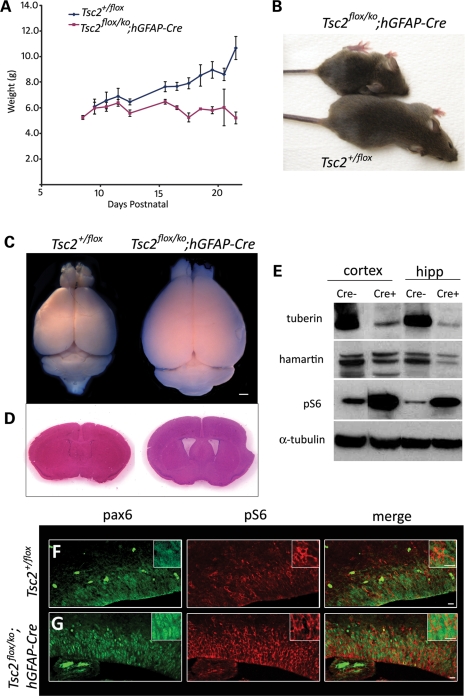
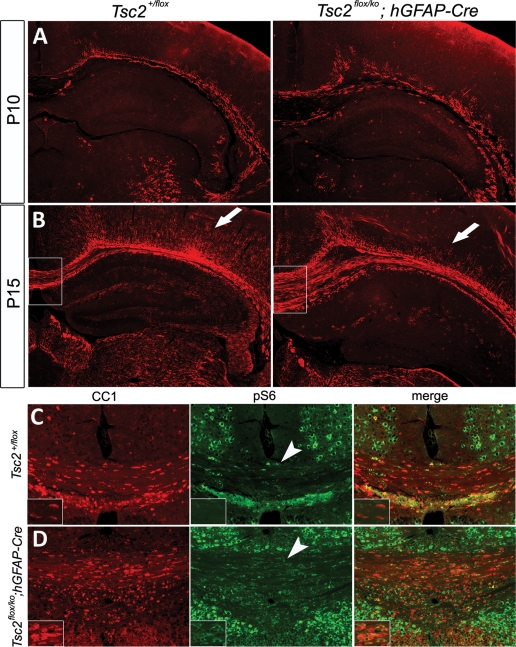
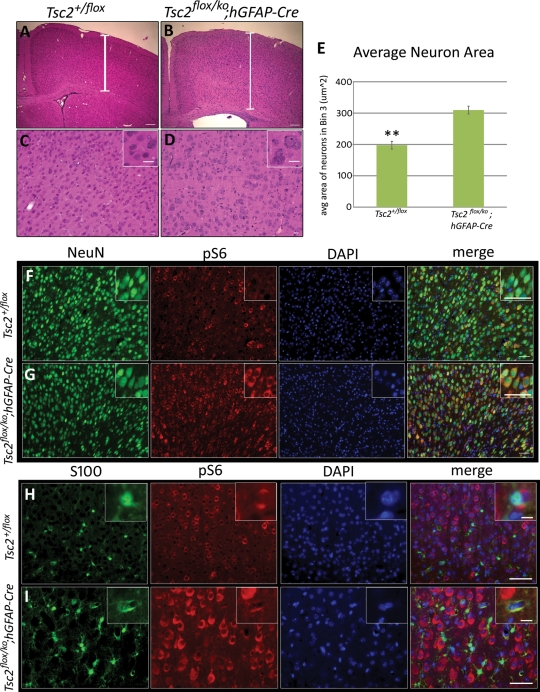
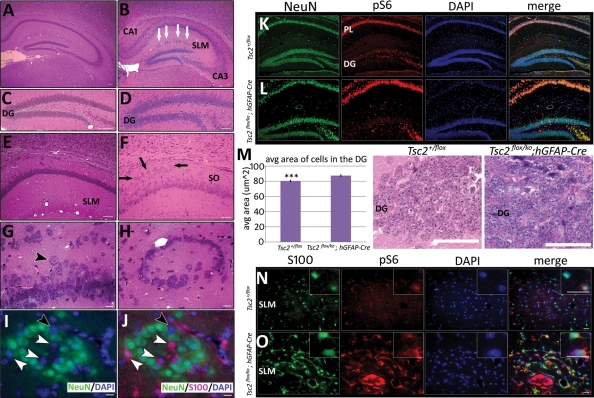
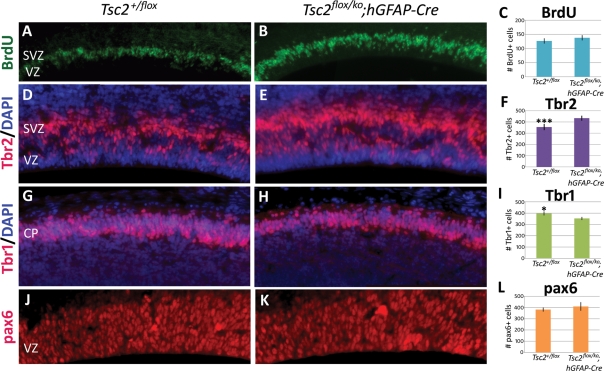
Tuberous sclerosis complex (TSC) is an autosomal dominant, tumor predisposition disorder characterized by significant neurodevelopmental brain lesions, such as tubers and subependymal nodules. The neuropathology of TSC is often associated with seizures and intellectual disability. To learn about the developmental perturbations that lead to these brain lesions, we created a mouse model that selectively deletes the Tsc2 gene from radial glial progenitor cells in the developing cerebral cortex and hippocampus. These Tsc2 mutant mice were severely runted, developed post-natal megalencephaly and died between 3 and 4 weeks of age. Analysis of brain pathology demonstrated cortical and hippocampal lamination defects, hippocampal heterotopias, enlarged dysplastic neurons and glia, abnormal myelination and an astrocytosis. These histologic abnormalities were accompanied by activation of the mTORC1 pathway as assessed by increased phosphorylated S6 in brain lysates and tissue sections. Developmental analysis demonstrated that loss of Tsc2 increased the subventricular Tbr2-positive basal cell progenitor pool at the expense of early born Tbr1-positive post-mitotic neurons. These results establish the novel concept that loss of function of Tsc2 in radial glial progenitors is one initiating event in the development of TSC brain lesions as well as underscore the importance of Tsc2 in the regulation of neural progenitor pools. Given the similarities between the mouse and the human TSC lesions, this model will be useful in further understanding TSC brain pathophysiology, testing potential therapies and identifying other genetic pathways that are altered in TSC.
结节性硬化症(TSC)是一种常染色体显性遗传的肿瘤易感疾病,其特征为显著的神经发育性脑损伤,如结节和室管膜下结节。TSC的神经病理学常与癫痫发作和智力残疾相关。为了了解导致这些脑损伤的发育扰动,我们创建了一种小鼠模型,该模型可在发育中的大脑皮层和海马体的放射状胶质祖细胞中选择性删除Tsc2基因。这些Tsc2突变小鼠严重发育不良,出生后出现巨头症,并在3至4周龄时死亡。脑病理学分析显示皮层和海马体分层缺陷、海马体异位、发育异常的神经元和胶质细胞增大、髓鞘形成异常以及星形细胞增生。通过脑裂解物和组织切片中磷酸化S6增加评估,这些组织学异常伴随着mTORC1通路的激活。发育分析表明,Tsc2的缺失增加了脑室下Tbr2阳性基底细胞祖细胞池,而牺牲了早期出生的Tbr1阳性有丝分裂后神经元。这些结果确立了一个新的概念,即放射状胶质祖细胞中Tsc2功能丧失是TSC脑损伤发展中的一个起始事件,同时也强调了Tsc2在调节神经祖细胞池中的重要性。鉴于小鼠和人类TSC损伤之间的相似性,该模型将有助于进一步了解TSC脑病理生理学、测试潜在疗法以及识别TSC中改变的其他遗传途径。