Werling Linda L, Reed Stephanie Collins, Wade Dean, Izenwasser Sari
Department of Pharmacology & Physiology, The George Washington University Medical Center, 2300 Eye Street NW, Washington, DC 20037, USA.
Int J Dev Neurosci. 2009 May;27(3):263-9. doi: 10.1016/j.ijdevneu.2008.12.008. Epub 2009 Jan 10.
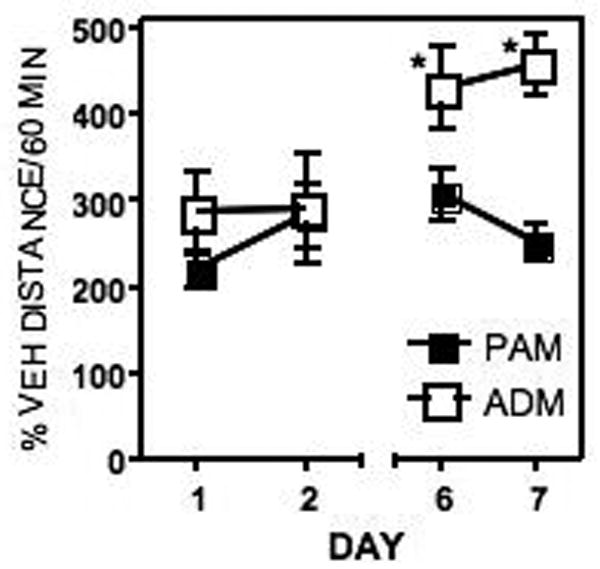
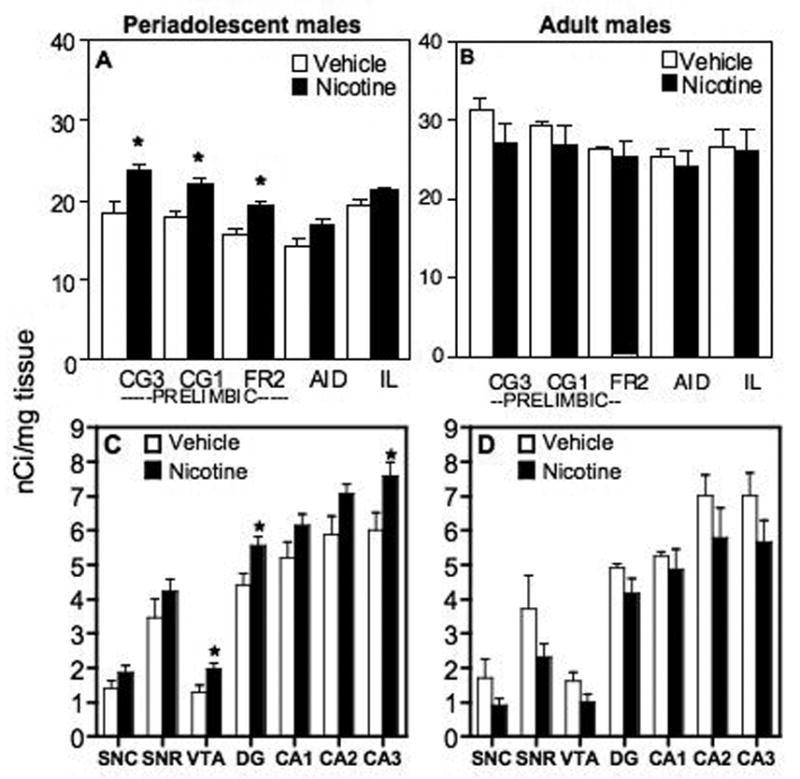
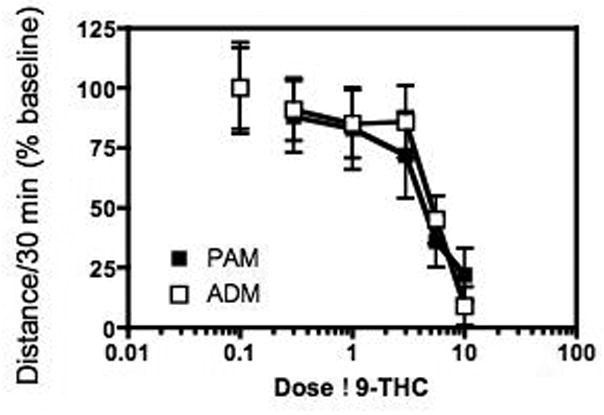
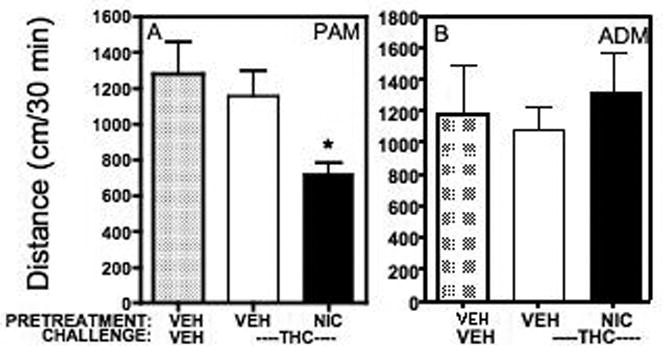
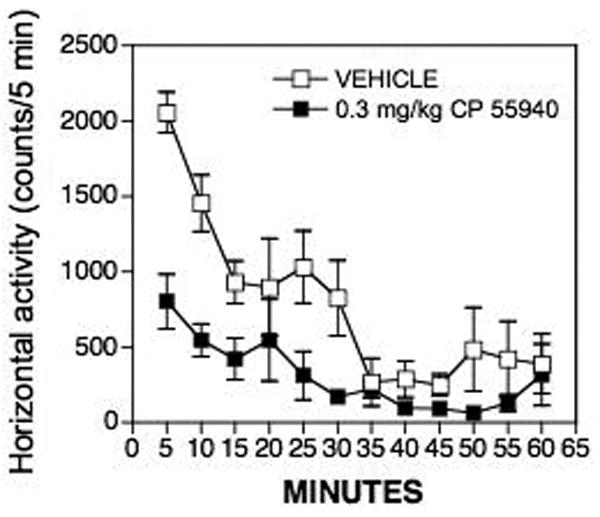
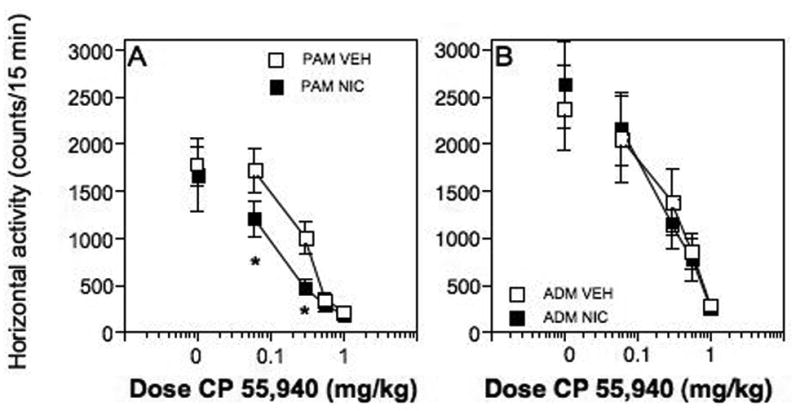
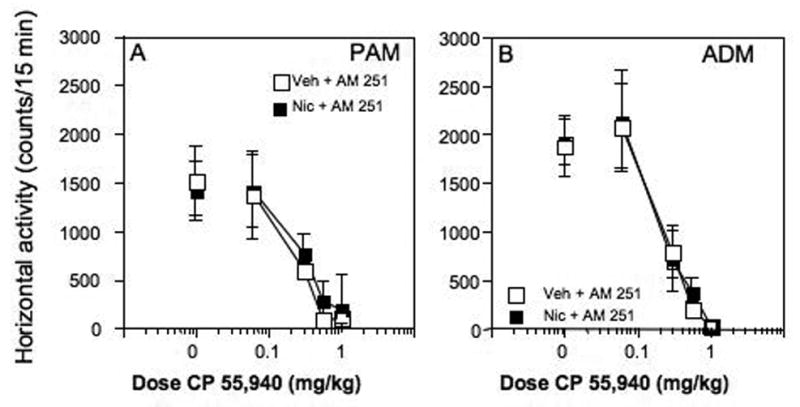
A significant number of youths use cigarettes, and more than half of the youths who smoke daily also use illicit drugs. The focus of these studies is on how exposure to nicotine affects subsequent responses to both nicotine and cannabinoids in adolescents compared with adults. We have shown previously that chronic treatment with nicotine produces sensitization to its locomotor-activating effects in female and adult rats but not male adolescent rats. To better understand the effects of nicotine on adolescent and adult rats, rats were injected with nicotine or saline for 7 days and, on day 8, either challenged with delta-9-tetrahydrocannabinol (Delta 9-THC) or the cannabinoid agonist CP 55,940 and tested for locomotor activity, or the brains were removed for quantitative autoradiography studies of the cannabinoid(1) receptor. A separate group of rats was treated with nicotine plus the cannabinoid antagonist AM 251 and then challenged with CP 55,940. In adolescent male rats, nicotine administration led to sensitization to the locomotor-decreasing effects of both Delta 9-THC and CP 55,940, but in adult male rats, the response to either drug was unchanged compared to controls. The effect of nicotine on CP 55,940-mediated locomotor activity was blocked by co-administration of AM 251 with the nicotine. Further, cannabinoid receptor density was increased in the prelimbic prefrontal cortex, ventral tegmental area, and select regions of the hippocampus in adolescent male rats pretreated with nicotine compared to vehicle-treated controls. There were no significant changes in cannabinoid receptor binding, however, in any of the brain regions examined in adult males pretreated with nicotine. The prelimbic prefrontal cortex and the hippocampus have been shown previously to be involved in stimulant reinforcement; thus it is possible that these changes contribute to the unique behavioral effects of chronic nicotine and subsequent drug administration in adolescents compared with adults.
相当数量的青少年吸烟,而且每天吸烟的青少年中有超过一半还使用非法药物。这些研究的重点是,与成年人相比,接触尼古丁如何影响青少年对尼古丁和大麻素的后续反应。我们之前已经表明,尼古丁的长期治疗会使雌性和成年大鼠对其运动激活作用产生敏感,但对雄性青少年大鼠则不然。为了更好地了解尼古丁对青少年和成年大鼠的影响,给大鼠注射尼古丁或生理盐水,持续7天,在第8天,要么用δ-9-四氢大麻酚(Delta 9-THC)或大麻素激动剂CP 55,940进行挑战并测试其运动活性,要么取出大脑进行大麻素(1)受体的定量放射自显影研究。另一组大鼠用尼古丁加大麻素拮抗剂AM 251进行治疗,然后用CP 55,940进行挑战。在青春期雄性大鼠中,给予尼古丁会导致对Delta 9-THC和CP 55,940的运动减少作用产生敏感,但在成年雄性大鼠中,与对照组相比,对这两种药物的反应没有变化。AM 251与尼古丁共同给药可阻断尼古丁对CP 55,940介导的运动活性的影响。此外,与用赋形剂处理的对照组相比,用尼古丁预处理的青春期雄性大鼠的前边缘前额叶皮质、腹侧被盖区和海马体的特定区域中的大麻素受体密度增加。然而,在用尼古丁预处理的成年雄性大鼠的任何一个检测脑区中,大麻素受体结合均无显著变化。之前已经表明,前边缘前额叶皮质和海马体参与兴奋剂强化作用;因此,与成年人相比,这些变化可能导致青少年中慢性尼古丁和随后药物给药产生独特的行为效应。