Department of Pharmacology and Clinical Pharmacy, School of Pharmacy, Addis Ababa University, 1176 Addis Ababa, Ethiopia.
Department of Biology, William Paterson University, Wayne, NJ 07470, USA.
Molecules. 2019 Aug 30;24(17):3164. doi: 10.3390/molecules24173164.
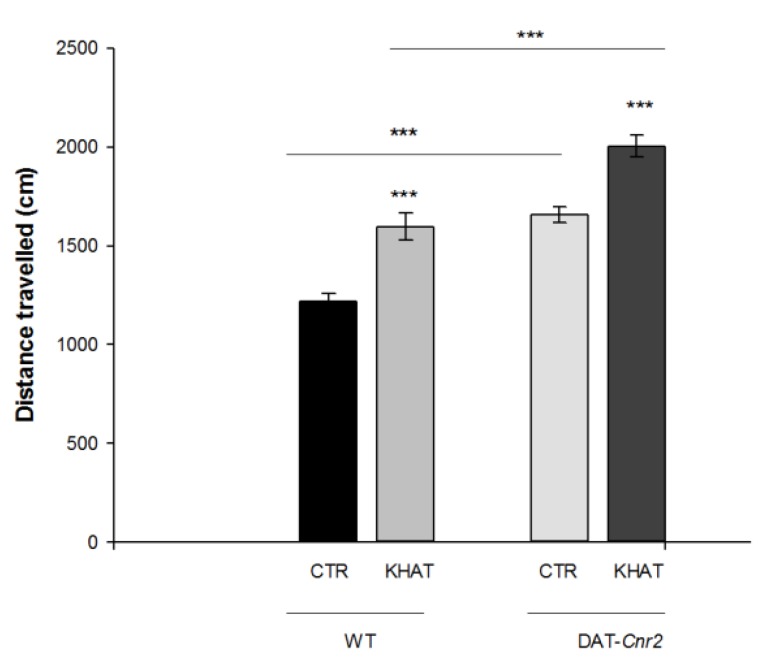
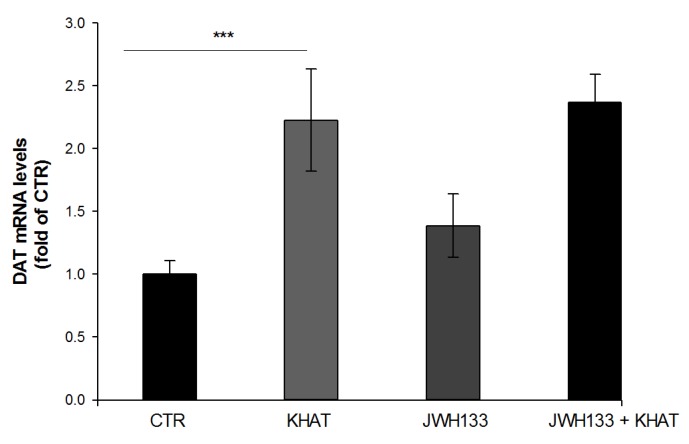
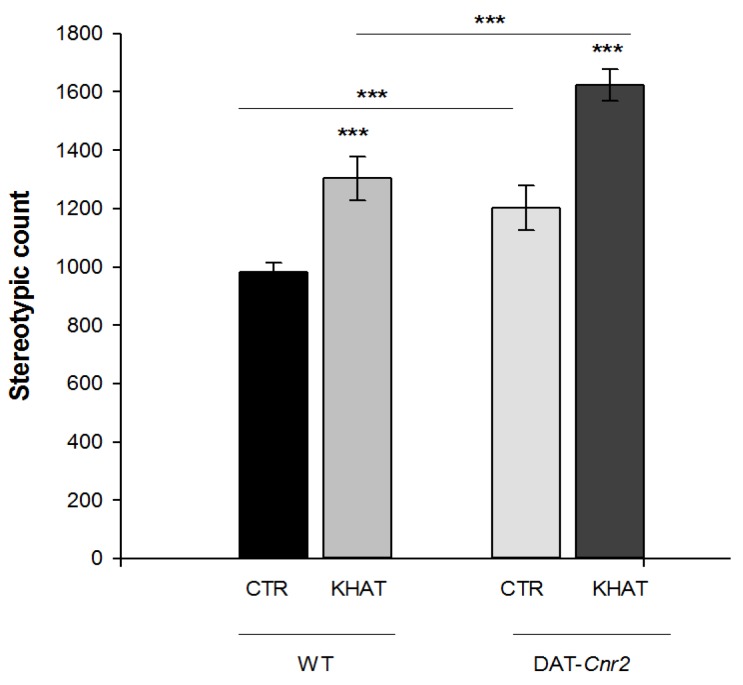
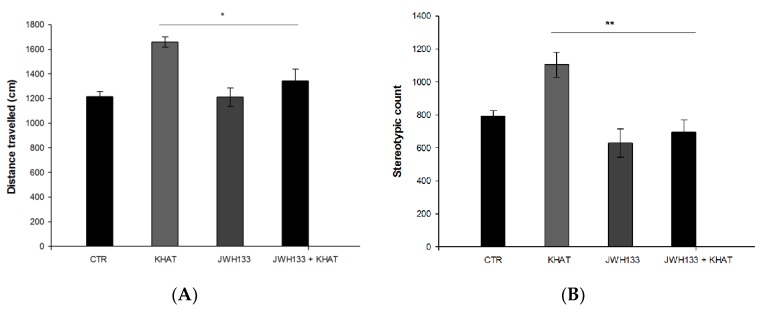
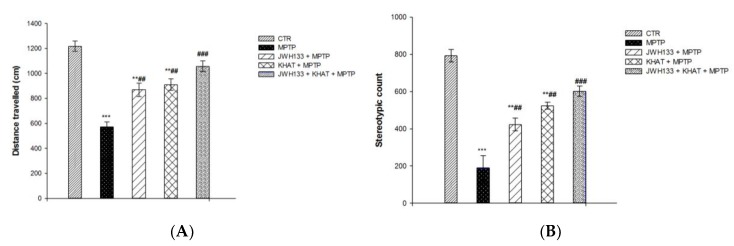
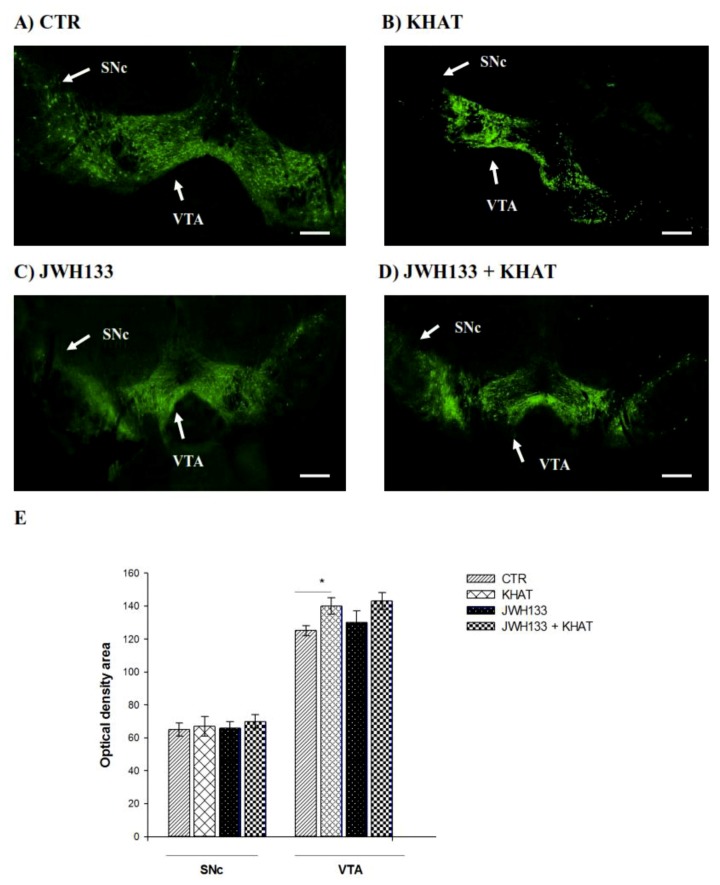
There is behavioral evidence for the interaction between crude khat extract and the endocannabinoid system, whereby the endocannabinoid system alters khat extract-mediated behavioral effects through modulation of the monoaminergic system. The objective of this study was to investigate the role of the endocannabinoid system on the neurobehavioral effect of khat extract in mice following concomitant administration of khat extract and the CB2R agonist, JWH133. Locomotor activity test, immunohistochemistry, and reverse transcriptase polymerase chain reaction technique were utilized to assess locomotor activity, tyrosine hydroxylase immunoreactivity, and expression of dopamine transporter mRNA gene. The results show sub-acute administration of khat extract alone increased locomotor activity in mice and co-administration of the CB2R agonist, JWH133, reduced khat extract induced hyperlocomotor activity. The data revealed that cell type specific deletion of CB2Rs on dopaminergic neurons increased the hyperlocomotor behavior of khat extract. Furthermore, the results revealed that khat extract attenuated MPTP induced motor deficits, which is enhanced by JWH133. Khat extract also increased expression of tyrosine hydroxylase positive cells and expression of dopamine transporter mRNA gene in wild type mice. Nevertheless, JWH133 did not alter the effect of khat extract on tyrosine hydroxylase immunoreactivity and dopamine transporter mRNA expression when given together with khat extract. Taken together, the results suggest that the CB2Rs selectively interact with khat extract-mediated locomotor effects and could be utilized as therapeutic target in central nervous system movement disorders associated with dopamine dysregulation.
有行为证据表明,粗咔特提取物与内源性大麻素系统相互作用,内源性大麻素系统通过调节单胺能系统改变咔特提取物介导的行为效应。本研究的目的是研究内源性大麻素系统在咔特提取物和 CB2R 激动剂 JWH133 同时给药后对小鼠咔特提取物神经行为效应的作用。利用运动活性测试、免疫组织化学和逆转录聚合酶链反应技术来评估运动活性、酪氨酸羟化酶免疫反应性和多巴胺转运体 mRNA 基因的表达。结果表明,咔特提取物单次亚急性给药可增加小鼠的运动活性,而 CB2R 激动剂 JWH133 的共同给药可减少咔特提取物诱导的过度运动活性。数据显示,多巴胺能神经元上 CB2R 的细胞类型特异性缺失增加了咔特提取物的过度运动行为。此外,结果表明,咔特提取物可减轻 MPTP 引起的运动障碍,而 JWH133 可增强这种作用。咔特提取物还增加了野生型小鼠中酪氨酸羟化酶阳性细胞的表达和多巴胺转运体 mRNA 基因的表达。然而,当与咔特提取物一起给予时,JWH133 并没有改变咔特提取物对酪氨酸羟化酶免疫反应性和多巴胺转运体 mRNA 表达的影响。综上所述,研究结果表明,CB2R 选择性地与咔特提取物介导的运动效应相互作用,可作为与多巴胺失调相关的中枢神经系统运动障碍的治疗靶点。