Andrew Angeline S, Mason Rebecca A, Memoli Vincent, Duell Eric J
Department of Community and Family Medicine, Dartmouth Medical School, Dartmouth College, Hanover, New Hampshire 03756, USA.
Toxicol Sci. 2009 Jun;109(2):350-7. doi: 10.1093/toxsci/kfp015. Epub 2009 Jan 23.
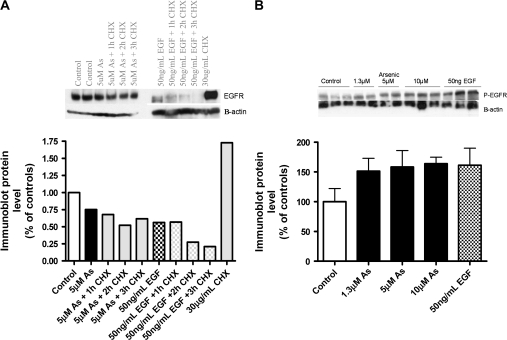
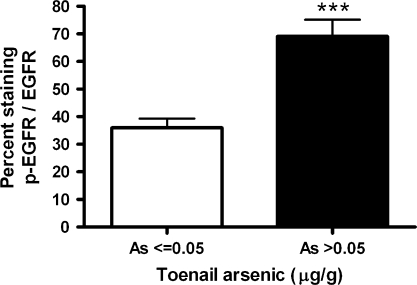
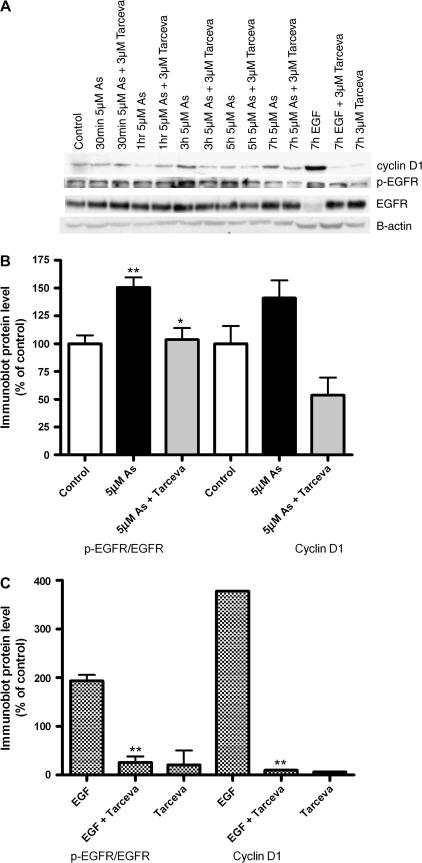
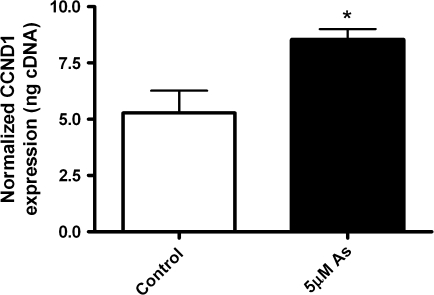
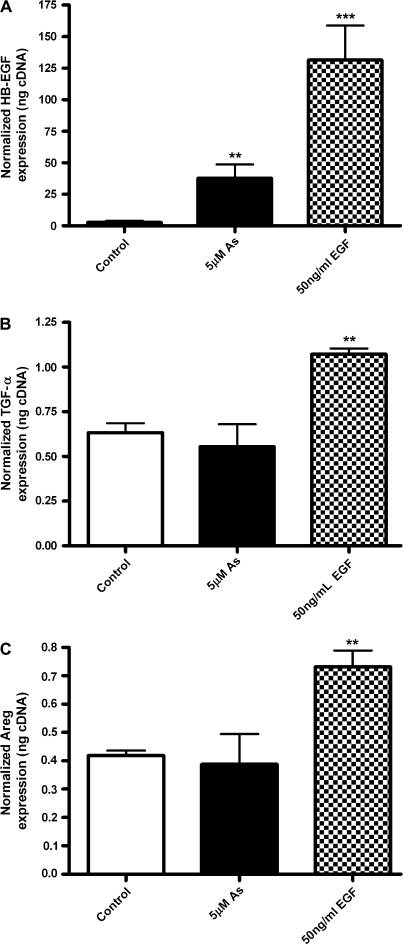
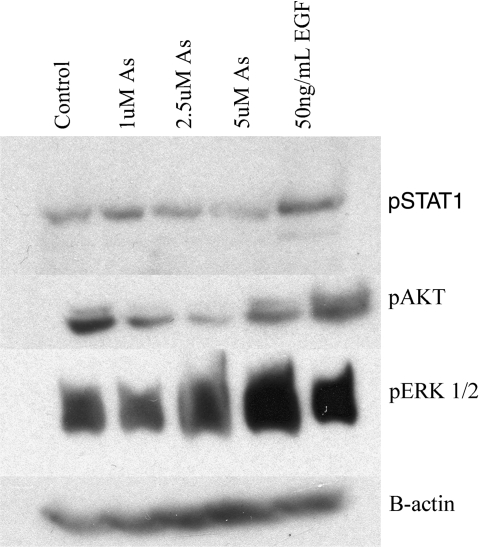
Arsenic is an established lung carcinogen, however, the carcinogenic mechanisms are currently under investigation. Phosphorylation of the epidermal growth factor receptor (EGFR) has been reported with arsenic exposure in bladder cells. EGFR is a tyrosine kinase transmembrane receptor that regulates important processes in carcinogenesis, including cell survival, cell cycle progression, tumor invasion, and angiogenesis. We investigated the mechanisms of EGFR pathway activation by levels of arsenic relevant to human exposure scenarios both in vitro using cultured lung epithelial cells, and in lung tumors samples from New England Lung Cancer Study participants. Toenail arsenic levels were used as an internal biomarker of arsenic exposure. Our in vitro data suggest that arsenic increases levels of the EGFR ligand, heparin binding-EGF, and activate EGFR phosphorylation in the lung. Downstream of EGFR, arsenic exposure increased pERK and cyclin D1 levels. These effects were inhibited by treatment of cultured cells with the EGFR tyrosine kinase inhibitor, Tarceva (erlotinib). In a consecutive series of human lung tumor specimens, pEGFR protein levels were higher in subjects with elevated toenail arsenic levels compared to those with low exposure (odds ratio adjusted for other factors, OR 4.1 (95% confidence interval 1.1-15.6) (p = 0.04). These data suggest that arsenic exposure may stimulate EGFR pathway activation in the lung. Moreover, the tumors that arise in arsenic-exposed individuals also exhibit signs of EGFR pathway dysregulation. Further work is needed to assess the clinical utility of targeting the EGFR pathway in subgroups of lung cancer patients who have been exposed to elevated levels of arsenic.
砷是一种已被确认的肺癌致癌物,然而,其致癌机制目前仍在研究中。膀胱细胞暴露于砷时,已报道有表皮生长因子受体(EGFR)的磷酸化现象。EGFR是一种酪氨酸激酶跨膜受体,可调节致癌过程中的重要进程,包括细胞存活、细胞周期进展、肿瘤侵袭和血管生成。我们使用培养的肺上皮细胞在体外以及来自新英格兰肺癌研究参与者的肺肿瘤样本中,研究了与人类暴露情况相关的砷水平对EGFR通路激活的机制。趾甲砷水平被用作砷暴露的内部生物标志物。我们的体外数据表明,砷会增加EGFR配体肝素结合表皮生长因子(heparin binding-EGF)的水平,并激活肺中的EGFR磷酸化。在EGFR的下游,砷暴露会增加pERK和细胞周期蛋白D1的水平。用EGFR酪氨酸激酶抑制剂特罗凯(厄洛替尼)处理培养细胞可抑制这些效应。在一系列连续的人类肺肿瘤标本中,与低暴露者相比,趾甲砷水平升高的受试者中pEGFR蛋白水平更高(经其他因素调整后的优势比,OR 4.1(95%置信区间1.1 - 15.6)(p = 0.04)。这些数据表明,砷暴露可能会刺激肺中EGFR通路的激活。此外,砷暴露个体中出现的肿瘤也表现出EGFR通路失调的迹象。需要进一步开展工作,以评估在暴露于高水平砷的肺癌患者亚组中靶向EGFR通路的临床效用。