Department of Epidemiology, Geisel School of Medicine, Dartmouth College, 1 Medical Center Dr, Williamson Translational Research Bldg, Lebanon NH, 03756, USA.
Spanish Agency of Food Safety and Nutrition, Ministry of Consumer Affairs, Alcalá, 56, 28014, Madrid, Spain; Consortium for Biomedical Research in Epidemiology & Public Health (CIBER en Epidemiología y Salud Pública - CIBERESP), Monforte de Lemos 5, 28029, Madrid, Spain.
Environ Res. 2021 Apr;195:110286. doi: 10.1016/j.envres.2020.110286. Epub 2020 Oct 16.
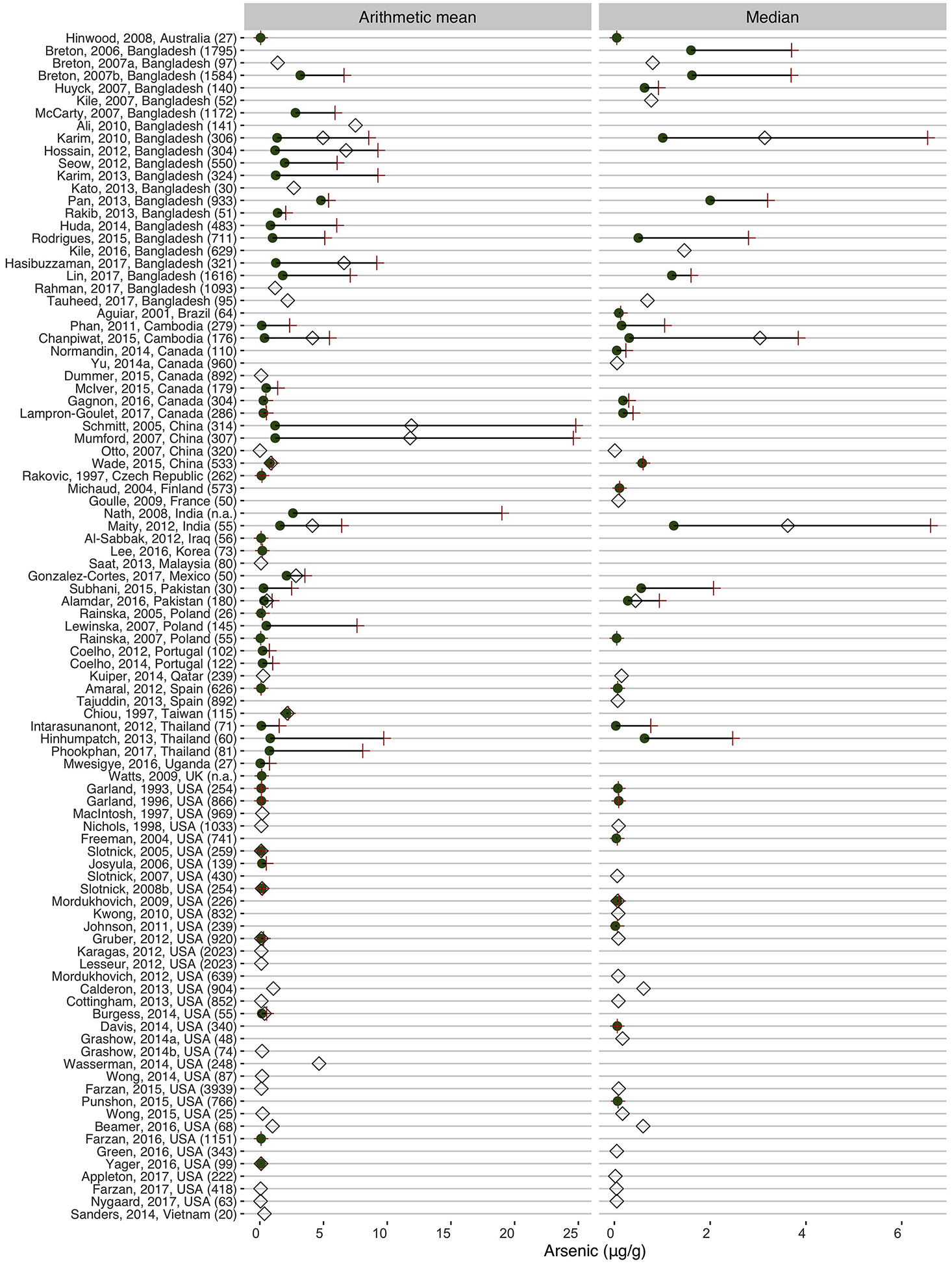
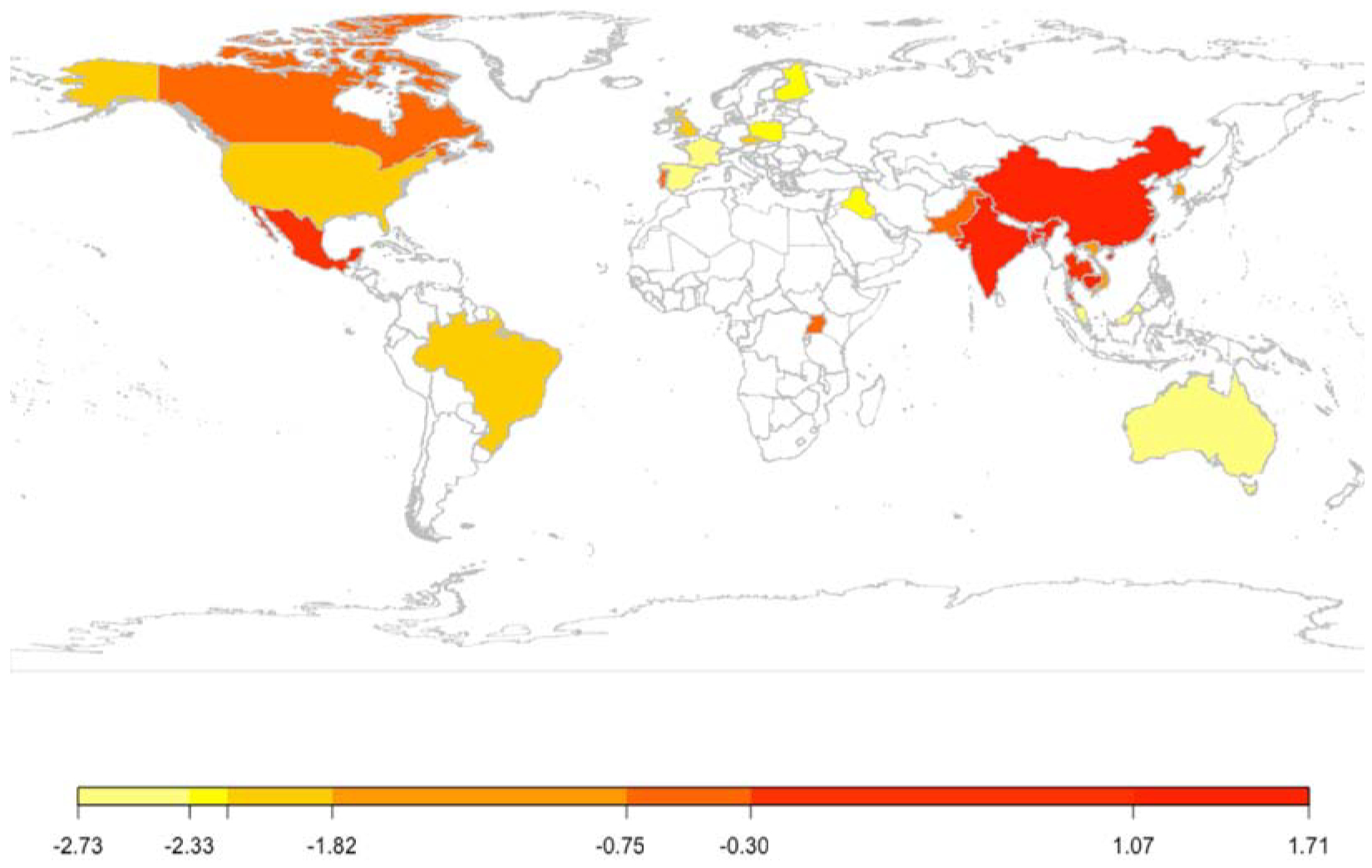
This systematic review summarizes the current evidence related to the reliability of toenail total arsenic concentrations (thereafter "arsenic") as a biomarker of long-term exposure. Specifically, we reviewed literature on consistency of repeated measures over time, association with other biomarkers and metal concentrations, factors influencing concentrations, and associations with health effects. We identified 129 papers containing quantitative original data on arsenic in toenail samples covering populations from 29 different countries. We observed geographic differences in toenail arsenic concentrations, with highest median or mean concentrations in Asian countries. Arsenic-contaminated drinking water, occupational exposure or living in specific industrial areas were associated with an increased toenail arsenic content. The effects of other potential determinants and sources of arsenic exposure including diet, gender and age on the concentrations in toenails need further investigations. Toenail arsenic was correlated with the concentrations in hair and fingernails, and with urine arsenic mainly among highly exposed populations with a toenail mean or median ≥1 μg/g. Overall, there is a growing body of evidence suggesting that arsenic content from a single toenail sample may reflect long-term internal dose-exposure. Toenail arsenic can serve as a reliable measure of toxic inorganic arsenic exposure in chronic disease research, particularly promising for cancer and cardiovascular conditions.
本系统综述总结了目前有关全趾甲总砷浓度(以下简称“砷”)作为长期暴露生物标志物的可靠性的证据。具体而言,我们综述了关于随时间推移重复测量的一致性、与其他生物标志物和金属浓度的关联、影响浓度的因素以及与健康影响的关联的文献。我们确定了 129 篇包含来自 29 个不同国家的人群的趾甲样本中砷的定量原始数据的论文。我们观察到趾甲砷浓度存在地理差异,亚洲国家的中位数或平均值最高。受砷污染的饮用水、职业暴露或生活在特定工业区域与趾甲中砷含量增加有关。其他潜在决定因素和砷暴露源(包括饮食、性别和年龄)对趾甲中浓度的影响需要进一步研究。趾甲砷与头发和指甲中的浓度以及尿液砷有关,主要是在高暴露人群中,趾甲的平均或中位数≥1μg/g。总体而言,越来越多的证据表明,单个趾甲样本中的砷含量可能反映长期的内部剂量暴露。趾甲砷可以作为慢性疾病研究中有毒无机砷暴露的可靠衡量标准,特别是在癌症和心血管疾病方面很有前途。