Ren Zhen-Yu, Shi Jie, Epstein David H, Wang Jun, Lu Lin
National Institute on Drug Dependence, Peking University, HaiDian District, Beijing, China.
Psychopharmacology (Berl). 2009 Jun;204(3):423-9. doi: 10.1007/s00213-009-1472-0. Epub 2009 Jan 27.
Craving is a primary feature of opiate addiction and is clinically significant because of its potential to trigger opiate use and relapse. Opiate use can also produce abnormal pain perception. We predicted that for opiate addicts (OAs), there may be an association between these two major features of addiction (drug craving and abnormal pain responses).
To examine pain responses in abstinent opiate addicts in comparison with healthy controls using a cold-pressor test (CPT) and investigate the correlations of cue-induced drug craving with pain responses.
Fifty-four abstinent OAs and 46 healthy subjects participated in the CPT, and the OAs were also exposed to heroin-related cues the day before the pain test. Outcome measures included pain-tolerance time, VAS ratings of pain intensity and distress, and (in the cue-exposure procedure) VAS ratings of heroin craving and anxiety.
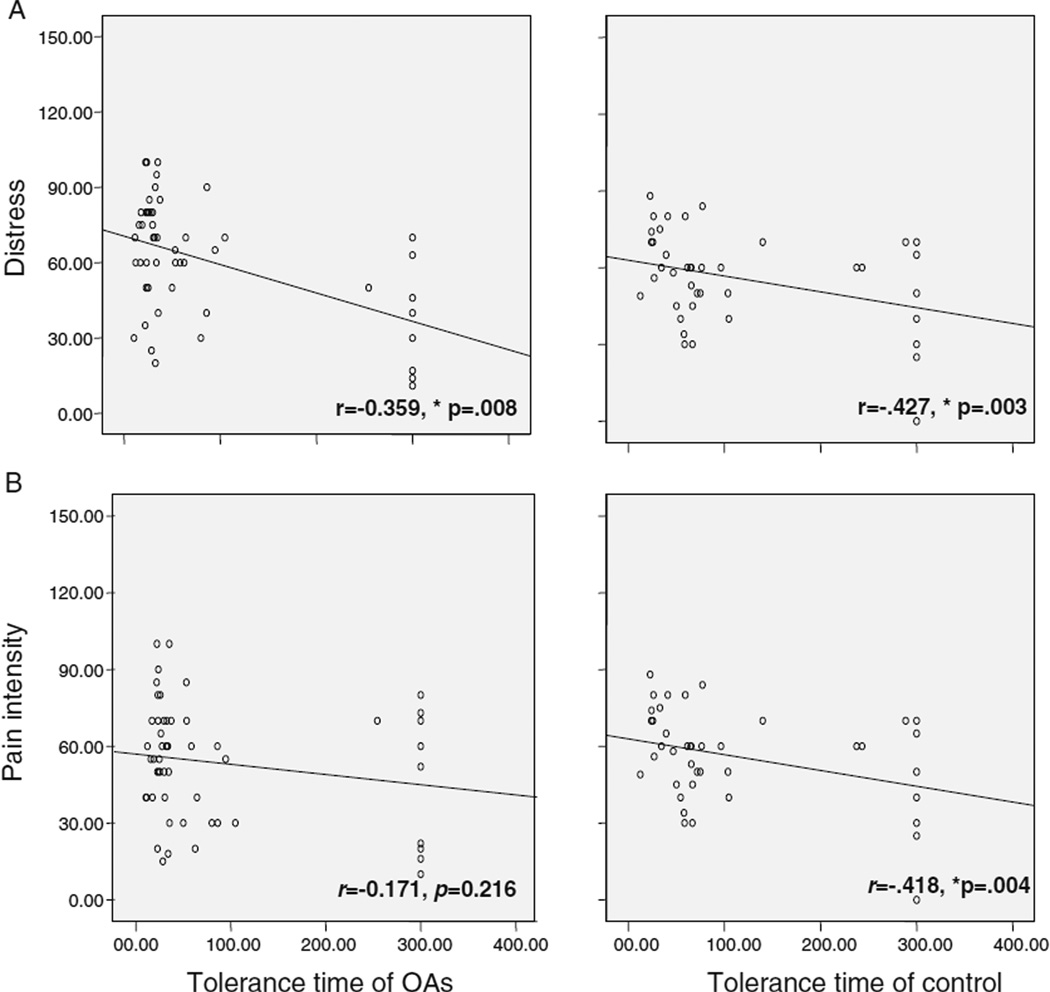
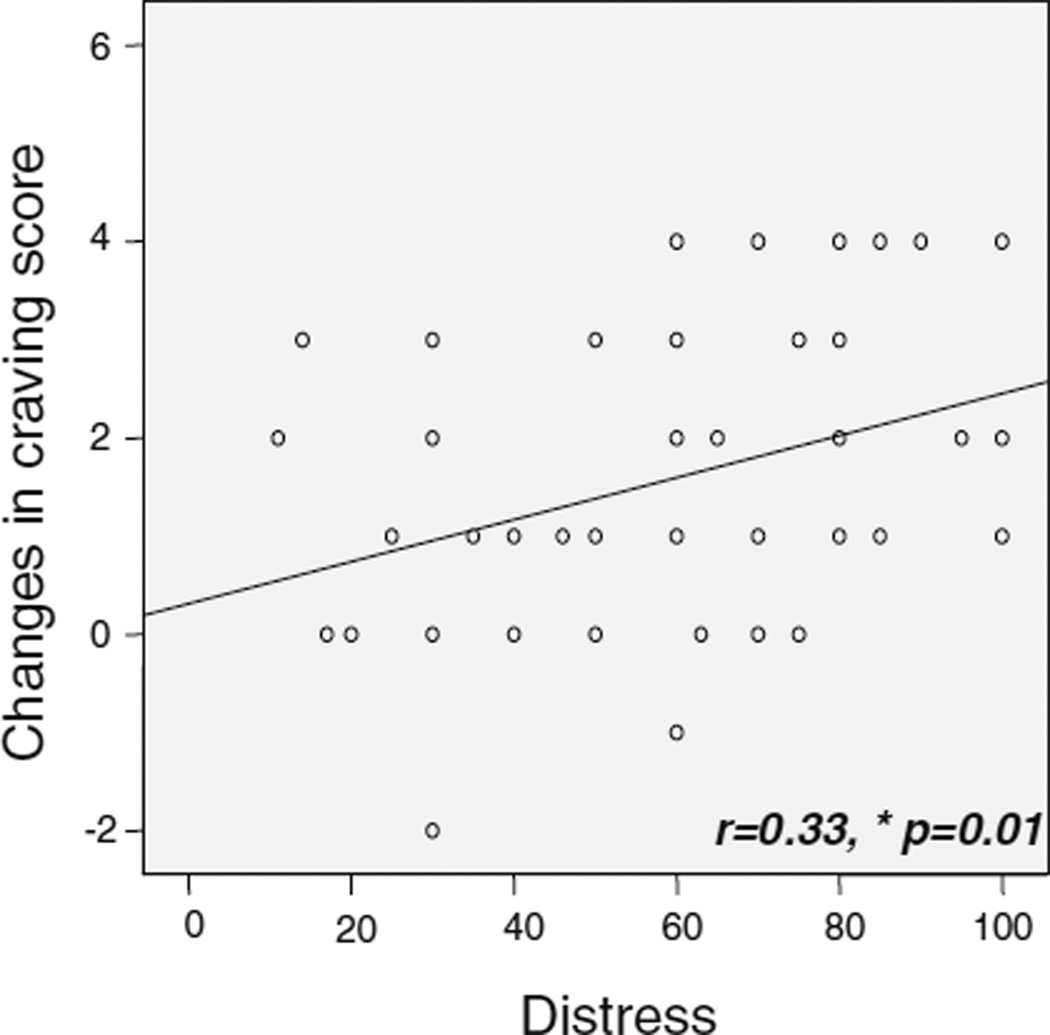
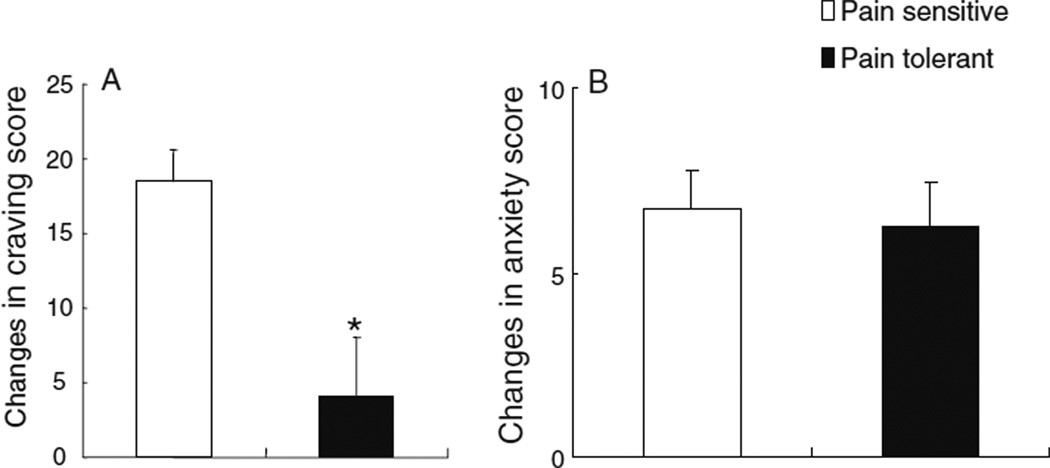
In the CPT, abstinent addicts showed shorter pain-tolerance time (85.1 +/- 14.1 s vs. 133.7 +/- 16.7 s, p < 0.05) and higher ratings of pain distress (61 +/- 3.2 vs. 45.6 +/- 3.2, p < 0.01) compared to healthy controls. When we divided the addicts and controls into pain-sensitive (PS) and pain-tolerant (PT) groups by dichotomizing each group in terms of pain-tolerance time, we again found differences between the two PS groups (37.3 +/- 3.5 s vs. 57.4 +/- 5.1 s, p < 0.01 for pain-tolerance time; 66.7 +/- 3.2 vs. 52.4 +/- 3.3, p < 0.01 for distress ratings). For all participants, pain-tolerance time was negatively correlated with VAS ratings for pain intensity and distress. More importantly, the PS addicts reported greater cue-induced craving than the PT addicts (17.8 +/- 2.2 vs. 4.5 +/- 4.2, p < 0.05). For the addict group as a whole, pain distress (the affective aspect of pain) was positively correlated with intensity of cue-induced craving measured on a different day (r = 0.33, p = 0.01).
A hyperalgesic state persists for at least 5 months in abstinent OAs and is predictive of cue-induced craving. Longitudinal research is needed to clarify the direction of causation between hyperalgesia and opiate addiction.
渴望是阿片类药物成瘾的主要特征,且具有临床意义,因为它有可能引发阿片类药物的使用和复吸。阿片类药物的使用也会导致异常的疼痛感知。我们预测,对于阿片类药物成瘾者(OAs)来说,成瘾的这两个主要特征(药物渴望和异常疼痛反应)之间可能存在关联。
通过冷加压试验(CPT)检查戒断期阿片类药物成瘾者与健康对照者的疼痛反应,并研究线索诱导的药物渴望与疼痛反应之间的相关性。
54名戒断期阿片类药物成瘾者和46名健康受试者参与了冷加压试验,且这些成瘾者在疼痛测试前一天还接触了与海洛因相关的线索。观察指标包括疼痛耐受时间、疼痛强度和痛苦程度的视觉模拟评分(VAS),以及(在线索暴露过程中)海洛因渴望和焦虑的视觉模拟评分。
在冷加压试验中,与健康对照者相比,戒断期成瘾者的疼痛耐受时间更短(85.1±14.1秒对133.7±16.7秒,p<0.05),疼痛痛苦程度评分更高(61±3.2对45.6±3.2,p<0.01)。当我们根据疼痛耐受时间将成瘾者和对照者分为疼痛敏感(PS)组和疼痛耐受(PT)组时,我们再次发现两个疼痛敏感组之间存在差异(疼痛耐受时间为37.3±3.5秒对57.4±5.1秒,p<0.01;痛苦程度评分为66.7±3.2对52.4±3.3,p<0.01)。对于所有参与者,疼痛耐受时间与疼痛强度和痛苦程度的视觉模拟评分呈负相关。更重要的是,疼痛敏感的成瘾者报告的线索诱导渴望比疼痛耐受的成瘾者更强烈(17.8±2.2对4.5±4.2,p<0.05)。对于整个成瘾者组,疼痛痛苦程度(疼痛的情感方面)与在不同日期测量的线索诱导渴望强度呈正相关(r = 0.33,p = 0.01)。
戒断期阿片类药物成瘾者的痛觉过敏状态至少持续5个月,并且可预测线索诱导的渴望。需要进行纵向研究以阐明痛觉过敏与阿片类药物成瘾之间的因果关系方向。