Neuroscience Discovery, Novartis Institutes for BioMedical Research, Novartis Pharma AG, Basel, Switzerland.
Mol Neurodegener. 2009 Feb 9;4:11. doi: 10.1186/1750-1326-4-11.
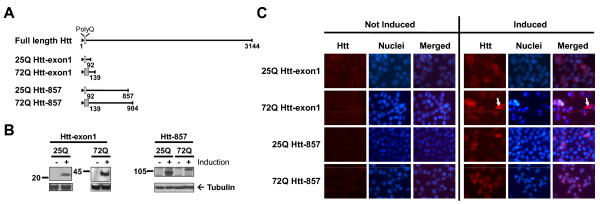
Expansion of a polyglutamine repeat at the amino-terminus of huntingtin is the probable cause for Huntington's disease, a lethal progressive autosomal-dominant neurodegenerative disorders characterized by impaired motor performance and severe brain atrophy. The expanded polyglutamine repeat changes the conformation of huntingtin and initiates a range of pathogenic mechanisms in neurons including intracellular huntingtin aggregates, transcriptional dysregulation, energy metabolism deficits, synaptic dystrophy and ultimately neurodegeneration. It is unclear how these events relate to each other or if they can be reversed by pharmacological intervention. Here, we describe neuronal cell lines expressing inducible fragments of normal and mutant huntingtin.
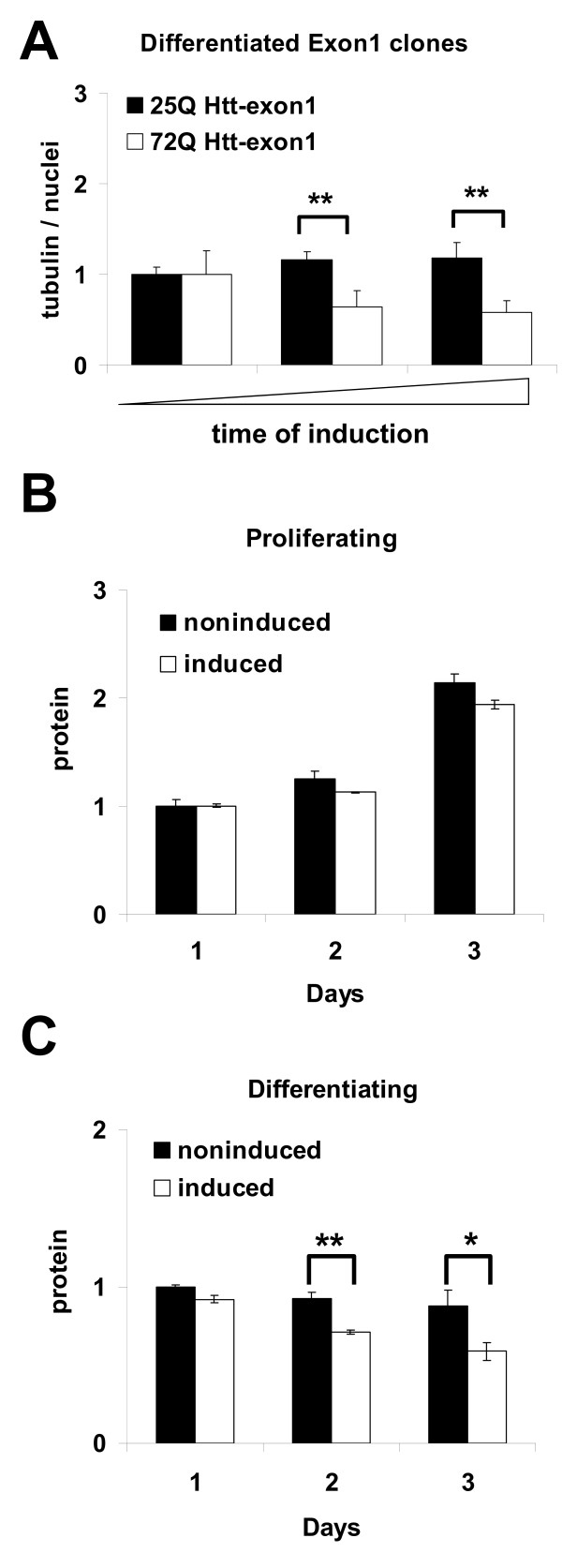
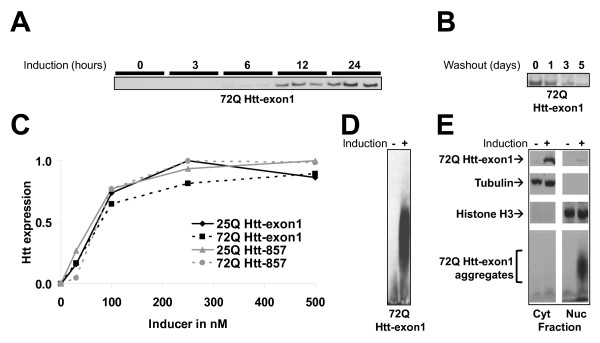
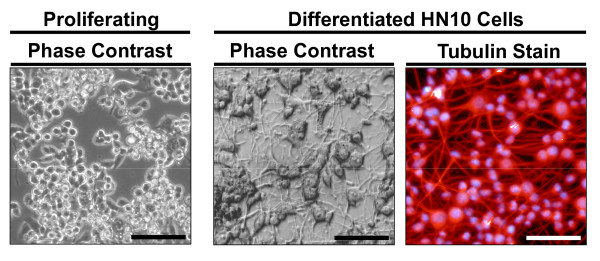
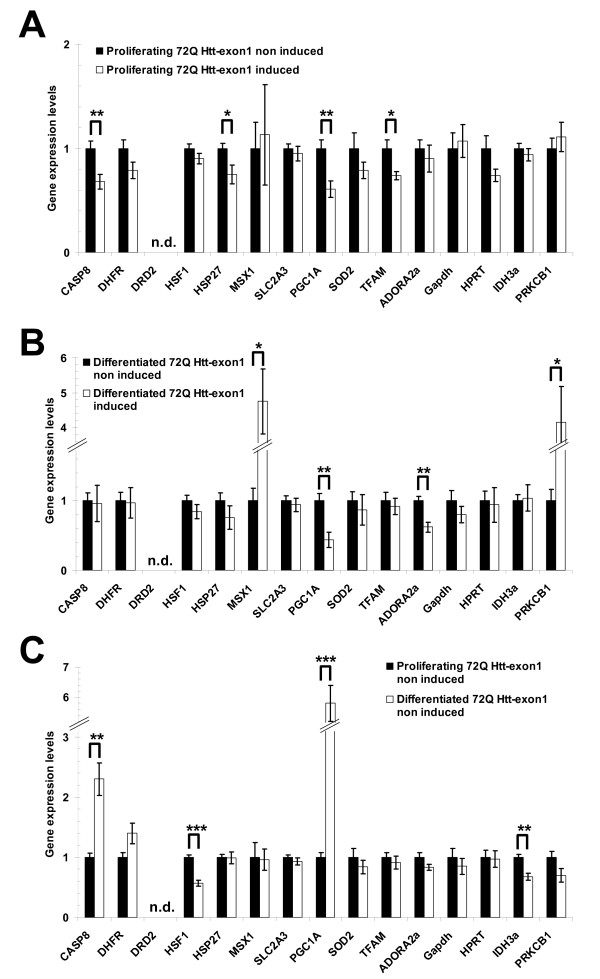
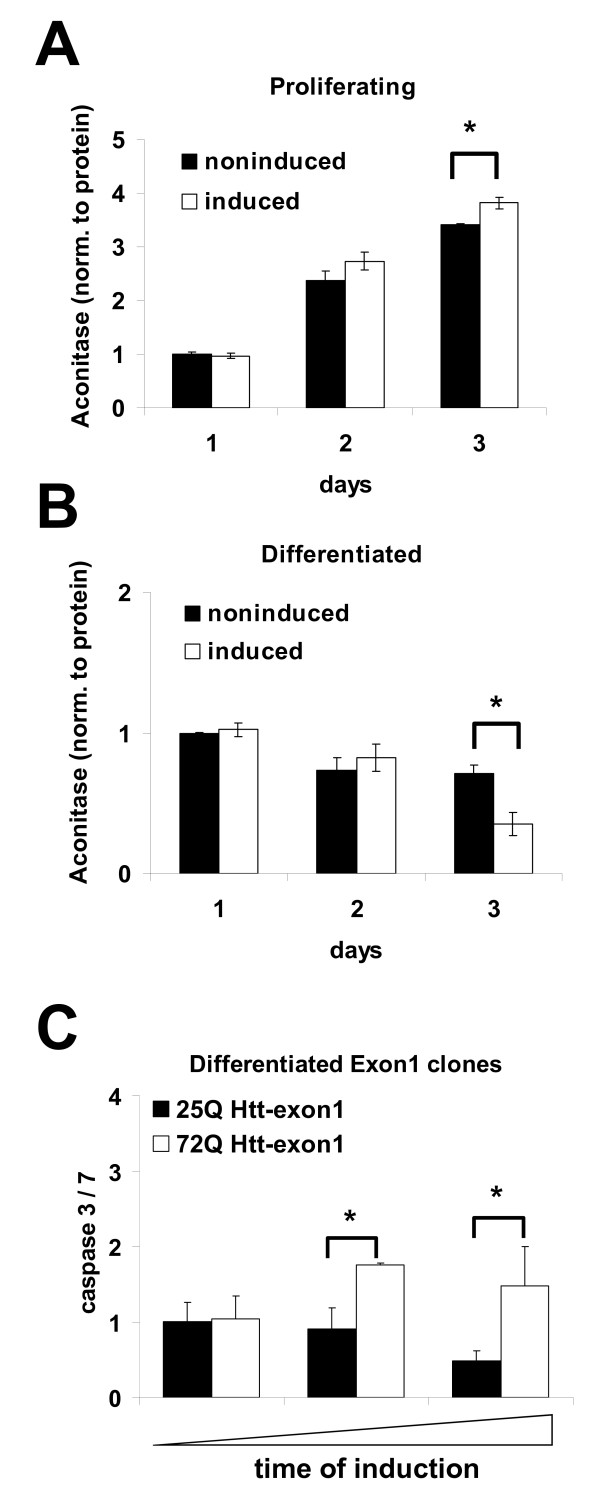
In HN10 cells, the expression of wild type and mutant huntingtin fragments was dependent on the induction time as well as on the concentration of the RheoSwitch(R) inducing ligand. In order to analyze the effect of mutant huntingtin expression on cellular functions we concentrated on the 72Q exon1 huntingtin expressing cell line and found that upon induction, it was possible to carefully dissect mutant huntingtin-induced phenotypes as they developed over time. Dysregulation of transcription as a result of mutant huntingtin expression showed a transcription signature replicating that reported in animal models and Huntington's disease patients. Crucially, triggering of neuronal differentiation in mutant huntingtin expressing cell resulted in the appearance of additional pathological hallmarks of Huntington's disease including cell death.
We developed neuronal cell lines with inducible expression of wild type and mutant huntingtin. These new cell lines represent a reliable in vitro system for modeling Huntington's disease and should find wide use for high-throughput screening application and for investigating the biology of mutant huntingtin.
亨廷顿病是一种致命的进行性常染色体显性神经退行性疾病,其病因可能是亨廷顿蛋白氨基末端的多聚谷氨酰胺重复扩展。扩展的多聚谷氨酰胺重复改变了亨廷顿蛋白的构象,并在神经元中引发了一系列致病机制,包括细胞内亨廷顿蛋白聚集、转录失调、能量代谢缺陷、突触萎缩,最终导致神经退行性变。目前尚不清楚这些事件之间的关系,或者它们是否可以通过药物干预来逆转。在这里,我们描述了表达诱导型正常和突变亨廷顿蛋白片段的神经元细胞系。
在 HN10 细胞中,野生型和突变型亨廷顿蛋白片段的表达依赖于诱导时间以及 RheoSwitch(R)诱导配体的浓度。为了分析突变型亨廷顿蛋白表达对细胞功能的影响,我们集中研究了表达 72Q 外显子 1 亨廷顿蛋白的细胞系,发现诱导后,可以随着时间的推移仔细剖析突变型亨廷顿蛋白诱导的表型。由于突变型亨廷顿蛋白的表达而导致的转录失调显示出与动物模型和亨廷顿病患者报告的转录特征相似的转录特征。至关重要的是,在突变型亨廷顿蛋白表达的神经元细胞中触发神经元分化会导致出现亨廷顿病的其他病理特征,包括细胞死亡。
我们开发了具有诱导型野生型和突变型亨廷顿蛋白表达的神经元细胞系。这些新的细胞系代表了一种可靠的体外模型系统,可以用于模拟亨廷顿病,并且应该广泛用于高通量筛选应用和研究突变型亨廷顿蛋白的生物学。