Department of Gastroenterology and Hepatology.
Ther Clin Risk Manag. 2008 Aug;4(4):733-8. doi: 10.2147/tcrm.s3091.
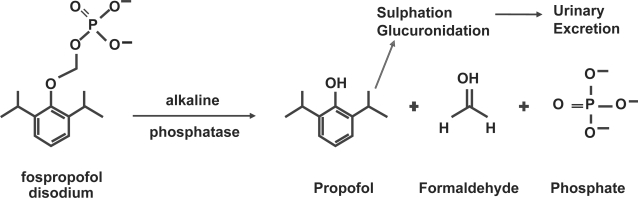
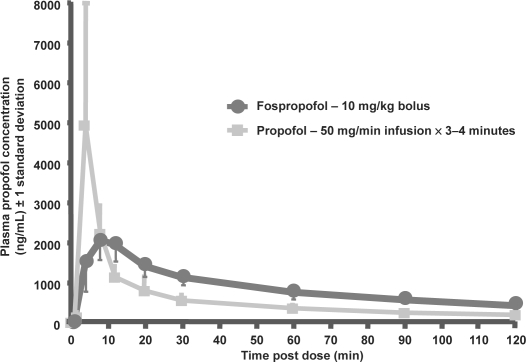
Sedation plays a central role in making colonoscopy tolerable for patients and feasible for the endoscopist to perform. The array of agents used for endoscopic sedation continues to evolve. Fospropofol (FP), a prodrug of propofol with a slower pharmacokinetic profile, is currently under evaluation for use during endoscopic procedures. Preliminary data suggests that FP dosed at 6.5 mg/kg is well tolerated by most patients with perineal paresthesias being the most commonly experienced adverse effect. This article will examine the current literature on the use of FP for the sedation of patients undergoing colonoscopy, highlighting the pharmacokinetics, pharmacodynamics, risks, and common adverse events associated with the novel sedative/hypnotic.
镇静在使结肠镜检查对患者可耐受和对内镜医生可实施方面起着核心作用。用于内镜镇静的药物不断发展。磷丙泊酚(FP)是丙泊酚的前体药物,具有较慢的药代动力学特征,目前正在评估其在内镜检查过程中的应用。初步数据表明,大多数患者对 6.5mg/kg 剂量的 FP 耐受良好,最常发生的不良反应是会阴部感觉异常。本文将检查关于 FP 用于结肠镜检查患者镇静的当前文献,重点介绍新型镇静/催眠药物的药代动力学、药效学、风险和常见不良反应。