Department of Medicine and Center of Excellence on Aging, "G. D'Annunzio" University School of Medicine, and "Gabriele D'Annunzio" University Foundation, CeSI, Chieti, Italy.
Ther Clin Risk Manag. 2008 Oct;4(5):983-97. doi: 10.2147/tcrm.s3209.
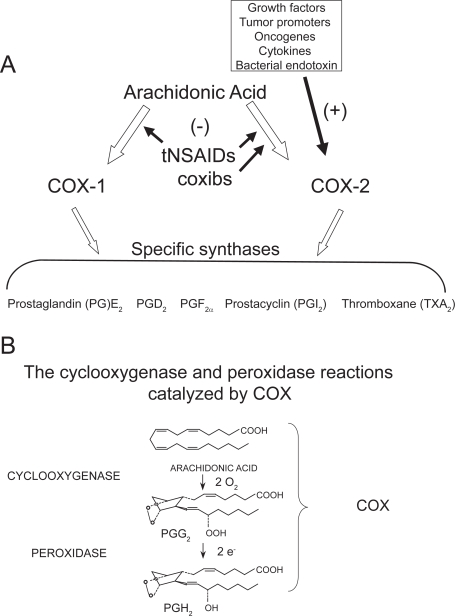
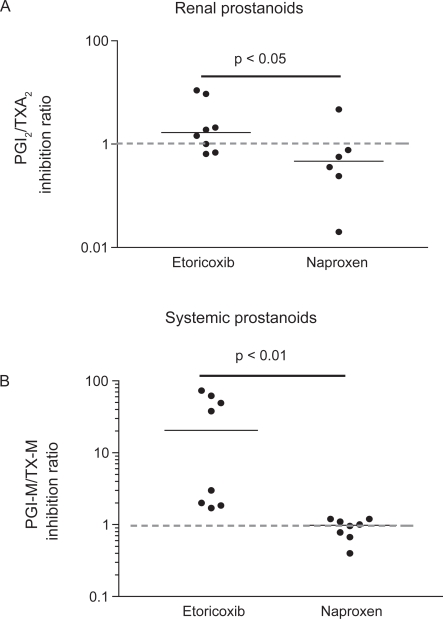
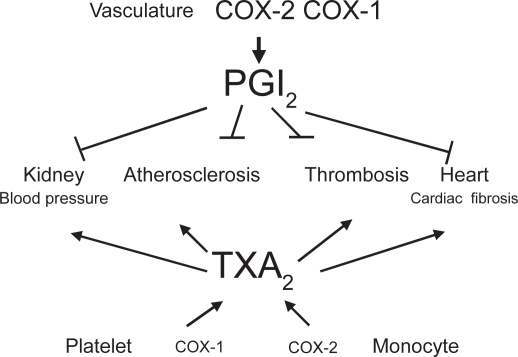
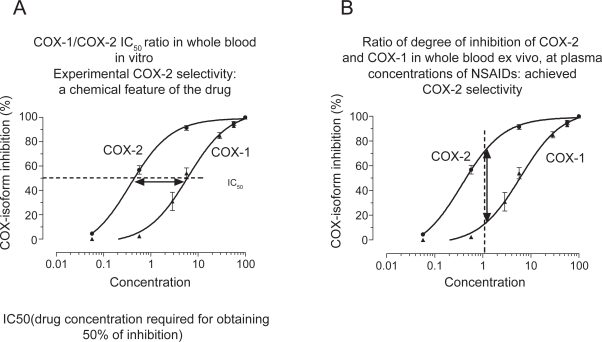
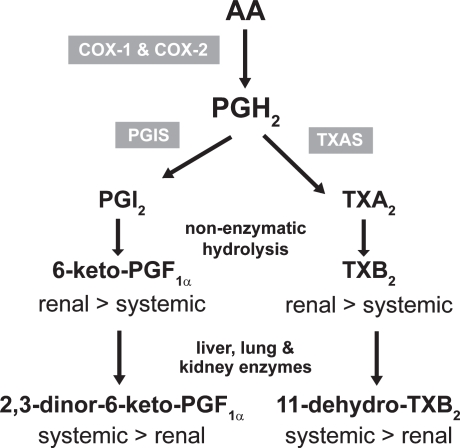
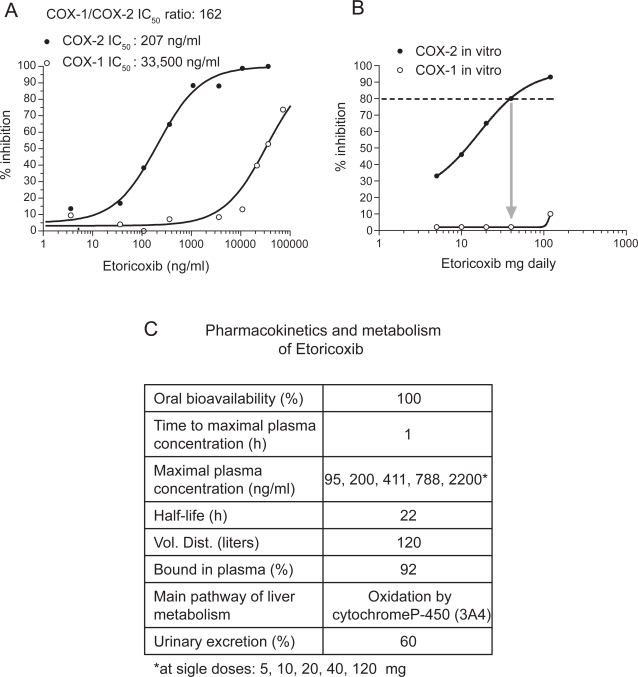
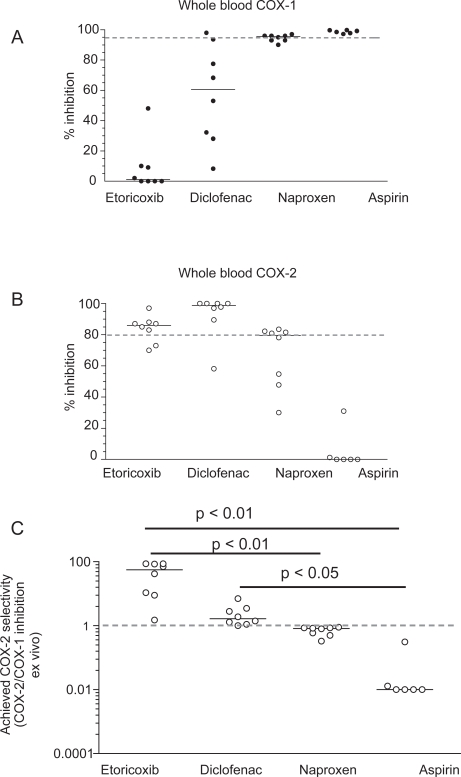
The development of nonsteroidal anti-inflammatory drugs (NSAIDs) selective for cyclooxygenase (COX)-2 (named coxibs) has been driven by the aim of reducing the incidence of serious gastrointestinal (GI) adverse events associated with the administration of traditional (t) NSAIDs - mainly dependent on the inhibition of COX-1 in GI tract and platelets. However, their use has unravelled the important protective role of COX-2 for the cardiovascular (CV) system, mainly through the generation of prostacyclin. In a recent nested-case control study, we found that patients taking NSAIDs (both coxibs and tNSAIDs) had a 35% increase risk of myocardial infarction. The increased incidence of thrombotic events associated with profound inhibition of COX-2-dependent prostacyclin by coxibs and tNSAIDs can be mitigated, even if not obliterated, by a complete suppression of platelet COX-1 activity. However, most tNSAIDs and coxibs are functional COX-2 selective for the platelet (ie, they cause a profound suppression of COX-2 associated with insufficient inhibition of platelet COX-1 to translate into inhibition of platelet function), which explains their shared CV toxicity. The development of genetic and biochemical markers will help to identify the responders to NSAIDs or who are uniquely susceptible at developing thrombotic or GI events by COX inhibition. We will describe possible strategies to reduce the side effects of etoricoxib by using biochemical markers of COX inhibition, such as whole blood COX-2 and the assessment of prostacyclin biosynthesis in vivo.
非甾体抗炎药(NSAIDs)选择性环氧化酶(COX)-2(称为 COXIBs)的开发旨在降低与传统(t)NSAIDs 给药相关的严重胃肠道(GI)不良事件的发生率 - 主要取决于 COX-1 在胃肠道和血小板中的抑制作用。然而,它们的使用揭示了 COX-2 对心血管(CV)系统的重要保护作用,主要通过生成前列环素。在最近的一项巢式病例对照研究中,我们发现服用 NSAIDs(包括 COXIBs 和 tNSAIDs)的患者心肌梗死风险增加 35%。COXIBs 和 tNSAIDs 对 COX-2 依赖性前列环素的强烈抑制与血栓形成事件的增加相关,通过完全抑制血小板 COX-1 活性可以减轻,但不能消除。然而,大多数 tNSAIDs 和 COXIBs 是血小板功能上的 COX-2 选择性(即,它们导致 COX-2 的强烈抑制与血小板 COX-1 的抑制不足相关,从而导致血小板功能抑制),这解释了它们共同的 CV 毒性。遗传和生化标志物的发展将有助于识别对 NSAIDs 有反应的患者或因 COX 抑制而独特易发生血栓形成或 GI 事件的患者。我们将描述通过使用 COX 抑制的生化标志物(如全血 COX-2 和体内前列环素生物合成的评估)来减少依托考昔副作用的可能策略。