Lorenzi Philip L, Weinstein John N
Genomics & Bioinformatics Group, Laboratory of Molecular Pharmacology, Center for Cancer Research (CCR), National Cancer Institute, National Institutes of Health, Bethesda, Maryland, USA.
Drug News Perspect. 2009 Jan-Feb;22(1):61-4. doi: 10.1358/dnp.2009.22.1.1303820.
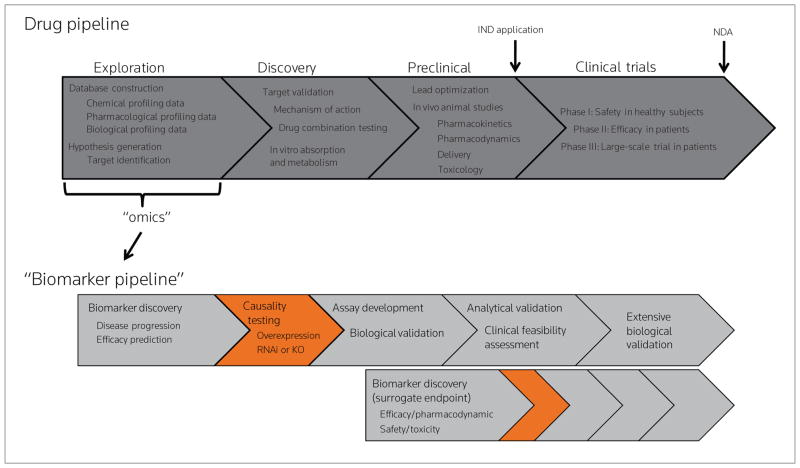
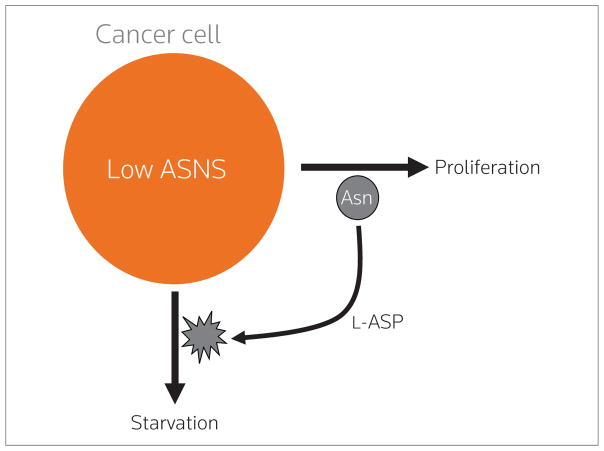
L-Asparaginase (L-ASP) is an enzyme drug that has been an asset to leukemia treatment regimens for four decades. Variability in its clinical efficacy, however, has prompted the search for biomarkers capable of distinguishing responders from non-responders. In that regard, the NCI-60 cell line panel has served as a biomarker discovery platform and has led to the identification of a correlation between L-ASP efficacy and asparagine synthetase (ASNS) expression in cultured cells. The presence of that correlation in the ovarian subpanel of the NCI-60 has made a case for repositioning L-ASP to ovarian cancer. This review presents an overview of the biomarker development process, summarizes the efforts that have been invested thus far in developing ASNS as a biomarker for ovarian cancer treatment, highlights the role of RNAi and the limitations of the NCI-60 in that process, and addresses important considerations for next steps in the development of ASNS as a predictive biomarker.
L-天冬酰胺酶(L-ASP)是一种酶类药物,四十年来一直是白血病治疗方案中的重要药物。然而,其临床疗效的变异性促使人们寻找能够区分反应者和无反应者的生物标志物。在这方面,NCI-60细胞系面板已作为一个生物标志物发现平台,并导致在培养细胞中确定了L-ASP疗效与天冬酰胺合成酶(ASNS)表达之间的相关性。NCI-60卵巢亚组中存在这种相关性,为将L-ASP重新定位用于卵巢癌治疗提供了依据。本综述概述了生物标志物的开发过程,总结了迄今为止在将ASNS开发为卵巢癌治疗生物标志物方面所投入的努力,强调了RNA干扰的作用以及NCI-60在该过程中的局限性,并讨论了将ASNS开发为预测性生物标志物下一步的重要考虑因素。