Bruijnzeel Adrie W, Prado Melissa, Isaac Shani
Department of Psychiatry, McKnight Brain Institute, University of Florida, Gainesville, Florida 32610, USA.
Biol Psychiatry. 2009 Jul 15;66(2):110-7. doi: 10.1016/j.biopsych.2009.01.010. Epub 2009 Feb 12.
Tobacco addiction is a chronic brain disorder that is characterized by a negative affective state upon smoking cessation and relapse after periods of abstinence. Previous research has shown that blockade of corticotropin-releasing factor (CRF) receptors with a nonspecific CRF1/CRF2 receptor antagonist prevents the deficit in brain reward function associated with nicotine withdrawal and stress-induced reinstatement of extinguished nicotine-seeking in rats. The aim of these studies was to investigate the role of CRF1 and CRF2 receptors in the deficit in brain reward function associated with precipitated nicotine withdrawal and stress-induced reinstatement of nicotine-seeking.
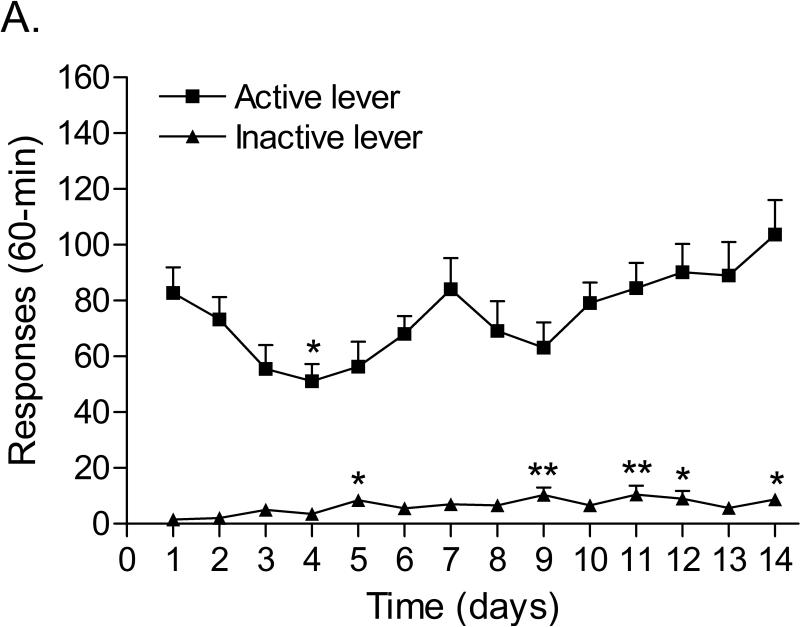
The intracranial self-stimulation (ICSS) procedure was used to assess the negative affective state of nicotine withdrawal. Elevations in brain reward thresholds are indicative of a deficit in brain reward function. Stress-induced reinstatement of nicotine-seeking was investigated in animals in which responding for intravenously infused nicotine was extinguished by substituting saline for nicotine.
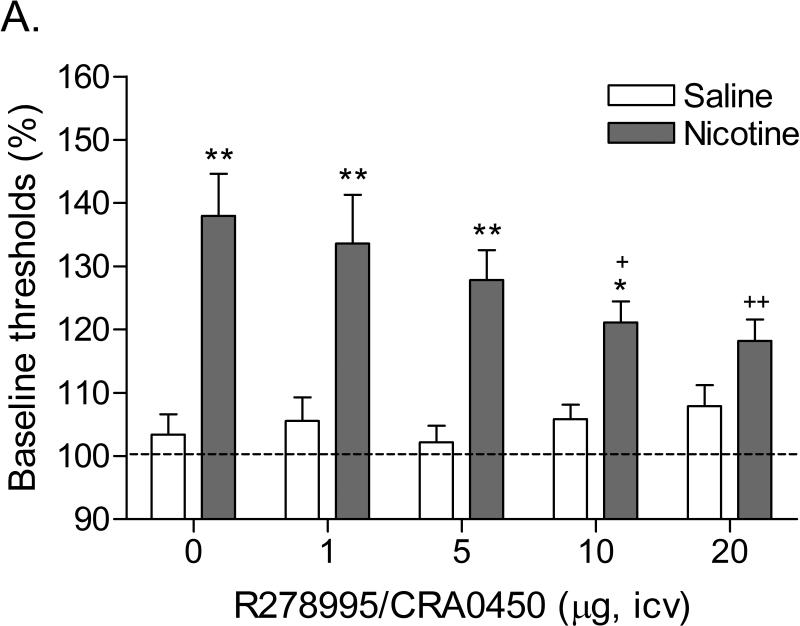
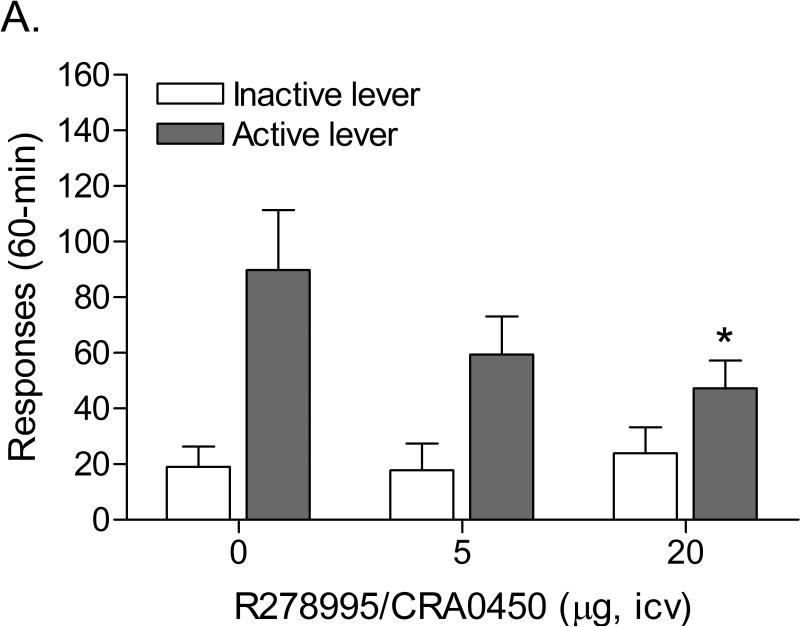
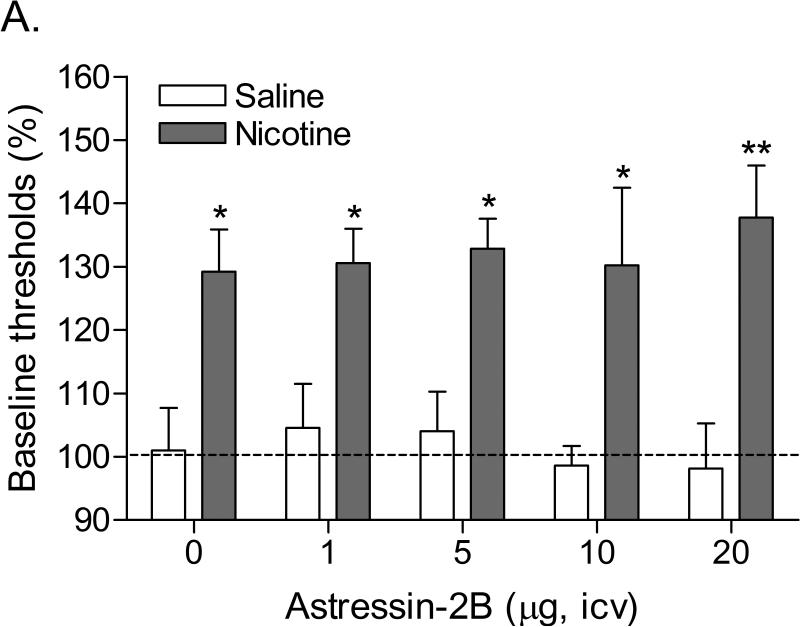
In the ICSS experiments, the nicotinic receptor antagonist mecamylamine elevated the brain reward thresholds of the nicotine-dependent rats but not those of the control rats. The CRF1 receptor antagonist R278995/CRA0450 but not the CRF2 receptor antagonist astressin-2B prevented the elevations in brain reward thresholds associated with precipitated nicotine withdrawal. Furthermore, R278995/CRA0450 but not astressin-2B prevented stress-induced reinstatement of extinguished nicotine-seeking. Neither R278995/CRA0450 nor astressin-2B affected operant responding for chocolate-flavored food pellets.
These studies indicate that CRF(1) receptors but not CRF(2) receptors play an important role in the anhedonic-state associated with acute nicotine withdrawal and stress-induced reinstatement of nicotine-seeking.
烟草成瘾是一种慢性脑部疾病,其特征是戒烟时出现负面情绪状态,并在禁欲一段时间后复发。先前的研究表明,使用非特异性促肾上腺皮质激素释放因子(CRF)1/CRF2受体拮抗剂阻断CRF受体,可预防与尼古丁戒断和应激诱导的消退性觅烟行为恢复相关的脑奖赏功能缺陷。这些研究的目的是调查CRF1和CRF2受体在与突然戒烟和应激诱导的觅烟行为恢复相关的脑奖赏功能缺陷中的作用。
采用颅内自我刺激(ICSS)程序评估尼古丁戒断的负面情绪状态。脑奖赏阈值升高表明脑奖赏功能存在缺陷。在通过用生理盐水替代尼古丁使静脉注射尼古丁的反应消退的动物中,研究应激诱导的觅烟行为恢复情况。
在ICSS实验中,烟碱受体拮抗剂美加明提高了尼古丁依赖大鼠的脑奖赏阈值,但对对照大鼠没有影响。CRF1受体拮抗剂R278995/CRA0450可预防与突然戒烟相关的脑奖赏阈值升高,而CRF2受体拮抗剂阿斯特辛-2B则不能。此外,R278995/CRA0450可预防应激诱导的消退性觅烟行为恢复,而阿斯特辛-2B则不能。R278995/CRA0450和阿斯特辛-2B均不影响对巧克力味食物颗粒的操作性反应。
这些研究表明,CRF1受体而非CRF2受体在与急性尼古丁戒断和应激诱导的觅烟行为恢复相关的快感缺失状态中起重要作用。