Nielsen Troels T, Jakobsson Johan, Rosenqvist Nina, Lundberg Cecilia
CNS Gene Therapy Unit, Wallenberg Neuroscience Center, Department of Experimental Medical Sciences, Lund University, Lund, Sweden.
BMC Biotechnol. 2009 Feb 24;9:13. doi: 10.1186/1472-6750-9-13.
Lentiviral vectors hold great promise as gene transfer vectors in gene therapeutic settings. However, problems related to the risk of insertional mutagenesis, transgene silencing and positional effects have stalled the use of such vectors in the clinic. Chromatin insulators are boundary elements that can prevent enhancer-promoter interactions, if placed between these elements, and protect transgene cassettes from silencing and positional effects. It has been suggested that insulators can improve the safety and performance of lentiviral vectors. Therefore insulators have been incorporated into lentiviral vectors in order to enhance their safety profile and improve transgene expression. Commonly such insulator vectors are produced at lower titers than control vectors thus limiting their potential use.
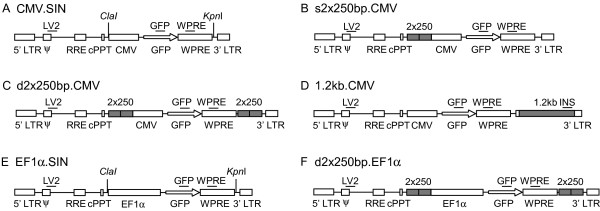
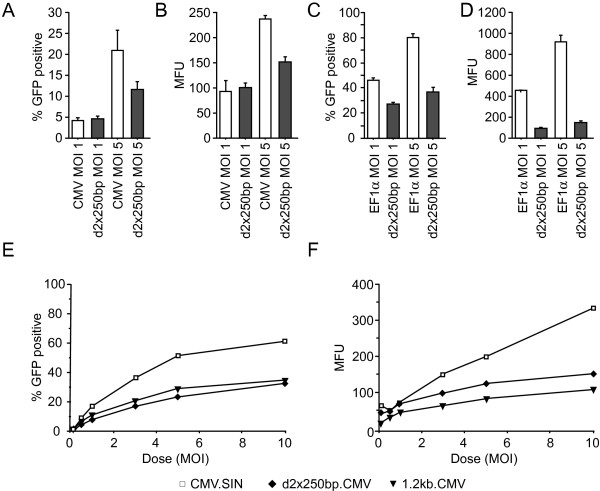
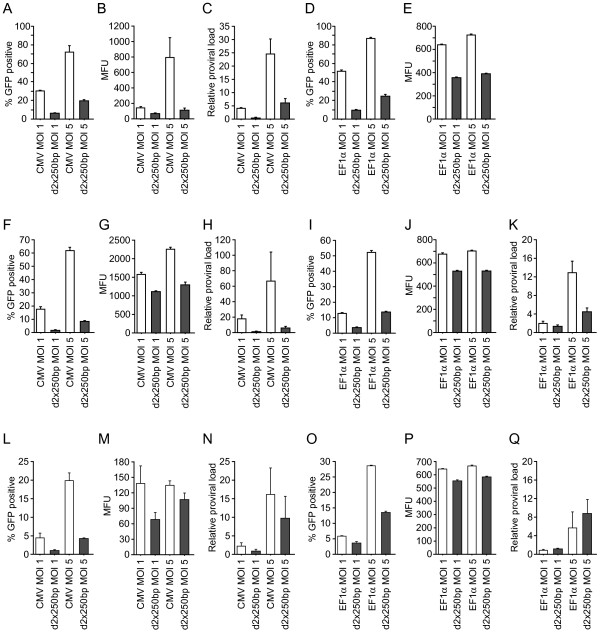
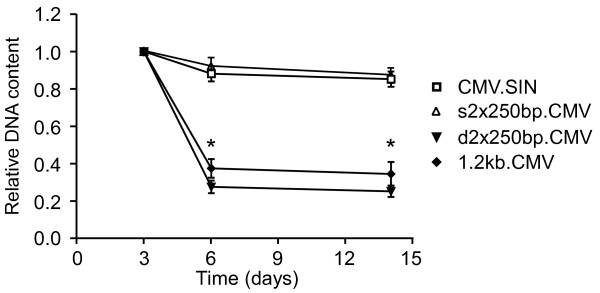
In this study we cloned in tandem copies of the chicken beta-globin insulator (cHS4) on both sides of the transgene cassette in order to enhance the insulating effect. Our insulator vectors were produced at significantly lower titers compared to control vectors, and we show that this reduction in titer is due to a block during the transduction process that appears after reverse transcription but before integration of the viral DNA. This non-integrated viral DNA could be detected by PCR and, importantly, prevented efficient transduction of target cells.
These results have importance for the future use of insulator sequences in lentiviral vectors and might limit the use of insulators in vectors for in vivo use. Therefore, a careful analysis of the optimal design must be performed before insulators are included into clinical lentiviral vectors.
慢病毒载体作为基因治疗环境中的基因转移载体具有巨大潜力。然而,与插入诱变风险、转基因沉默和位置效应相关的问题阻碍了此类载体在临床上的应用。染色质绝缘子是边界元件,如果置于增强子和启动子之间,可防止它们相互作用,并保护转基因盒免受沉默和位置效应的影响。有人提出绝缘子可提高慢病毒载体的安全性和性能。因此,绝缘子已被整合到慢病毒载体中,以提高其安全性并改善转基因表达。通常,此类绝缘子载体的滴度低于对照载体,从而限制了它们的潜在应用。
在本研究中,我们在转基因盒两侧串联克隆了鸡β-珠蛋白绝缘子(cHS4),以增强绝缘效果。与对照载体相比,我们的绝缘子载体滴度显著降低,并且我们表明滴度降低是由于转导过程中的一个阻滞,该阻滞出现在逆转录后但病毒DNA整合前。这种未整合的病毒DNA可通过PCR检测到,重要的是,它阻止了靶细胞的有效转导。
这些结果对绝缘子序列在慢病毒载体中的未来应用具有重要意义,可能会限制绝缘子在体内使用的载体中的应用。因此,在将绝缘子纳入临床慢病毒载体之前,必须对最佳设计进行仔细分析。