Jiménez Carlos, Capasso Juan M, Edelstein Charles L, Rivard Christopher J, Lucia Scott, Breusegem Sophia, Berl Tomás, Segovia María
Department of Ecology, Faculty of Sciences, University of Málaga, Bvd. Louis Pasteur s/n, E-29071 Málaga, Spain.
J Exp Bot. 2009;60(3):815-28. doi: 10.1093/jxb/ern330. Epub 2009 Feb 27.
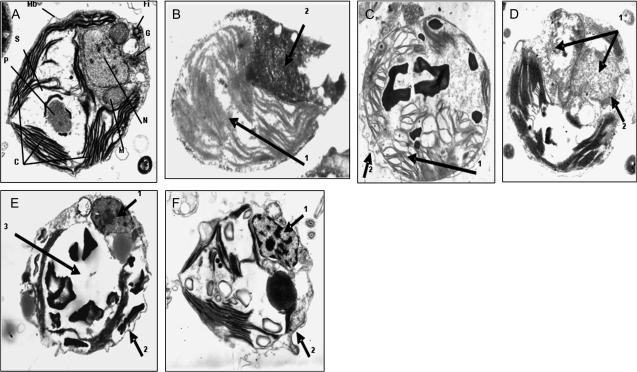
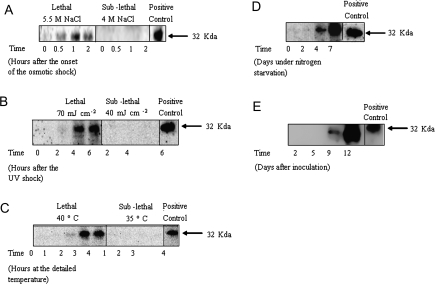
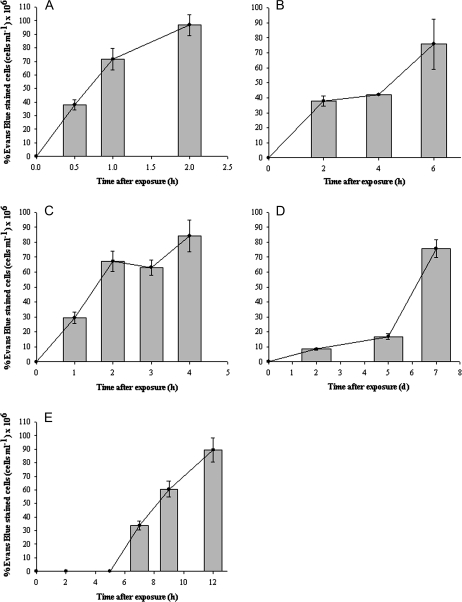
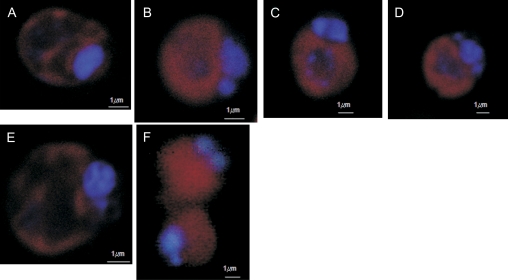
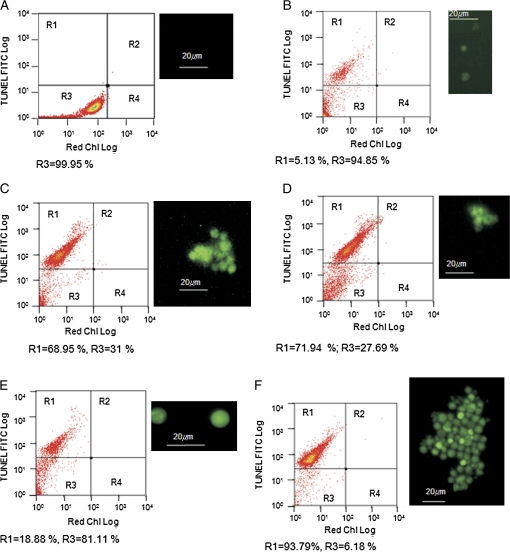
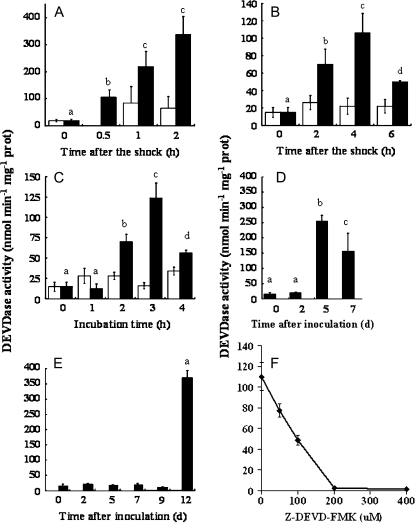
Programmed cell death is necessary for homeostasis in multicellular organisms and it is also widely recognized to occur in unicellular organisms. However, the mechanisms through which it occurs in unicells, and the enzymes involved within the final response is still the subject of heated debate. It is shown here that exposure of the unicellular microalga Dunaliella viridis to several environmental stresses, induced different cell death morphotypes, depending on the stimulus received. Senescent cells demonstrated classical and unambiguous apoptotic-like characteristics such as chromatin condensation, DNA fragmentation, intact organelles, and blebbing of the cell membrane. Acute heat shock caused general swelling and altered plasma membrane, but the presence of chromatin clusters and DNA strand breaks suggested a necrotic-like event. UV irradiated cells presented changes typical for necrosis, together with apoptotic characteristics resembling an intermediate cell-death phenotype termed aponecrosis-like. Cells subjected to hyperosmotic shock revealed chromatin spotting without DNA fragmentation, and extensive cytoplasmic swelling and vacuolization, comparable to a paraptotic-like cell death phenotype. Nitrogen-starved cells showed pyknosis, blebbing, and cytoplasmic consumption, indicating a similarity to autophagic/vacuolar-like cell death. The caspase-like activity DEVDase was measured by using the fluorescent substrate Ac-DEVD-AMC and antibodies against the human caspase-3 active enzyme cross-reacted with bands, the intensity of which paralleled the activity. All the environmental stresses tested produced a substantial increase in both DEVDase activity and protein levels. The irreversible caspase-3 inhibitor Z-DEVD-FMK completely inhibited the enzymatic activity whereas serine and aspartyl proteases inhibitors did not. These results show that cell death in D. viridis does not conform to a single pattern and that environmental stimuli may produce different types of cell death depending on the type and intensity of the stimulus, all of which help to understand the cell death-dependent and cell death-independent functions of caspase-like proteins. Hence, these data support the theory that alternative, non-apoptotic programmed cell death (PCDs), exist either in parallel or in an independent manner with apoptosis and were already present in single-celled organisms that evolved some 1.2-1.6 billion years ago.
程序性细胞死亡对于多细胞生物的体内平衡至关重要,并且在单细胞生物中也广泛存在,这一点已得到广泛认可。然而,它在单细胞生物中发生的机制以及最终反应中涉及的酶仍然是激烈争论的主题。本文表明,单细胞绿藻杜氏盐藻暴露于几种环境压力下,会根据所接受的刺激诱导出不同的细胞死亡形态类型。衰老细胞表现出典型且明确的凋亡样特征,如染色质浓缩、DNA片段化、细胞器完整以及细胞膜起泡。急性热休克导致细胞普遍肿胀并改变质膜,但染色质簇和DNA链断裂的存在表明这是一种坏死样事件。紫外线照射的细胞呈现出典型的坏死变化,同时具有类似凋亡的特征,类似于一种被称为类凋亡坏死的中间细胞死亡表型。遭受高渗休克的细胞显示出染色质斑点但无DNA片段化,以及广泛的细胞质肿胀和空泡化,类似于类副凋亡细胞死亡表型。氮饥饿细胞表现出核固缩、起泡和细胞质消耗,表明与自噬/液泡样细胞死亡相似。通过使用荧光底物Ac-DEVD-AMC测量了类半胱天冬酶活性DEVDase,并且针对人半胱天冬酶-3活性酶的抗体与条带发生交叉反应,其强度与活性平行。所有测试的环境压力均导致DEVDase活性和蛋白质水平大幅增加。不可逆的半胱天冬酶-3抑制剂Z-DEVD-FMK完全抑制了酶活性,而丝氨酸和天冬氨酸蛋白酶抑制剂则没有。这些结果表明,杜氏盐藻中的细胞死亡并不符合单一模式,环境刺激可能根据刺激的类型和强度产生不同类型的细胞死亡,所有这些都有助于理解类半胱天冬酶样蛋白的细胞死亡依赖性和细胞死亡非依赖性功能。因此,这些数据支持这样一种理论,即替代性的、非凋亡性程序性细胞死亡(PCDs)与凋亡并行或独立存在,并且在约12亿至16亿年前进化的单细胞生物中就已存在。