Siththanandan V B, Tobacman L S, Van Gorder N, Homsher E
Physiology Department, David Geffen School of Medicine, UCLA, Los Angeles, CA, 90095, USA.
Pflugers Arch. 2009 Aug;458(4):761-76. doi: 10.1007/s00424-009-0653-3. Epub 2009 Mar 3.
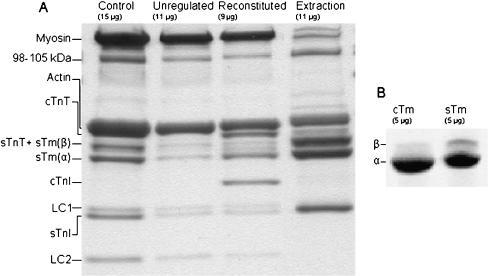
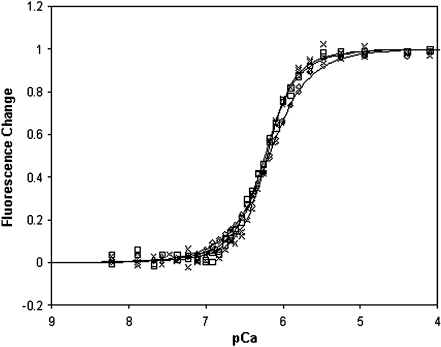
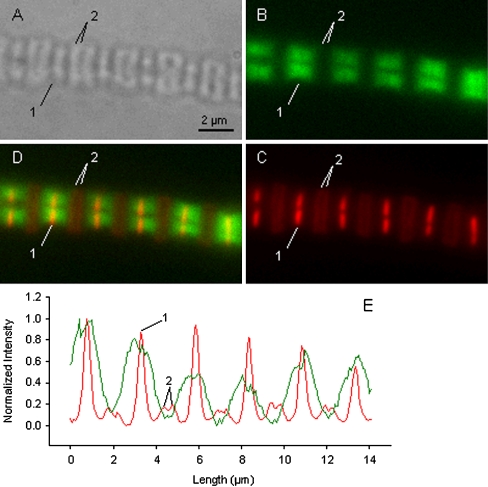
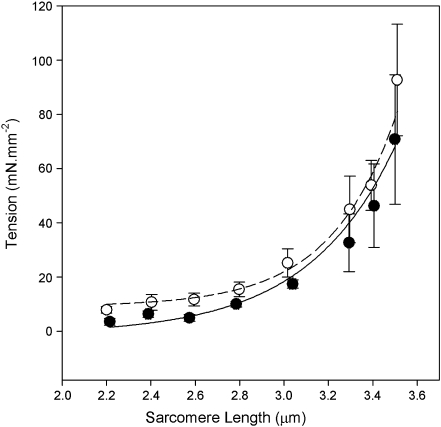
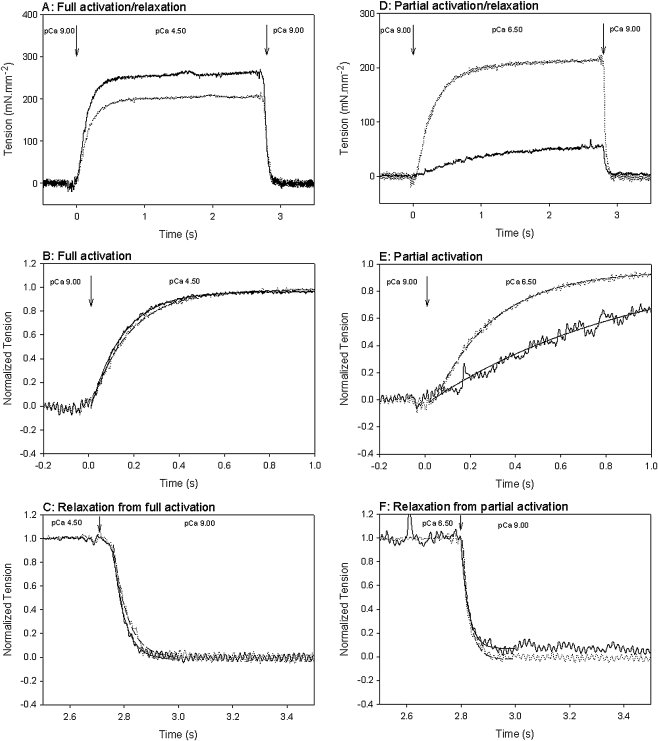
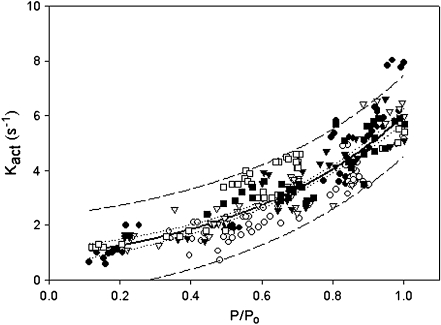
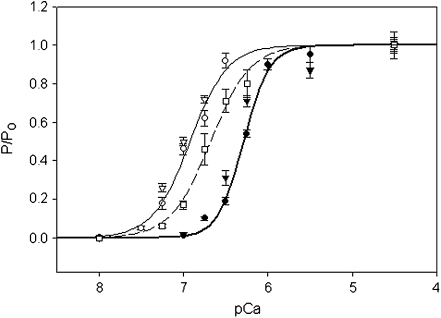
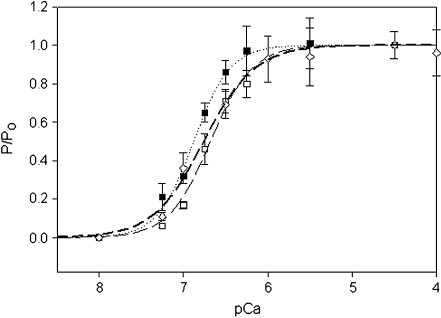
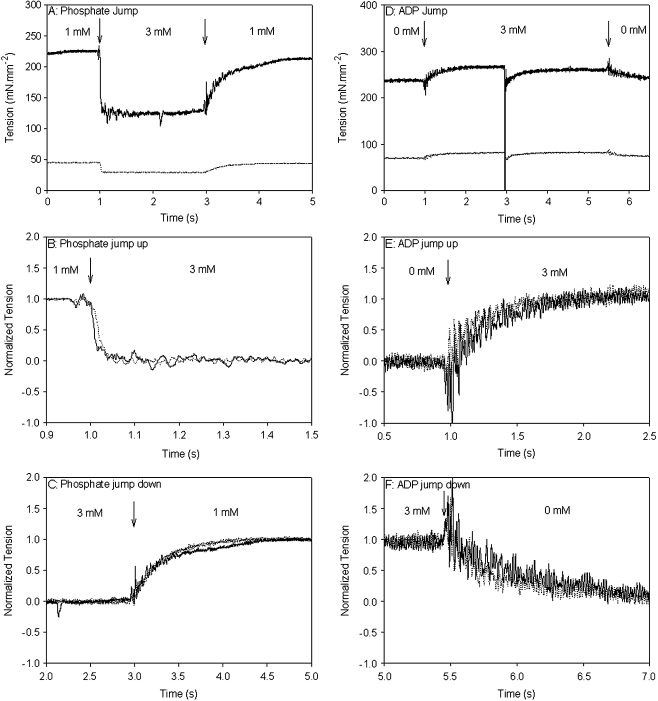
The effects of tropomyosin on muscle mechanics and kinetics were examined in skeletal myofibrils using a novel method to remove tropomyosin (Tm) and troponin (Tn) and then replace these proteins with altered versions. Extraction employed a low ionic strength rigor solution, followed by sequential reconstitution at physiological ionic strength with Tm then Tn. SDS-PAGE analysis was consistent with full reconstitution, and fluorescence imaging after reconstitution using Oregon-green-labeled Tm indicated the expected localization. Myofibrils remained mechanically viable: maximum isometric forces of myofibrils after sTm/sTn reconstitution (control) were comparable (~84%) to the forces generated by non-reconstituted preparations, and the reconstitution minimally affected the rate of isometric activation (k (act)), calcium sensitivity (pCa(50)), and cooperativity (n (H)). Reconstitutions using various combinations of cardiac and skeletal Tm and Tn indicated that isoforms of both Tm and Tn influence calcium sensitivity of force development in opposite directions, but the isoforms do not otherwise alter cross-bridge kinetics. Myofibrils reconstituted with Delta23Tm, a deletion mutant lacking the second and third of Tm's seven quasi-repeats, exhibited greatly depressed maximal force, moderately slower k (act) rates and reduced n (H). Delta23Tm similarly decreased the cooperativity of calcium binding to the troponin regulatory sites of isolated thin filaments in solution. The mechanisms behind these effects of Delta23Tm also were investigated using P ( i ) and ADP jumps. P ( i ) and ADP kinetics were indistinguishable in Delta23Tm myofibrils compared to controls. The results suggest that the deleted region of tropomyosin is important for cooperative thin filament activation by calcium.
利用一种去除原肌球蛋白(Tm)和肌钙蛋白(Tn)然后用改变后的版本替换这些蛋白质的新方法,在骨骼肌肌原纤维中研究了原肌球蛋白对肌肉力学和动力学的影响。提取过程采用低离子强度的僵直溶液,随后在生理离子强度下依次用Tm然后用Tn进行重组。SDS-PAGE分析与完全重组一致,使用俄勒冈绿标记的Tm重组后的荧光成像显示了预期的定位。肌原纤维在机械上仍然可行:sTm/sTn重组后(对照)的肌原纤维最大等长力与未重组制剂产生的力相当(约84%),并且重组对等长激活速率(k(act))、钙敏感性(pCa(50))和协同性(n(H))的影响最小。使用心脏和骨骼肌Tm和Tn的各种组合进行重组表明,Tm和Tn的同工型以相反的方向影响力发展的钙敏感性,但这些同工型在其他方面不会改变横桥动力学。用Delta23Tm重组的肌原纤维,Delta23Tm是一种缺失Tm七个准重复序列中的第二个和第三个的缺失突变体,其最大力大大降低,k(act)速率适度减慢,n(H)降低。Delta23Tm同样降低了溶液中分离的细肌丝与肌钙蛋白调节位点结合钙的协同性。还使用无机磷酸(Pi)和ADP跃升研究了Delta23Tm这些效应背后的机制。与对照相比,Delta23Tm肌原纤维中的Pi和ADP动力学没有区别。结果表明,原肌球蛋白的缺失区域对于钙协同激活细肌丝很重要。