Steele N, Finn P, Brown R, Plumb J A
Centre for Oncology and Applied Pharmacology, University of Glasgow, UK.
Br J Cancer. 2009 Mar 10;100(5):758-63. doi: 10.1038/sj.bjc.6604932.
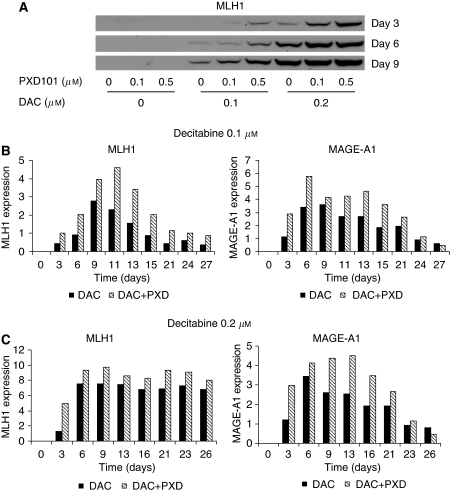
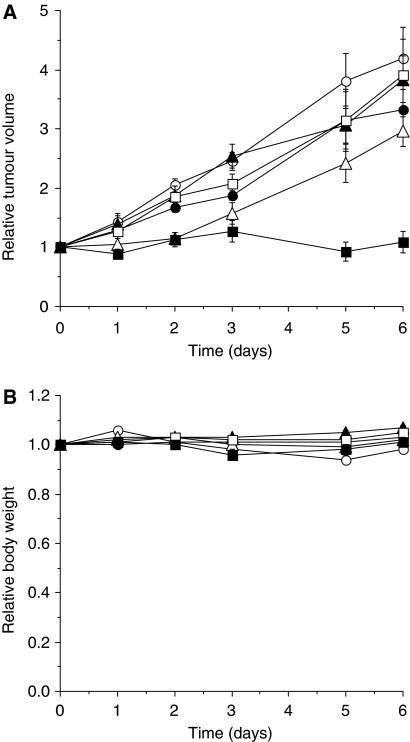
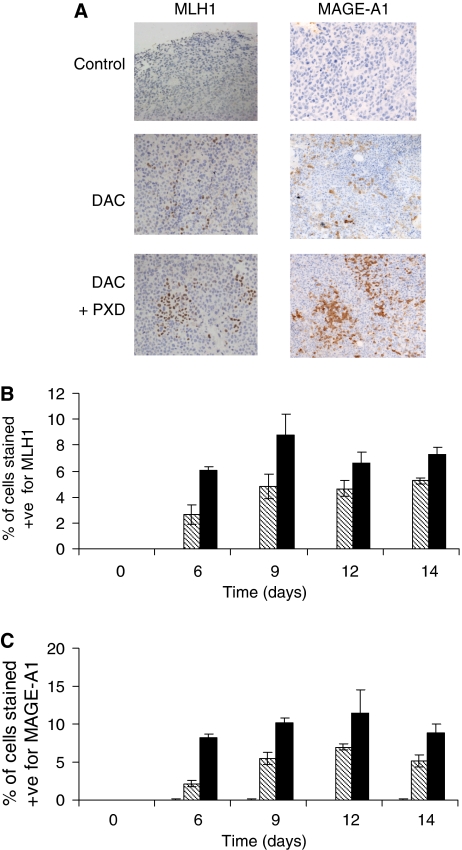
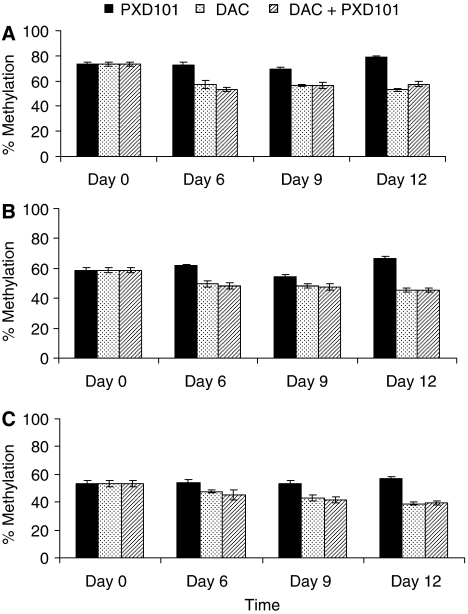
Histone deacetylation and DNA methylation have a central role in the control of gene expression in tumours, including transcriptional repression of tumour suppressor genes and genes involved in sensitivity to chemotherapy. Treatment of cisplatin-resistant cell lines with an inhibitor of DNA methyltransferases, 2-deoxy-5'azacytidine (decitabine), results in partial reversal of DNA methylation, re-expression of epigenetically silenced genes including hMLH1 and sensitisation to cisplatin both in vitro and in vivo. We have investigated whether the combination of decitabine and a clinically relevant inhibitor of histone deacetylase activity (belinostat, PXD101) can further increase the re-expression of genes epigenetically silenced by DNA methylation and enhance chemo-sensitisation in vivo at well-tolerated doses. The cisplatin-resistant human ovarian cell line A2780/cp70 has the hMLH1 gene methylated and is resistant to cisplatin both in vitro and when grown as a xenograft in mice. Treatment of A2780/cp70 with decitabine and belinostat results in a marked increase in expression of epigenetically silenced MLH1 and MAGE-A1 both in vitro and in vivo when compared with decitabine alone. The combination greatly enhanced the effects of decitabine alone on the cisplatin sensitivity of xenografts. As the dose of decitabine that can be given to patients and hence the maximum pharmacodynamic effect as a demethylating agent is limited by toxicity and eventual re-methylation of genes, we suggest that the combination of decitabine and belinostat could have a role in the efficacy of chemotherapy in tumours that have acquired drug resistance due to DNA methylation and gene silencing.
组蛋白去乙酰化和DNA甲基化在肿瘤基因表达调控中起核心作用,包括对肿瘤抑制基因以及与化疗敏感性相关基因的转录抑制。用DNA甲基转移酶抑制剂2-脱氧-5'-氮杂胞苷(地西他滨)处理顺铂耐药细胞系,可导致DNA甲基化部分逆转,使包括hMLH1在内的表观遗传沉默基因重新表达,并在体外和体内增强对顺铂的敏感性。我们研究了地西他滨与临床上相关的组蛋白去乙酰化酶活性抑制剂(贝利司他,PXD101)联合使用是否能进一步增加因DNA甲基化而表观遗传沉默的基因的重新表达,并在体内以耐受性良好的剂量增强化疗敏感性。顺铂耐药的人卵巢癌细胞系A2780/cp70的hMLH1基因发生甲基化,在体外以及作为异种移植物在小鼠体内生长时均对顺铂耐药。与单独使用地西他滨相比,用地西他滨和贝利司他处理A2780/cp70可导致体外和体内表观遗传沉默的MLH1和MAGE-A1表达显著增加。该联合用药大大增强了地西他滨单独使用时对异种移植物顺铂敏感性的影响。由于可给予患者的地西他滨剂量以及作为去甲基化剂的最大药效学效应受到毒性和基因最终重新甲基化的限制,我们认为地西他滨和贝利司他联合使用可能在因DNA甲基化和基因沉默而获得耐药性的肿瘤化疗疗效方面发挥作用。