Haller J, Barna I, Barsvari B, Gyimesi Pelczer K, Yasar S, Panlilio L V, Goldberg S
Institute of Experimental Medicine, P.O. Box 67, Budapest, 1450, Hungary.
Psychopharmacology (Berl). 2009 Jul;204(4):607-16. doi: 10.1007/s00213-009-1494-7. Epub 2009 Mar 4.
Since the discovery of endogenous cannabinoid signaling, the number of studies exploring its role in health and disease has increased exponentially. Fatty acid amide hydrolase (FAAH), the enzyme responsible for degradation of the endocannabinoid anandamide, has emerged as a promising target for anxiety-related disorders. FAAH inhibitors (e.g., URB597) increase brain levels of anandamide and induce anxiolytic-like effects in rodents. Recent findings, however, questioned the efficacy of URB597 as an anxiolytic.
We tested here the hypothesis that conflicting findings are due to variations in the stressfulness of experimental conditions employed in various studies.
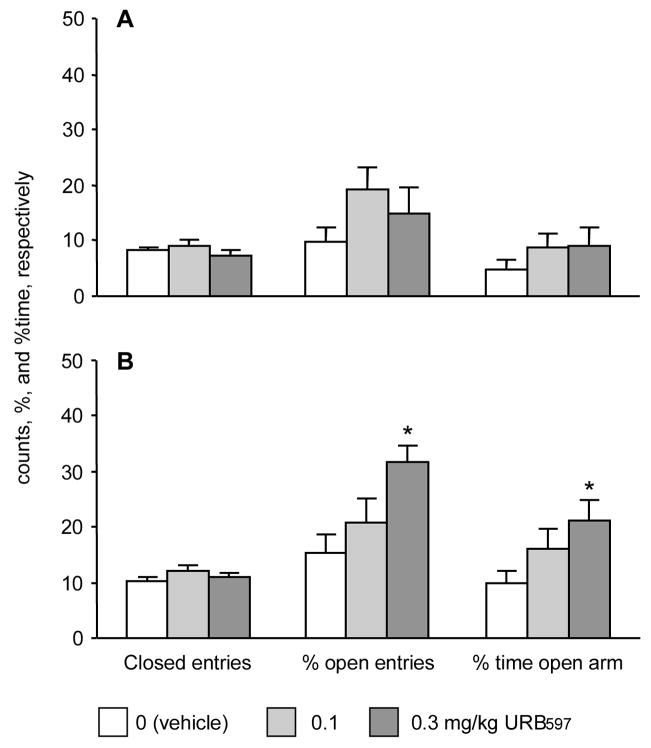
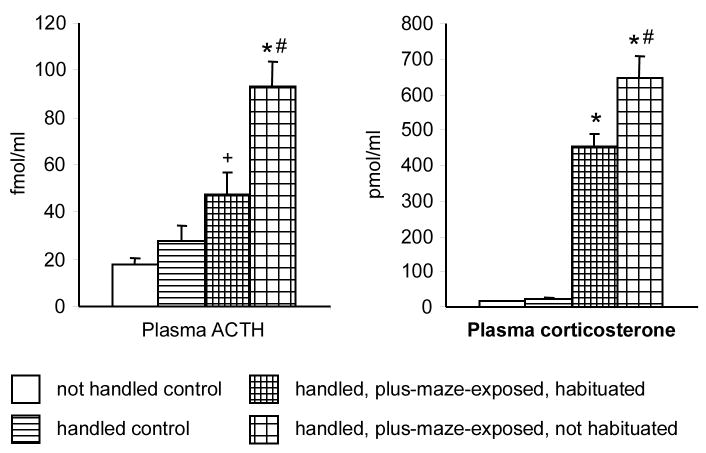
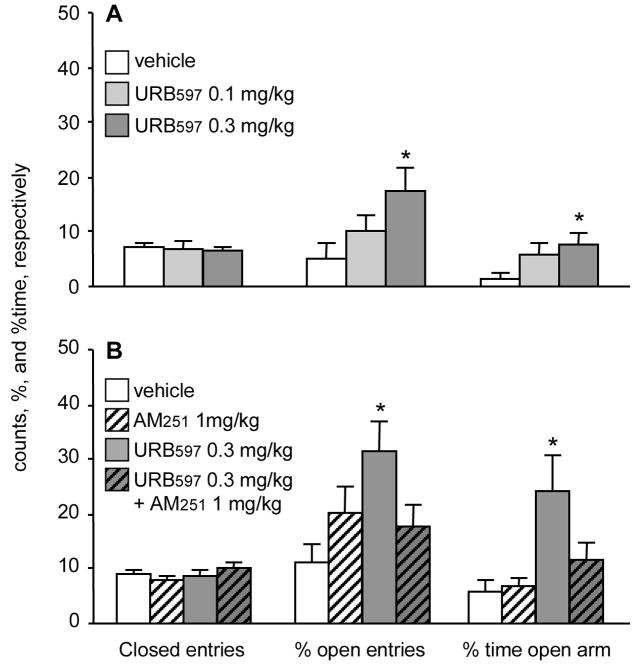
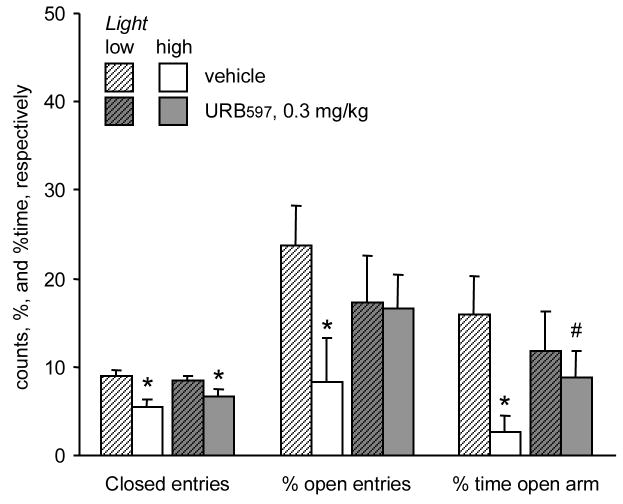
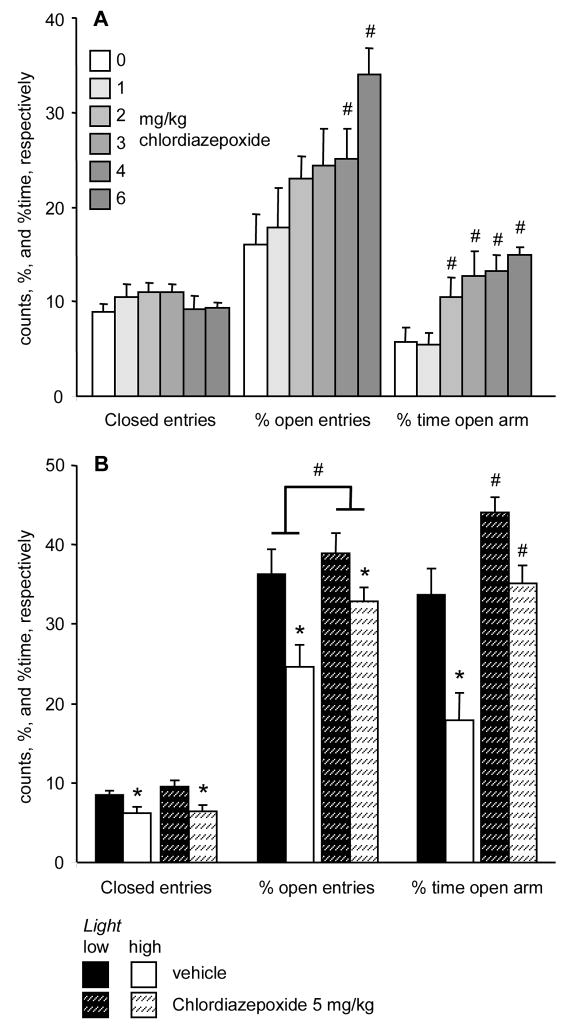
We found that URB597 (0.1-0.3 mg/kg) did not produce anxiolytic effects when the aversiveness of testing procedures was minimized by handling rats daily before experimentation, by habituating them to the experimental room, or by employing low illumination during testing. In contrast, URB597 had robust anxiolytic effects when the aversiveness of the testing environment was increased by eliminating habituation to the experimental room or by employing bright lighting conditions. Unlike URB597, the benzodiazepine chlordiazepoxide (5 mg/kg) had anxiolytic effects under all testing conditions. The anxiolytic effects of URB597 were abolished by the cannabinoid CB1-receptor antagonist AM251, showing that they were mediated by CB1 receptors. Close inspection of experimental conditions employed in earlier reports suggests that conflicting findings with URB597 can be explained by different testing conditions, such as those manipulated in the present study.
Our findings show that FAAH inhibition does not affect anxiety under mildly stressful circumstances but protects against the anxiogenic effects of aversive stimuli.
自内源性大麻素信号被发现以来,探索其在健康与疾病中作用的研究数量呈指数级增长。脂肪酸酰胺水解酶(FAAH)是负责降解内源性大麻素花生四烯乙醇胺的酶,已成为焦虑相关疾病的一个有前景的靶点。FAAH抑制剂(如URB597)可提高大脑中花生四烯乙醇胺的水平,并在啮齿动物中诱导出抗焦虑样效应。然而,最近的研究结果对URB597作为抗焦虑药的疗效提出了质疑。
我们在此检验了一个假设,即相互矛盾的研究结果是由于各研究中所采用实验条件的应激程度存在差异所致。
我们发现,当通过在实验前每日处理大鼠、使其适应实验环境或在测试期间采用低光照来将测试程序的厌恶程度降至最低时,URB597(0.1 - 0.3毫克/千克)并未产生抗焦虑作用。相比之下,当通过消除对实验环境的适应或采用明亮光照条件来增加测试环境的厌恶程度时,URB597具有显著的抗焦虑作用。与URB597不同,苯二氮䓬类药物氯氮䓬(5毫克/千克)在所有测试条件下均具有抗焦虑作用。URB597的抗焦虑作用被大麻素CB1受体拮抗剂AM251消除,表明其作用是由CB1受体介导的。仔细检查早期报告中所采用的实验条件表明,与URB597相互矛盾的研究结果可以用不同的测试条件来解释,比如本研究中所操控的那些条件。
我们的研究结果表明,在轻度应激情况下,抑制FAAH不会影响焦虑,但能抵御厌恶刺激的致焦虑作用。