Rottner Mathilde, Freyssinet Jean-Marie, Martínez M Carmen
1INSERM U 770; Université Paris-Sud 11, Faculté de Médecine, Hôpital de Bicêtre, Le Kremlin-Bicêtre, France.
Respir Res. 2009 Mar 13;10(1):23. doi: 10.1186/1465-9921-10-23.
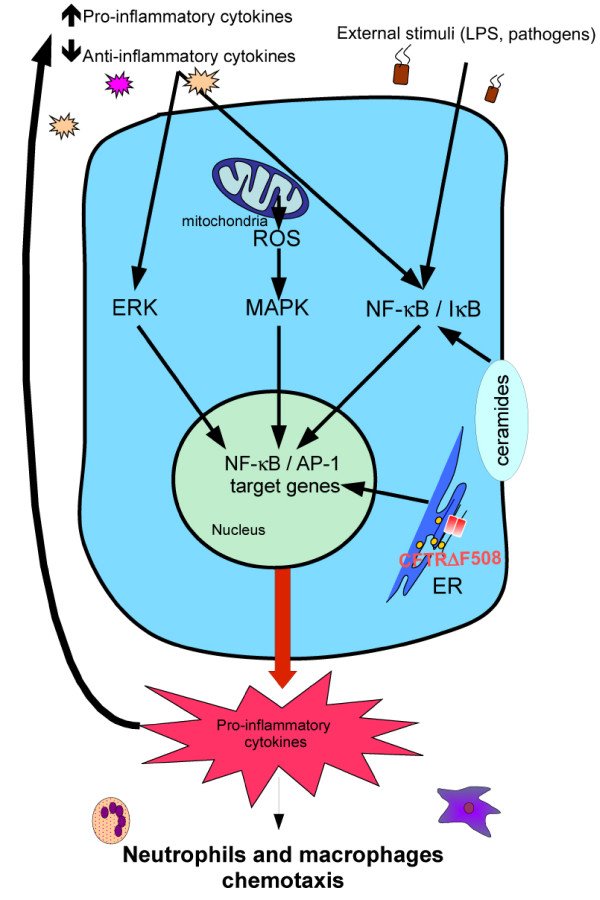
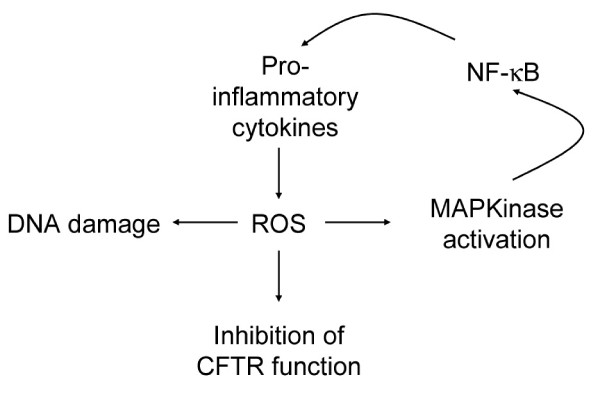
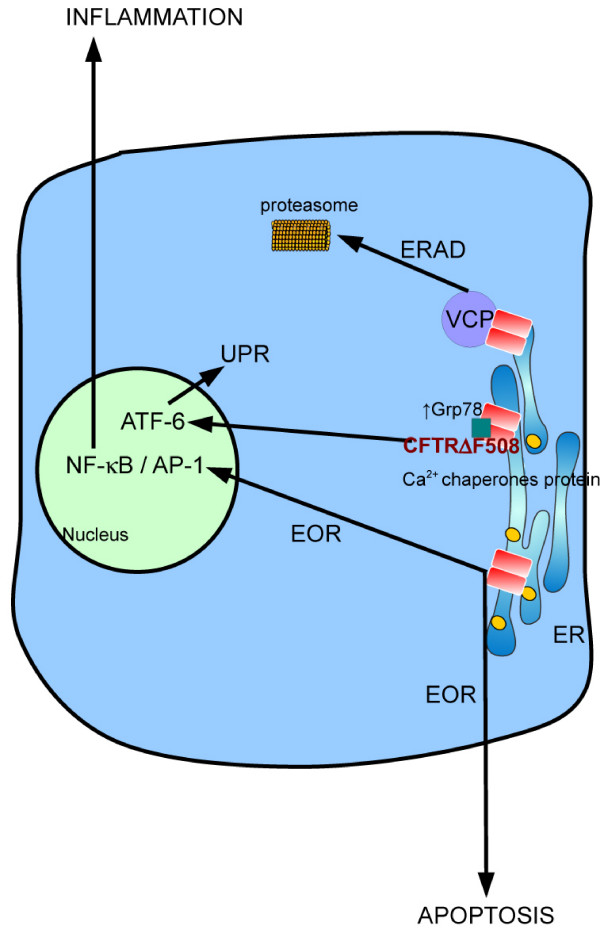
Multiple evidences indicate that inflammation is an event occurring prior to infection in patients with cystic fibrosis. The self-perpetuating inflammatory cycle may play a pathogenic part in this disease. The role of the NF-kappaB pathway in enhanced production of inflammatory mediators is well documented. The pathophysiologic mechanisms through which the intrinsic inflammatory response develops remain unclear. The unfolded mutated protein cystic fibrosis transmembrane conductance regulator (CFTRDeltaF508), accounting for this pathology, is retained in the endoplasmic reticulum (ER), induces a stress, and modifies calcium homeostasis. Furthermore, CFTR is implicated in the transport of glutathione, the major antioxidant element in cells. CFTR mutations can alter redox homeostasis and induce an oxidative stress. The disturbance of the redox balance may evoke NF-kappaB activation and, in addition, promote apoptosis. In this review, we examine the hypotheses of the integrated pathogenic processes leading to the intrinsic inflammatory response in cystic fibrosis.
多项证据表明,炎症是囊性纤维化患者感染之前发生的一个事件。自我持续的炎症循环可能在这种疾病中起致病作用。NF-κB通路在炎症介质产生增加中的作用已得到充分证明。内在炎症反应发生的病理生理机制仍不清楚。导致这种病理状况的未折叠突变蛋白囊性纤维化跨膜传导调节因子(CFTRDeltaF508)滞留在内质网(ER)中,引发应激,并改变钙稳态。此外,CFTR参与细胞内主要抗氧化元素谷胱甘肽的转运。CFTR突变可改变氧化还原稳态并诱导氧化应激。氧化还原平衡的紊乱可能引发NF-κB激活,此外,还会促进细胞凋亡。在这篇综述中,我们研究了导致囊性纤维化内在炎症反应的综合致病过程的假说。