Wang Fudong, Tang Rui, Kao Jeff L-F, Dingman Sean D, Buhro William E
Department of Chemistry and Center for Materials Innovation, Washington University, Saint Louis, Missouri 63130-4899, USA.
J Am Chem Soc. 2009 Apr 8;131(13):4983-94. doi: 10.1021/ja900191n.
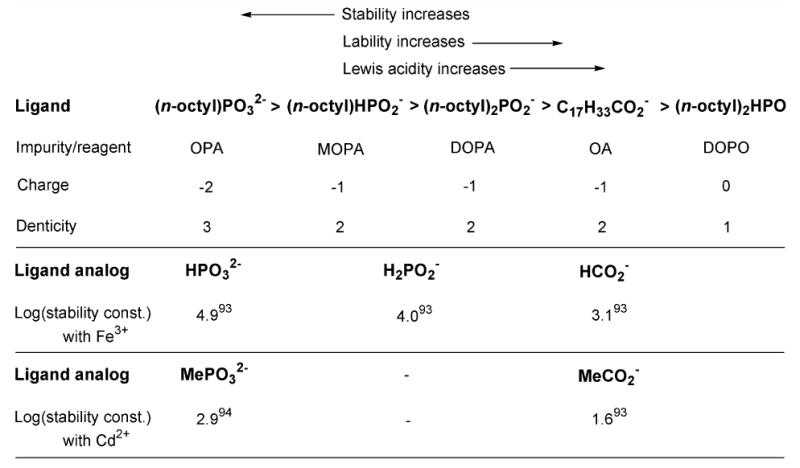
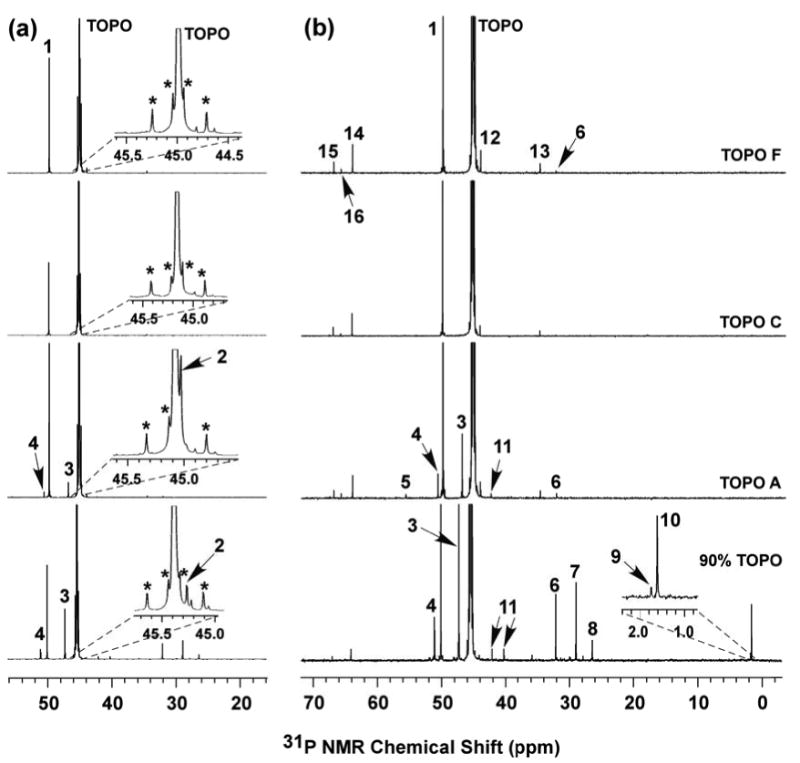
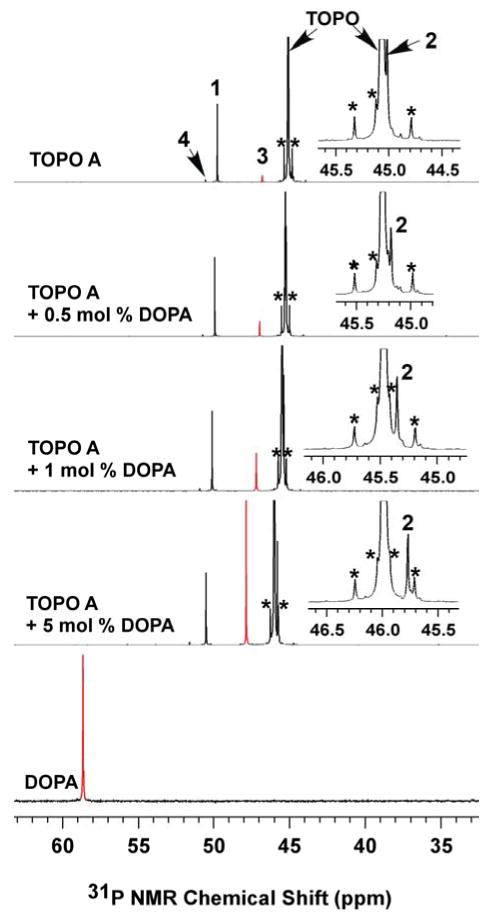
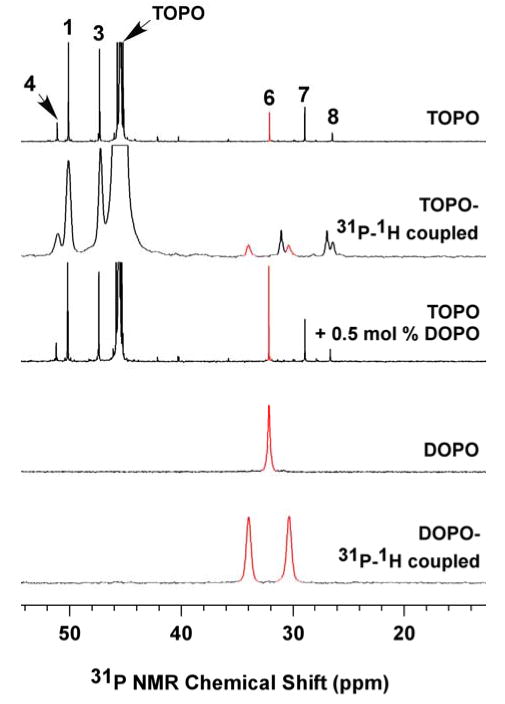
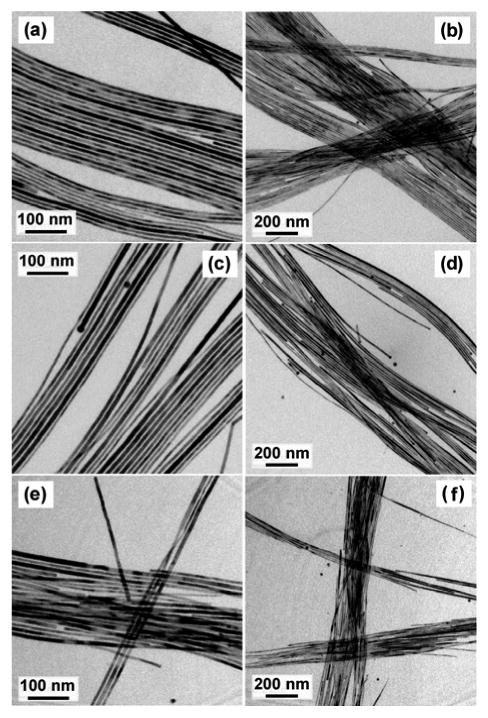
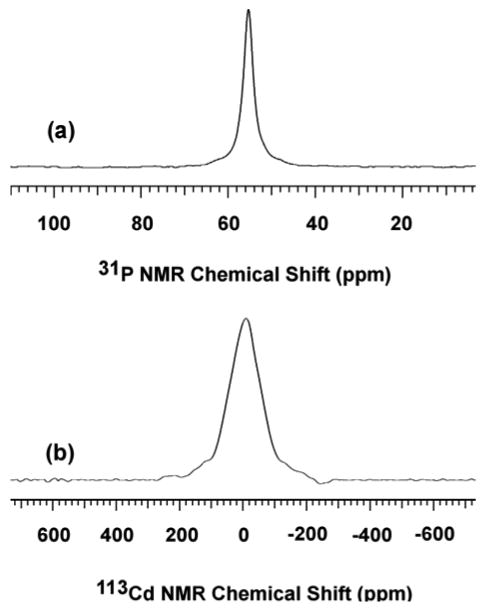
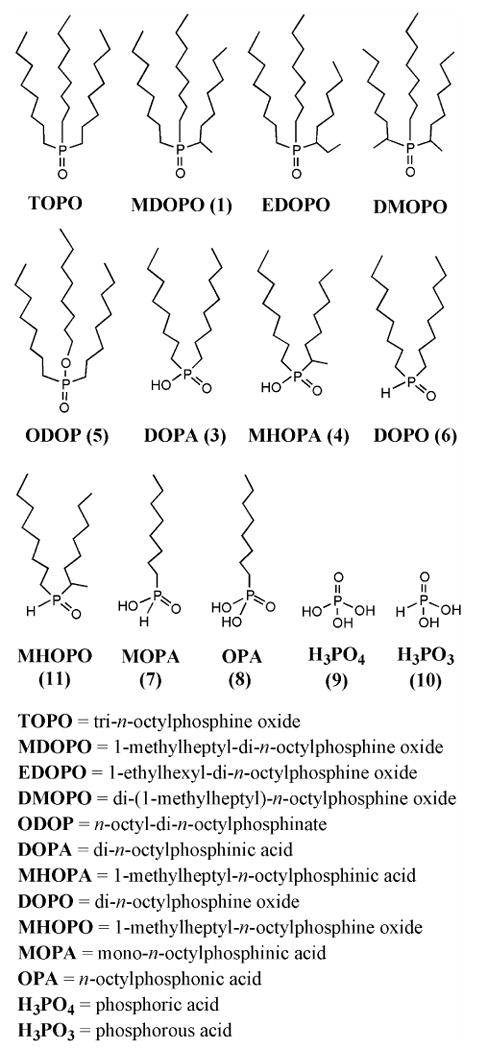
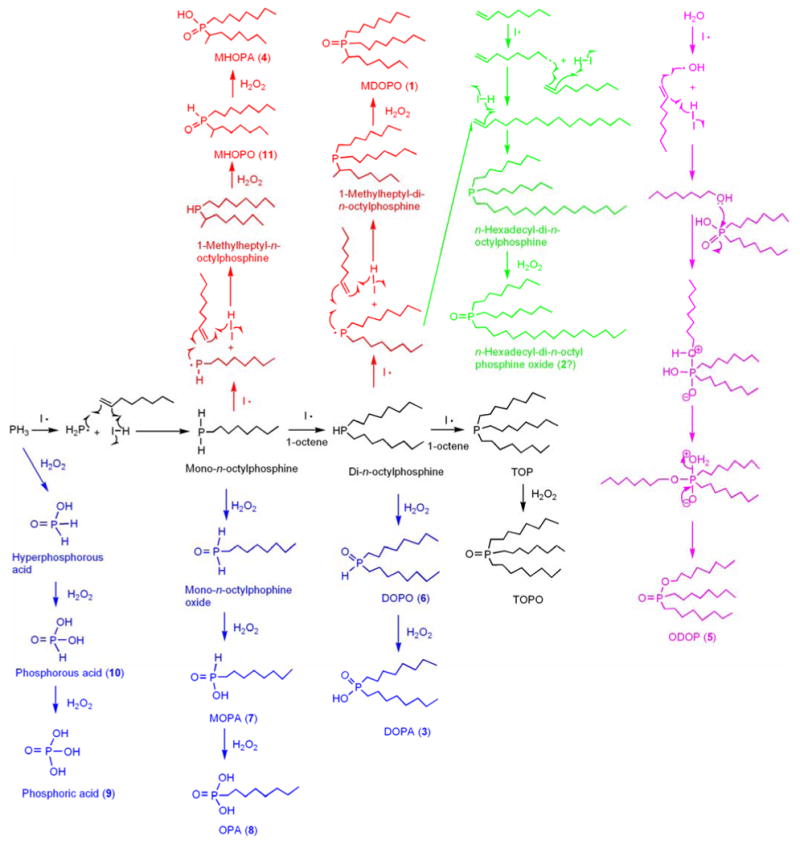
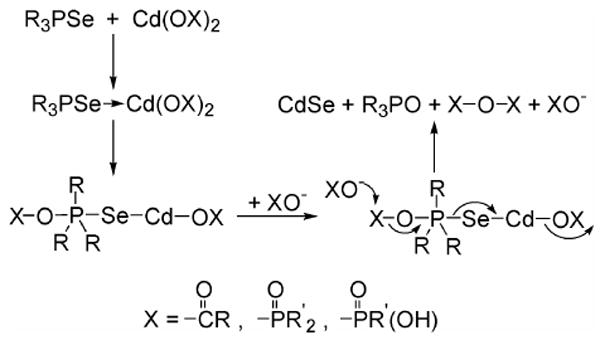
Tri-n-octylphosphine oxide (TOPO) is the most commonly used solvent for the synthesis of colloidal nanocrystals. Here we show that the use of different batches of commercially obtained TOPO solvent introduces significant variability into the outcomes of CdSe quantum-wire syntheses. This irreproducibility is attributed to varying amounts of phosphorus-containing impurities in the different TOPO batches. We employ (31)P NMR to identify 10 of the common TOPO impurities. Their beneficial, harmful, or negligible effects on quantum-wire growth are determined. The impurity di-n-octylphosphinic acid (DOPA) is found to be the important beneficial TOPO impurity for the reproducible growth of high-quality CdSe quantum wires. DOPA is shown to beneficially modify precursor reactivity through ligand substitution. The other significant TOPO impurities are ranked according to their abilities to similarly influence precursor reactivity. The results are likely of general relevance to most nanocrystal syntheses conducted in TOPO.
三辛基氧化膦(TOPO)是合成胶体纳米晶体最常用的溶剂。在此我们表明,使用不同批次市售获得的TOPO溶剂会给CdSe量子线合成的结果带来显著的变异性。这种不可重复性归因于不同TOPO批次中含磷杂质的含量不同。我们采用³¹P核磁共振来鉴定10种常见的TOPO杂质。确定了它们对量子线生长的有益、有害或可忽略不计的影响。发现杂质二辛基次膦酸(DOPA)是高质量CdSe量子线可重复生长的重要有益TOPO杂质。结果表明,DOPA通过配体取代有益地改变了前驱体的反应活性。根据其他重要的TOPO杂质类似地影响前驱体反应活性的能力对其进行了排序。这些结果可能与大多数在TOPO中进行的纳米晶体合成普遍相关。