Gascoyne Peter R C, Noshari Jamileh, Anderson Thomas J, Becker Frederick F
Department of Molecular Pathology, University of Texas M. D. Anderson Cancer Center, Houston, TX 77030, USA.
Electrophoresis. 2009 Apr;30(8):1388-98. doi: 10.1002/elps.200800373.
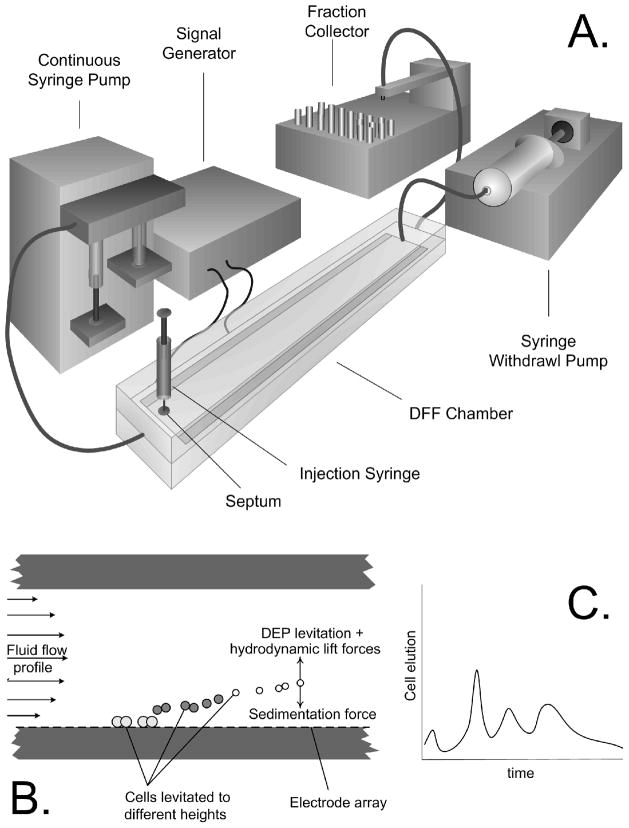
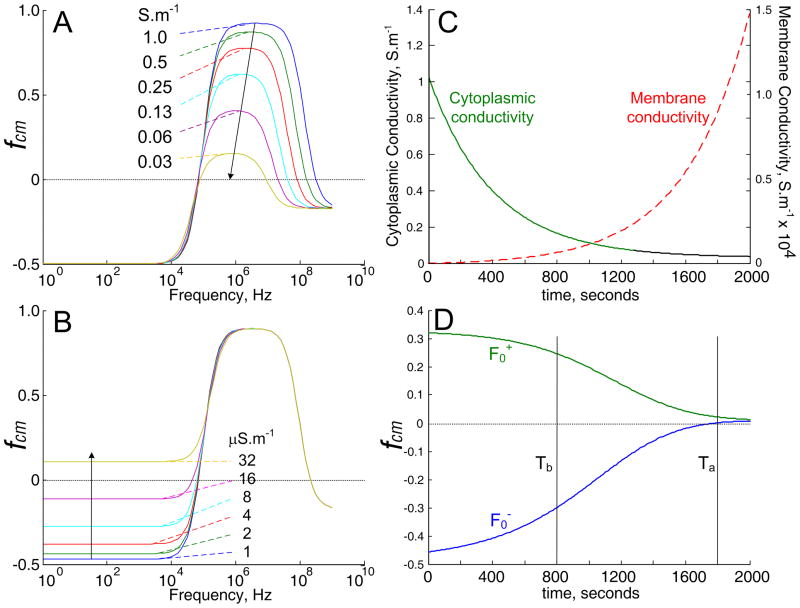
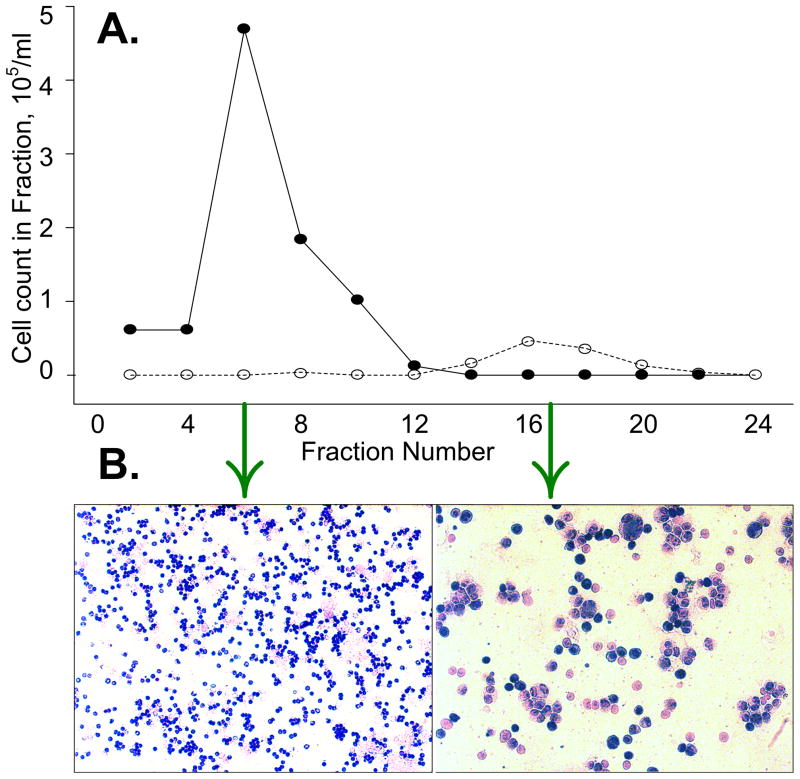
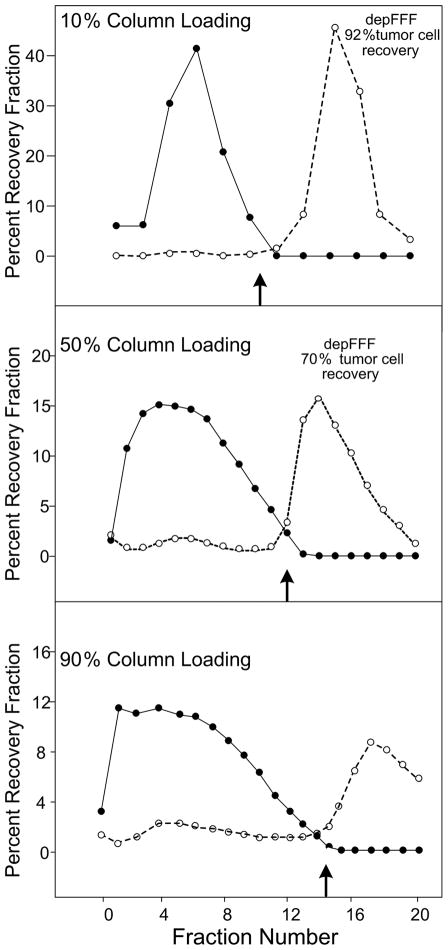
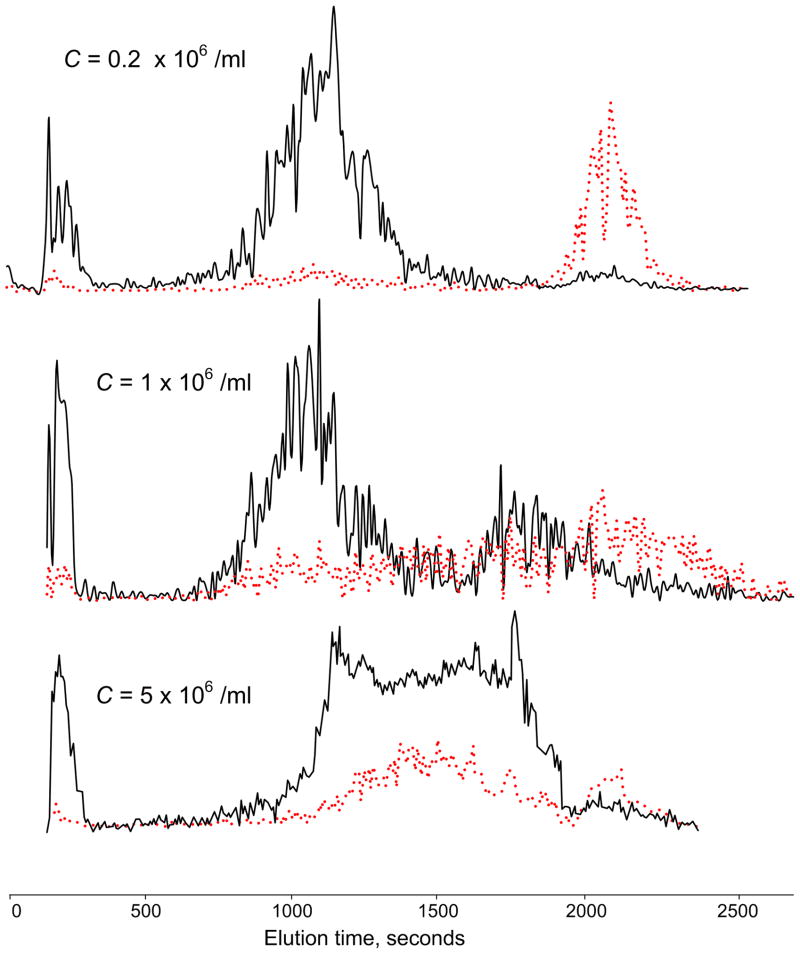
The application of dielectrophoretic field-flow fractionation (depFFF) to the isolation of circulating tumor cells (CTCs) from clinical blood specimens was studied using simulated cell mixtures of three different cultured tumor cell types with peripheral blood. The depFFF method can not only exploit intrinsic tumor cell properties so that labeling is unnecessary but can also deliver unmodified, viable tumor cells for culture and/or all types of molecular analysis. We investigated tumor cell recovery efficiency as a function of cell loading for a 25 mm wide x 300 mm long depFFF chamber. More than 90% of tumor cells were recovered for small samples but a larger chamber will be required if similarly high recovery efficiencies are to be realized for 10 mL blood specimens used CTC analysis in clinics. We show that the factor limiting isolation efficiency is cell-cell dielectric interactions and that isolation protocols should be completed within approximately 15 min in order to avoid changes in cell dielectric properties associated with ion leakage.
我们使用三种不同培养肿瘤细胞类型与外周血的模拟细胞混合物,研究了介电泳场流分离法(depFFF)在从临床血液标本中分离循环肿瘤细胞(CTC)方面的应用。depFFF方法不仅可以利用肿瘤细胞的固有特性,从而无需标记,还可以提供未经修饰的活肿瘤细胞用于培养和/或各种分子分析。我们研究了在一个25毫米宽×300毫米长的depFFF分离室中,肿瘤细胞回收效率与细胞加载量的关系。对于小样本,超过90%的肿瘤细胞能够被回收,但如果要在临床CTC分析中对10毫升血液标本实现同样高的回收效率,则需要更大的分离室。我们表明,限制分离效率的因素是细胞间的介电相互作用,并且分离方案应在大约15分钟内完成,以避免与离子泄漏相关的细胞介电特性变化。