Biraro S, Shafer L A, Kleinschmidt I, Wolff B, Karabalinde A, Nalwoga A, Musinguzi J, Kirungi W, Opio A, Whitworth J, Grosskurth H
Medical Research Council/Uganda Virus Research Institute Uganda Research Unit on AIDS, Entebbe, Uganda.
Sex Transm Infect. 2009 Apr;85 Suppl 1(Suppl_1):i3-11. doi: 10.1136/sti.2008.033928.
To describe sexual behaviour trends in a rural Ugandan cohort in the context of an evolving HIV epidemic, 1993-2006.
Sexual behaviour data were collected annually from a population cohort in which HIV serological surveys were also conducted. Behaviour trends were determined using survival analysis and logistic regression. Trends are reported based on the years in which the respective indicators were collected.
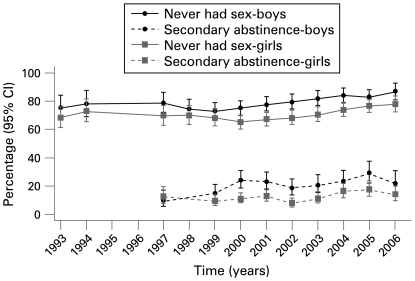
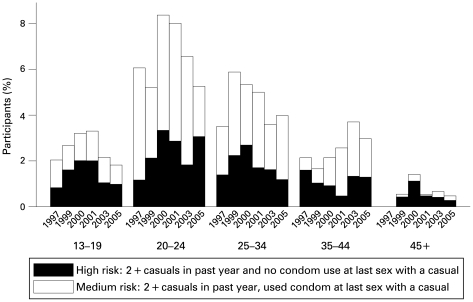
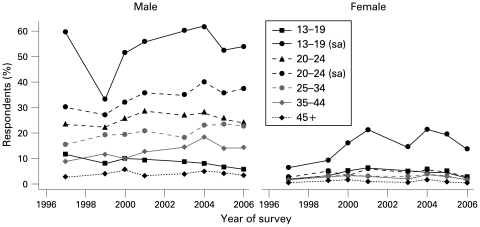
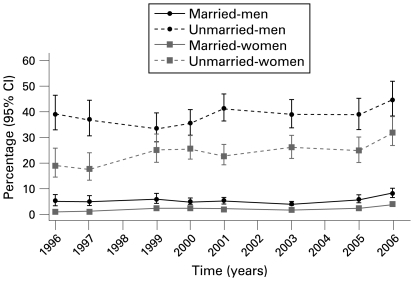
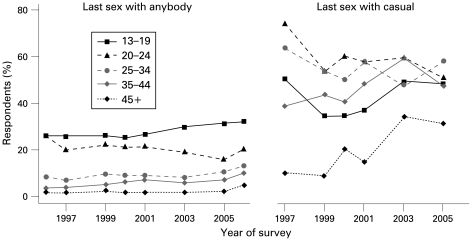
Between 1993 and 2006, median age at first sex increased from 16.7 years to 18.2 years among 17-20-year-old girls and from 18.5 years to 19.9 years among boys. Both sexes reported a dip in age at sexual debut between 1998 and 2001. One or more casual partners in the past 12 months among men rose from 11.6% in 1997 to 12.7% in 2004 and then declined to 10.2% in 2006. Among women it increased from 1.4% in 1997 to 3.7% in 2004 and then reduced to 1.4% in 2006. The rise in casual partners between 1997 and 2004 was driven mainly by older age groups. Trends in condom use with casual partners varied by age, increasing among those aged 35+ years, declining in the middle age groups and presenting a dip and then a rise in the youngest aged group (13-19 years).
Among youth, risky behaviour declined but increased in the late 1990s/early 2000s. Among those aged 35+ years, condom use rose but casual partners also rose. Several indicators portrayed a temporary increase in risk taking behaviour from 1998 to 2002.
描述1993 - 2006年乌干达农村一个队列在不断演变的艾滋病毒流行背景下的性行为趋势。
每年从一个也进行艾滋病毒血清学调查的人群队列中收集性行为数据。使用生存分析和逻辑回归确定行为趋势。趋势报告基于收集各个指标的年份。
1993年至2006年期间,17 - 20岁女孩的首次性行为中位年龄从16.7岁增至18.2岁,男孩从18.5岁增至19.9岁。两性报告在1998年至2001年期间首次性行为年龄有所下降。过去12个月中有一个或多个性伴侣的男性比例从1997年的11.6%升至2004年的12.7%,然后在2006年降至10.2%。女性这一比例从1997年的1.4%增至2004年的3.7%,然后在2006年降至1.4%。1997年至2004年期间性伴侣增加主要由年龄较大的群体推动。与临时性伴侣使用避孕套的趋势因年龄而异,35岁及以上人群中增加,中年人群体中下降,最年轻年龄组(13 - 19岁)呈现先下降后上升。
在青少年中,危险行为减少,但在20世纪90年代末/21世纪初有所增加。在35岁及以上人群中,避孕套使用增加,但性伴侣也增加。若干指标显示1998年至2002年期间冒险行为暂时增加。