Shi Guoqing, Chen Di, Zhai Guangshu, Chen Marina S, Cui Qiuzhi Cindy, Zhou Qunfang, He Bin, Dou Q Ping, Jiang Guibin
State Key Laboratory of Environmental Chemistry and Ecotoxicology, Research Center for Eco-Environmental Sciences, Chinese Academy of Sciences, Beijing, People's Republic of China.
Environ Health Perspect. 2009 Mar;117(3):379-86. doi: 10.1289/ehp.11865. Epub 2008 Oct 23.
Because of the vital importance of the proteasome pathway, chemicals affecting proteasome activity could disrupt essential cellular processes. Although the toxicity of organotins to both invertebrates and vertebrates is well known, the essential cellular target of organotins has not been well identified. We hypothesize that the proteasome is a molecular target of environmental toxic organotins.
Our goal was to test the above hypothesis by investigating whether organotins could inhibit the activity of purified and cellular proteasomes and, if so, the involved molecular mechanisms and downstream events.
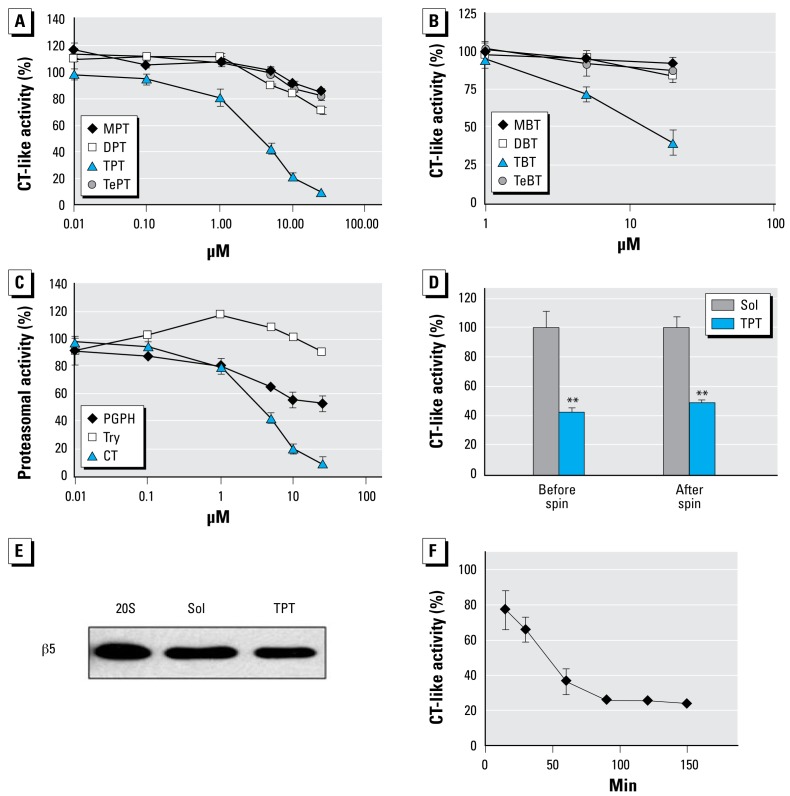
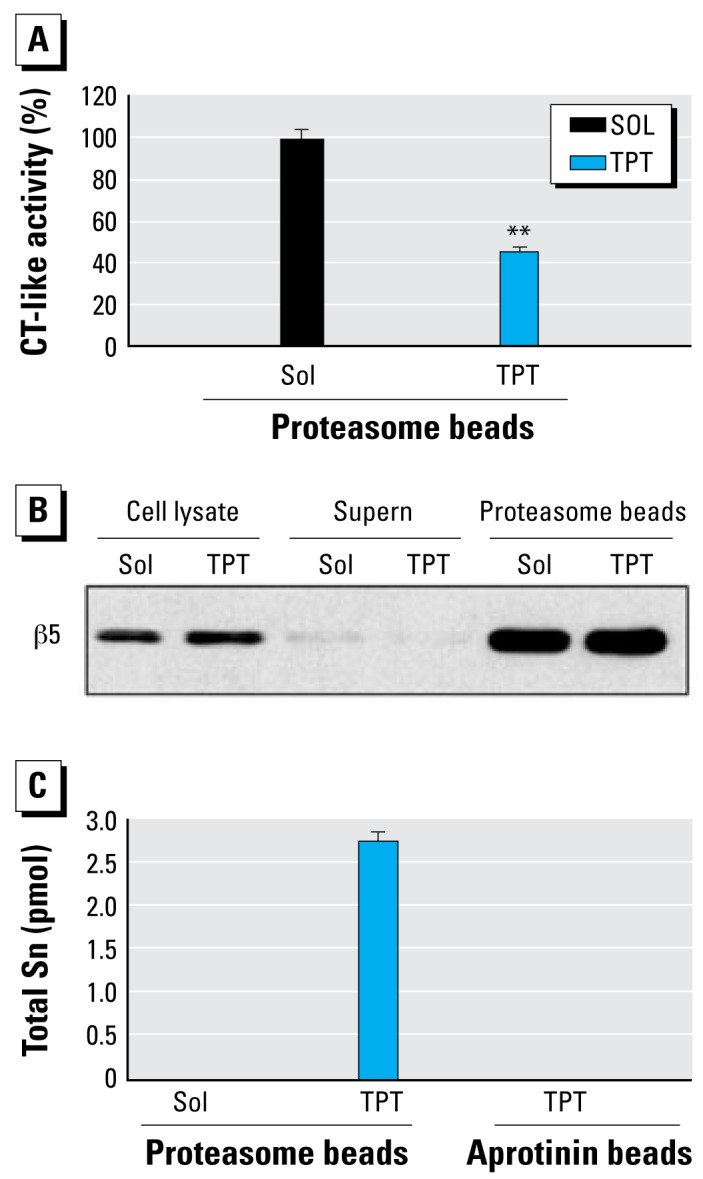
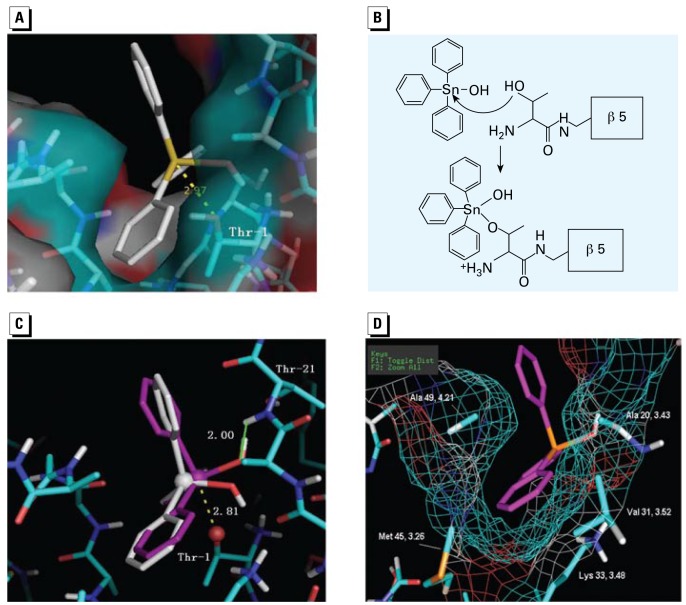
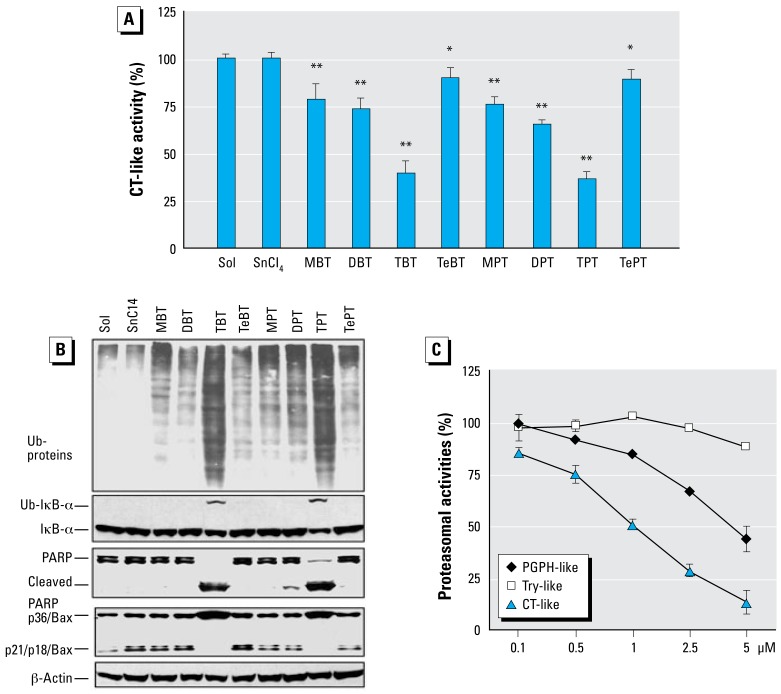
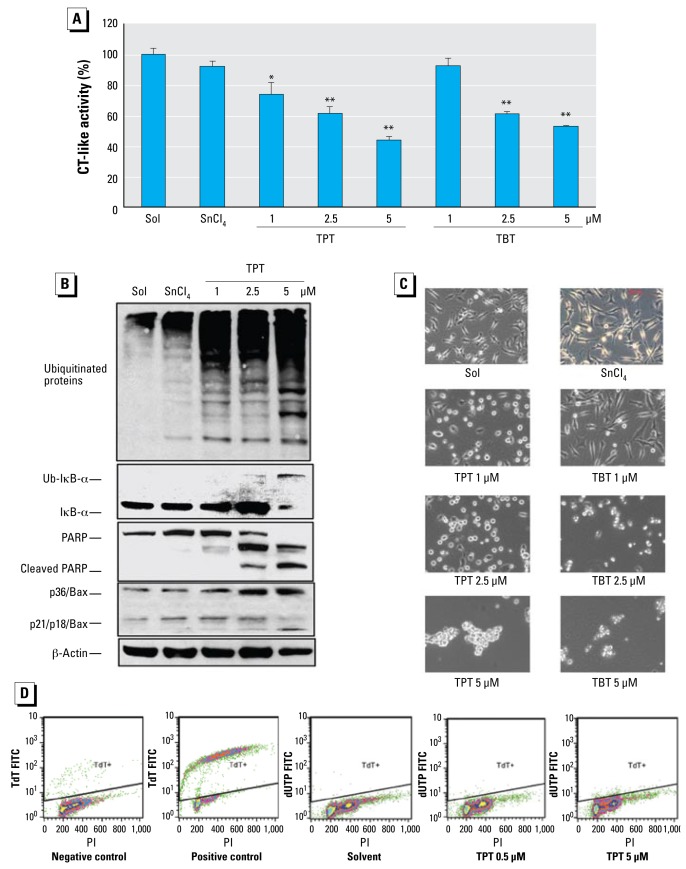
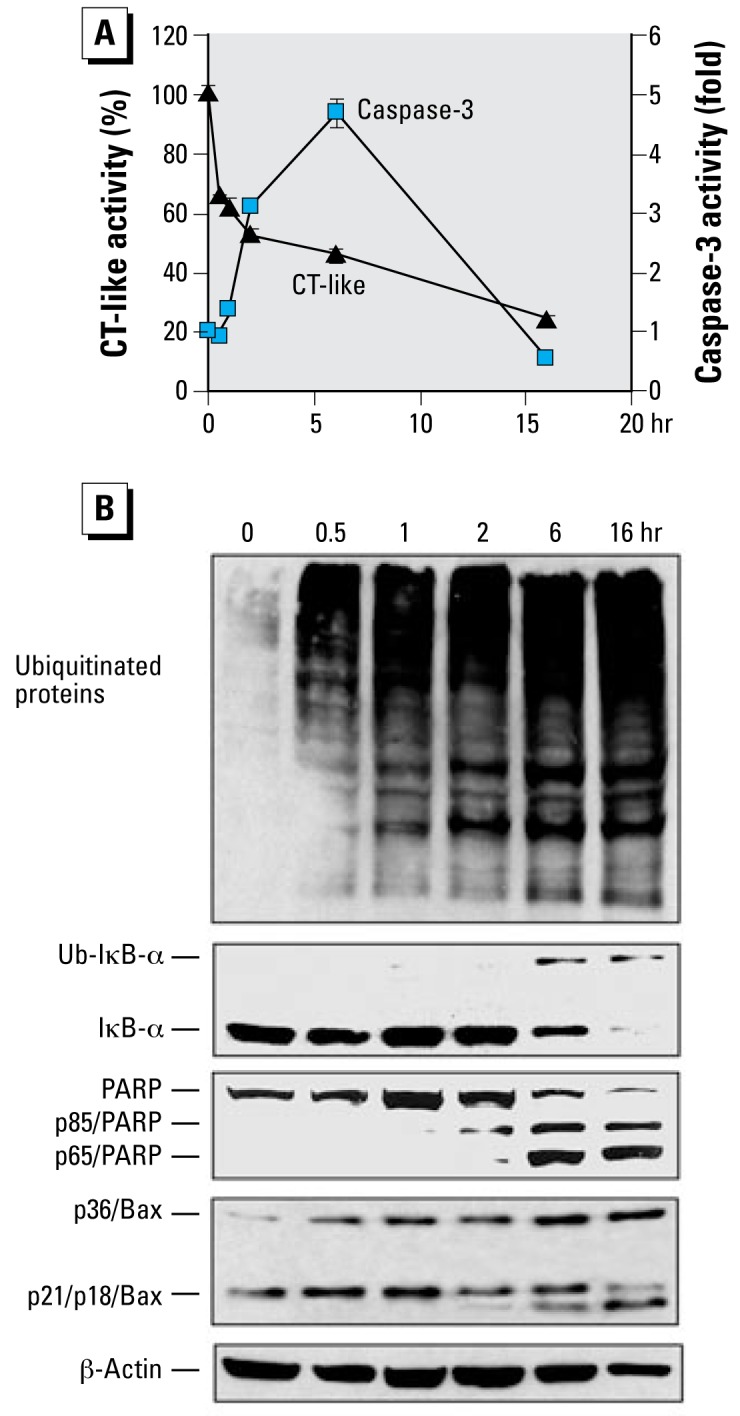
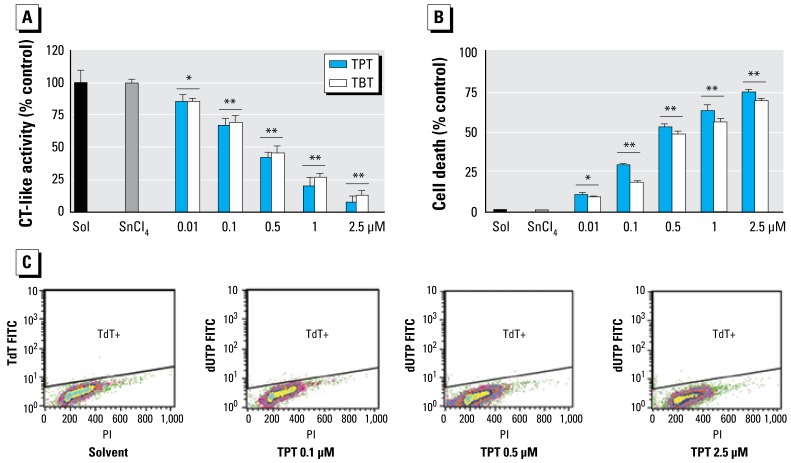
We found that some toxic organotins [e.g., triphenyltin (TPT)] can potently and preferentially inhibit the chymotrypsin-like activity of purified 20S proteasomes and human breast cancer cellular 26S proteasomes. Direct binding of tin atoms to cellular proteasomes is responsible for the observed irreversible inhibition. Inhibition of cellular proteasomes by TPT in several human cell lines results in the accumulation of ubiquitinated proteins and natural proteasome target proteins, accompanied by induction of cell death.
The proteasome is one of the molecular targets of environmental toxic organotins in human cells, and proteasome inhibition by organotins contributes to their cellular toxicity.
由于蛋白酶体途径至关重要,影响蛋白酶体活性的化学物质可能会扰乱细胞的基本过程。尽管有机锡对无脊椎动物和脊椎动物的毒性众所周知,但其在细胞内的关键作用靶点尚未明确。我们推测蛋白酶体是环境中毒性有机锡的分子靶点。
我们的目标是通过研究有机锡是否能抑制纯化的和细胞内蛋白酶体的活性,以及如果可以,其涉及的分子机制和下游事件,来验证上述假设。
我们发现一些有毒有机锡[如三苯基锡(TPT)]能够有效且优先抑制纯化的20S蛋白酶体和人乳腺癌细胞26S蛋白酶体的类胰凝乳蛋白酶活性。锡原子与细胞内蛋白酶体的直接结合导致了观察到的不可逆抑制。TPT对多种人类细胞系中细胞蛋白酶体的抑制作用导致泛素化蛋白和天然蛋白酶体靶蛋白的积累,并伴随细胞死亡的诱导。
蛋白酶体是人类细胞中环境中毒性有机锡的分子靶点之一,有机锡对蛋白酶体的抑制作用导致了它们的细胞毒性。