Singh Jasmeet, Ranganathan Radha, Hajdu Joseph
Department of Physics, Center for Supramolecular Studies, California State University, Northridge, California 91330-8268, USA.
J Phys Chem B. 2008 Dec 25;112(51):16741-51. doi: 10.1021/jp807067g.
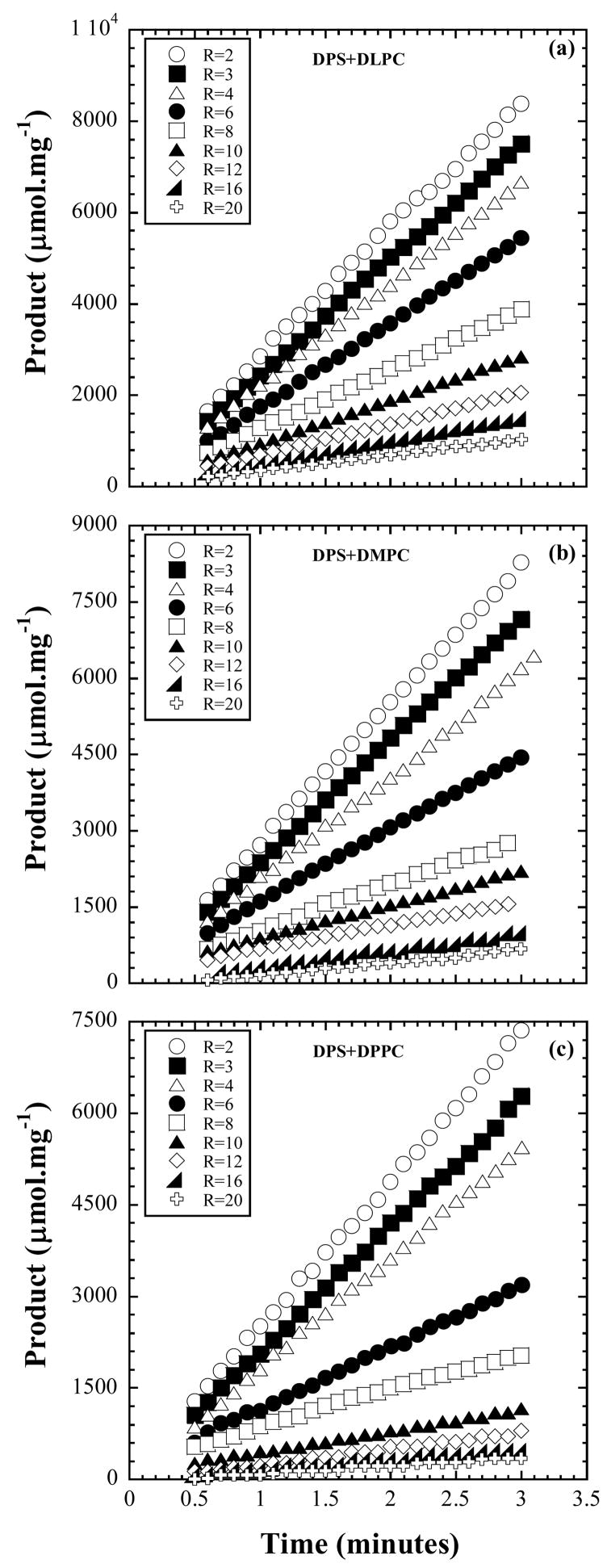
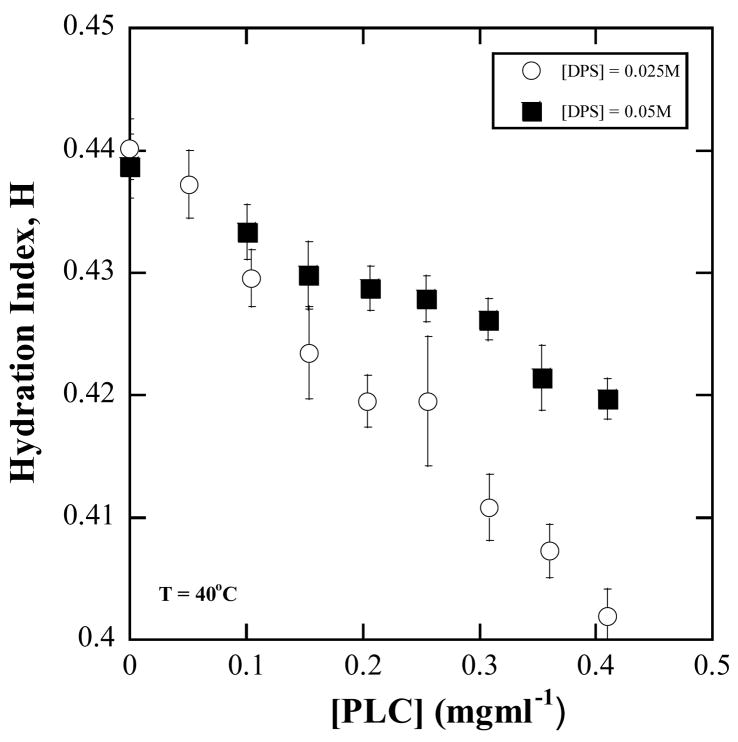
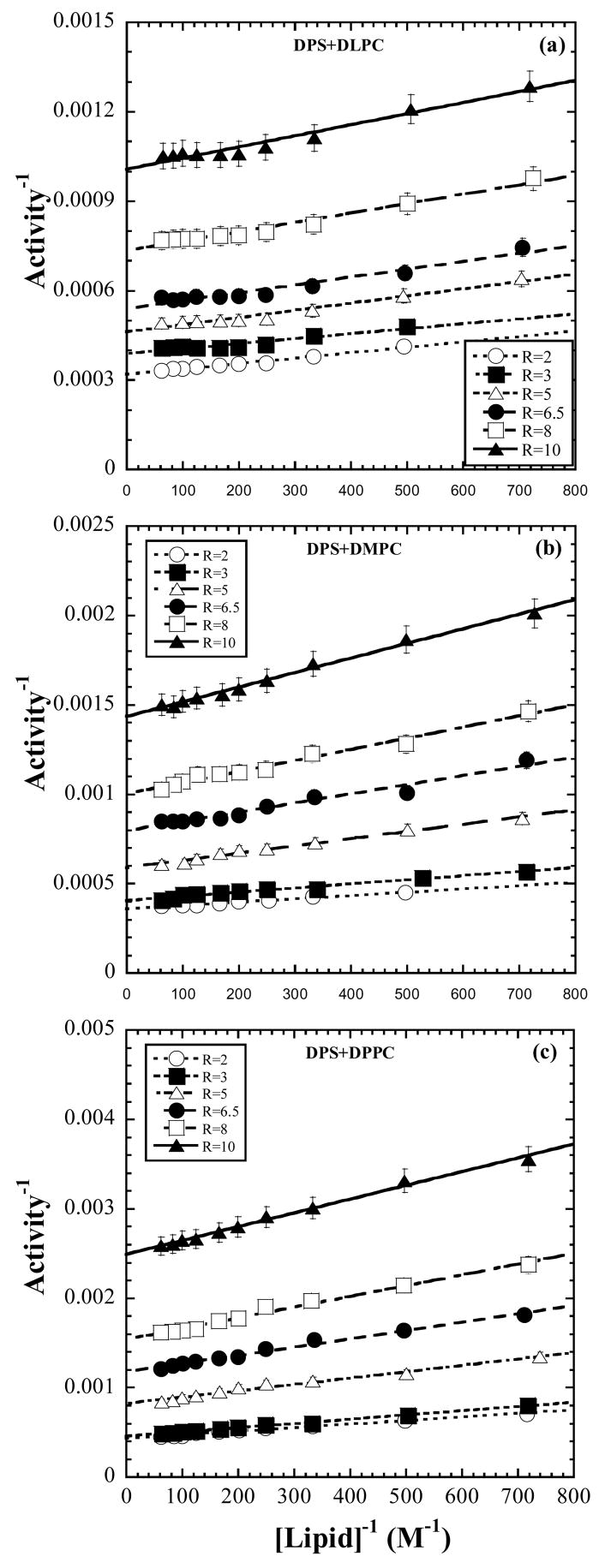
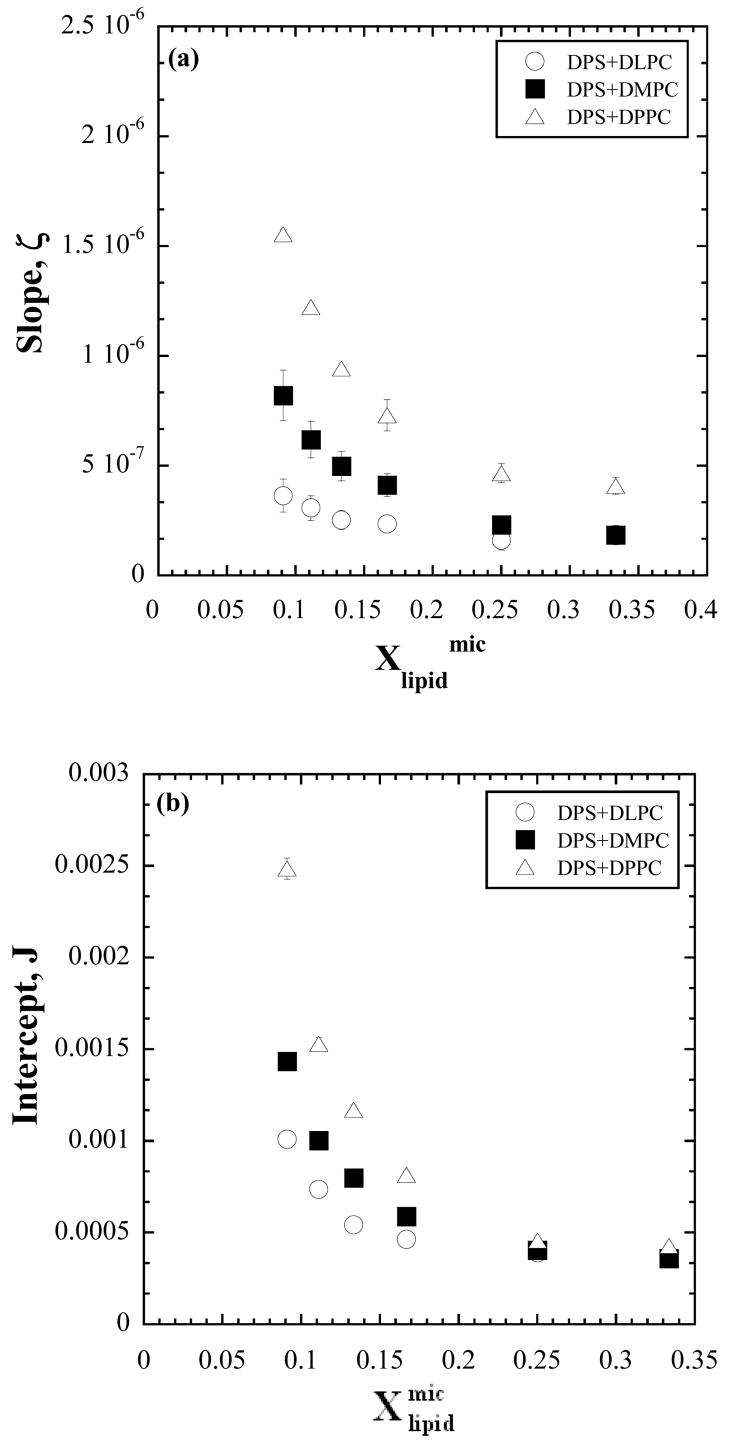
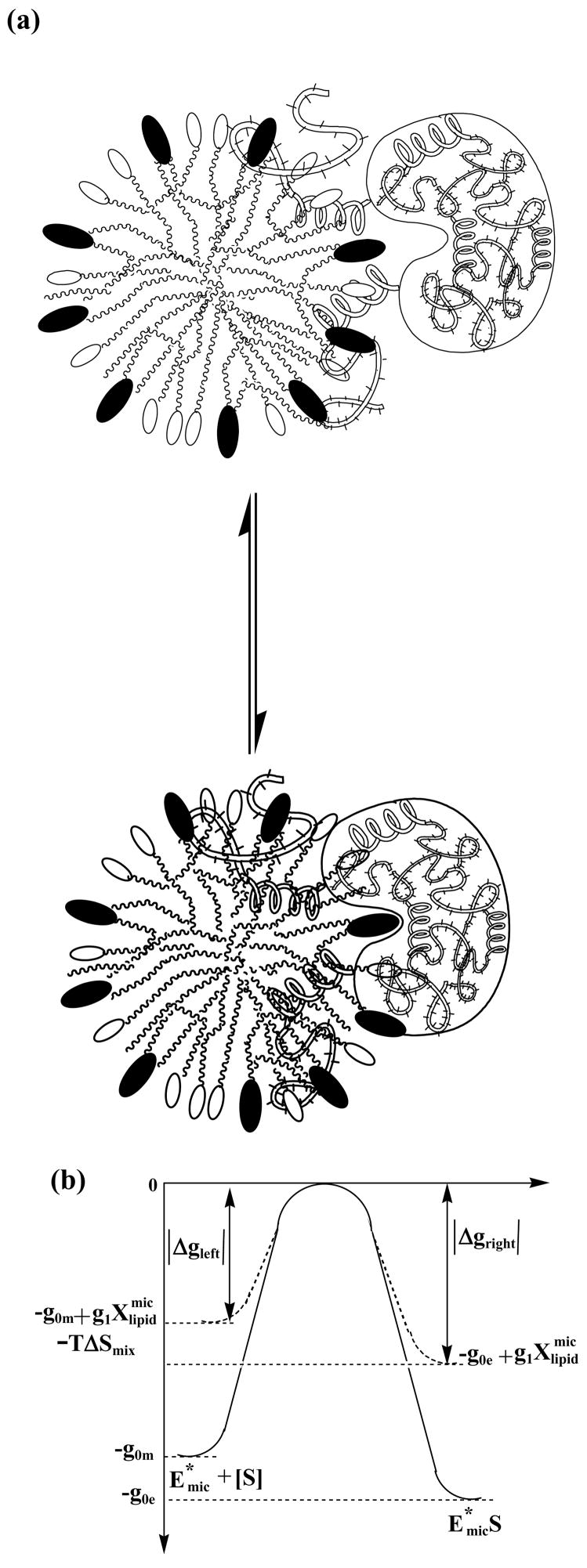
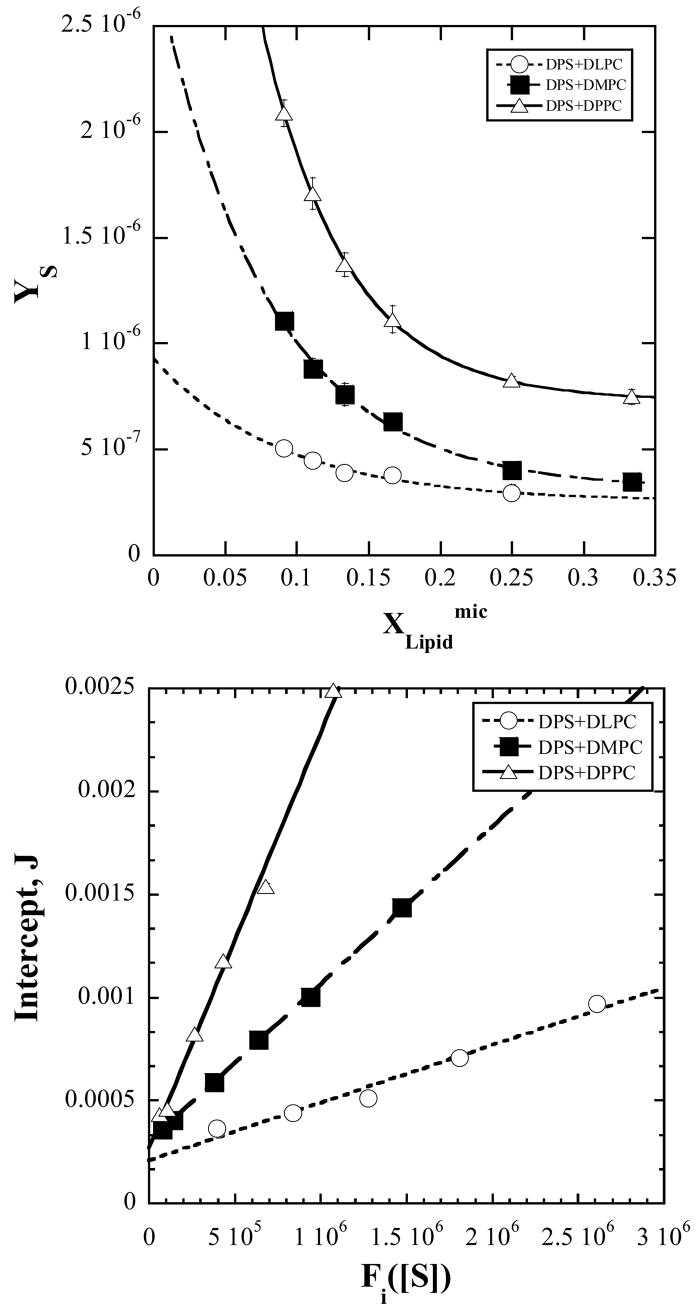
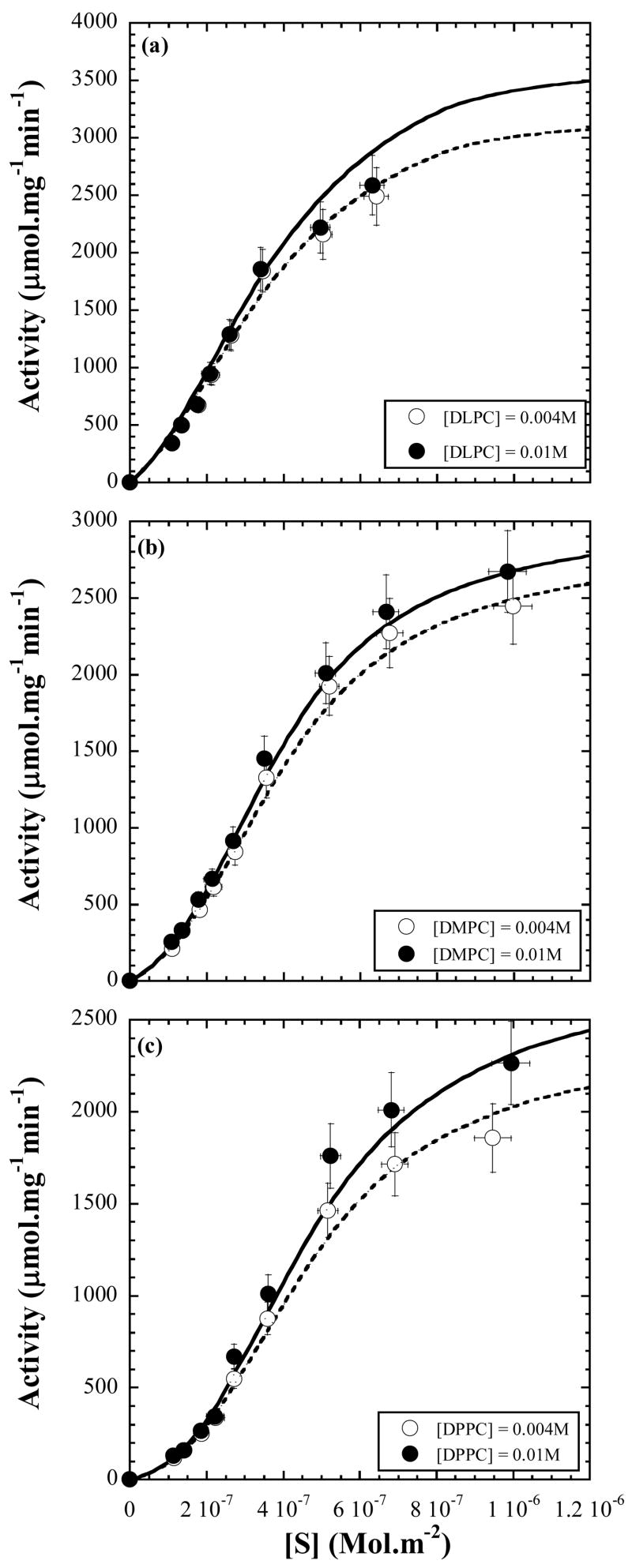
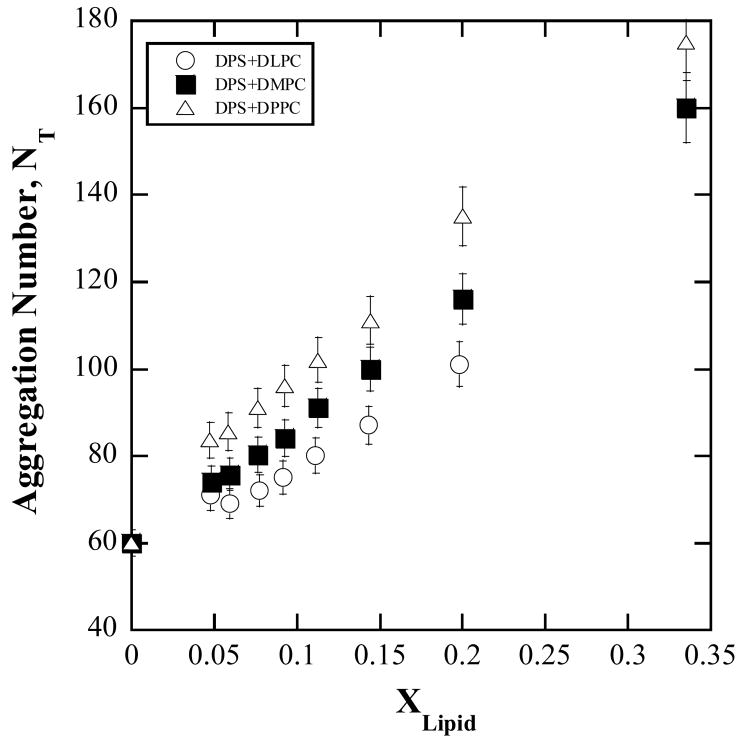
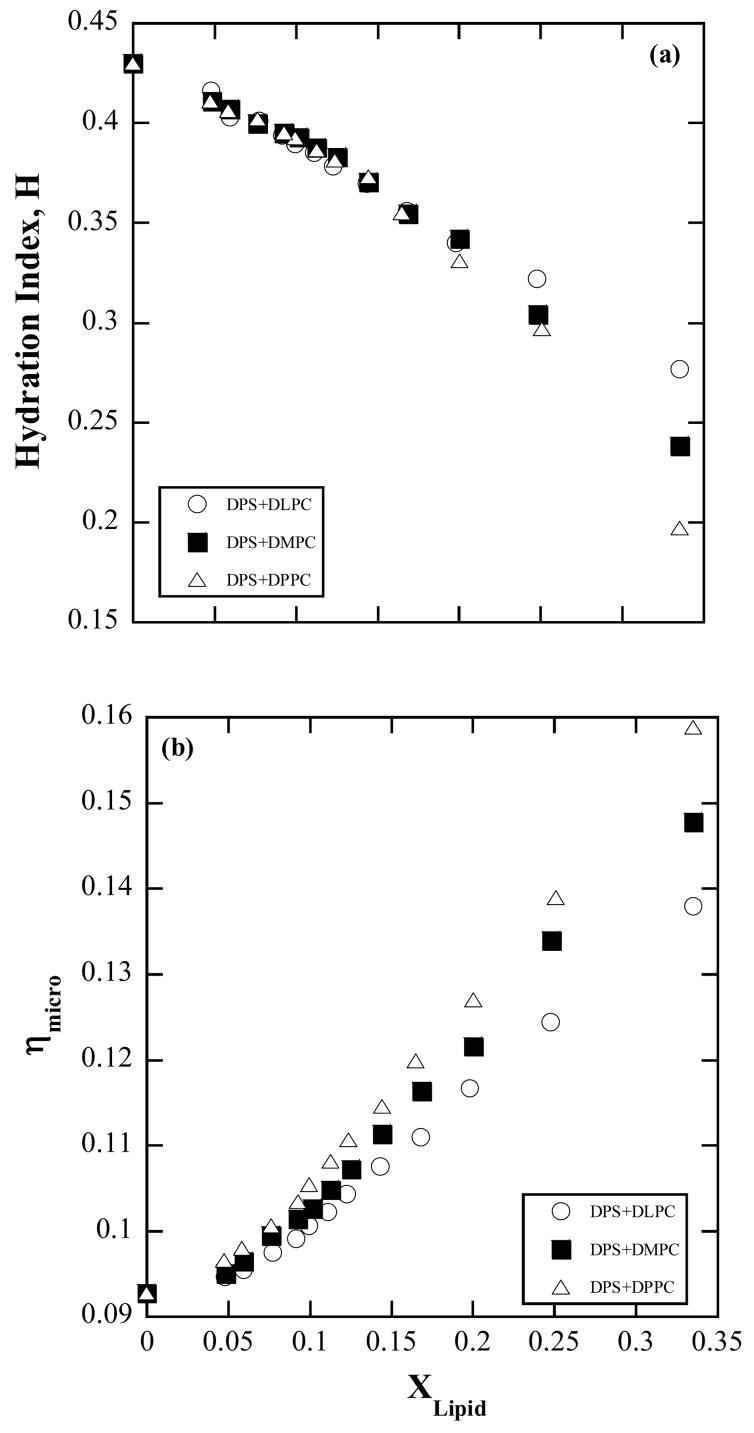
Activity at micellar interfaces of bacterial phospholipase C from Bacillus cereus on phospholipids solubilized in micelles was investigated with the goal of elucidating the role of the interface microstructure and developing further an existing kinetic model. Enzyme kinetics and physicochemical characterization of model substrate aggregates were combined, thus enabling the interpretation of kinetics in the context of the interface. Substrates were diacylphosphatidylcholine of different acyl chain lengths in the form of mixed micelles with dodecyldimethylammoniopropanesulfonate. An early kinetic model, reformulated to reflect the interfacial nature of the kinetics, was applied to the kinetic data. A better method of data treatment is proposed, use of which makes the presence of microstructure effects quite transparent. Models for enzyme-micelle binding and enzyme-lipid binding are developed, and expressions incorporating the microstructural properties are derived for the enzyme-micelle dissociation constant K(s) and the interface Michaelis-Menten constant, K(M). Use of these expressions in the interface kinetic model brings excellent agreement between the kinetic data and the model. Numerical values for the thermodynamic and kinetic parameters are determined. Enzyme-lipid binding is found to be an activated process with an acyl chain length dependent free energy of activation that decreases with micelle lipid molar fraction with a coefficient of about -15RT and correlates with the tightness of molecular packing in the substrate aggregate. Thus, the physical insight obtained includes a model for the kinetic parameters that shows that these parameters depend on the substrate concentration and acyl chain length of the lipid. Enzyme-micelle binding is indicated to be hydrophobic and solvent mediated with a dissociation constant of 1.2 mM.
为了阐明界面微观结构的作用并进一步完善现有的动力学模型,对蜡样芽孢杆菌的细菌磷脂酶C在胶束中溶解的磷脂上的胶束界面活性进行了研究。将酶动力学与模型底物聚集体的物理化学特性相结合,从而能够在界面背景下解释动力学。底物是不同酰基链长度的二酰基磷脂酰胆碱,其以与十二烷基二甲基氨丙烷磺酸盐形成的混合胶束形式存在。一个经过重新表述以反映动力学界面性质的早期动力学模型被应用于动力学数据。提出了一种更好的数据处理方法,使用该方法可使微观结构效应的存在非常明显。建立了酶 - 胶束结合和酶 - 脂质结合的模型,并推导出包含微观结构性质的酶 - 胶束解离常数K(s)和界面米氏常数K(M)的表达式。在界面动力学模型中使用这些表达式可使动力学数据与模型之间达成极好的一致性。确定了热力学和动力学参数的数值。发现酶 - 脂质结合是一个活化过程,其活化自由能取决于酰基链长度,该自由能随着胶束脂质摩尔分数以约 -15RT的系数降低,并且与底物聚集体中分子堆积的紧密程度相关。因此,所获得的物理见解包括一个动力学参数模型,该模型表明这些参数取决于脂质的底物浓度和酰基链长度。酶 - 胶束结合表明是疏水的且由溶剂介导,解离常数为1.2 mM。