Suppr超能文献

雌二醇诱导的T47D:A18/PKCalpha肿瘤消退需要雌激素受体以及与细胞外基质的相互作用。

Estradiol-induced regression in T47D:A18/PKCalpha tumors requires the estrogen receptor and interaction with the extracellular matrix.

作者信息

Zhang Yiyun, Zhao Huiping, Asztalos Szilard, Chisamore Michael, Sitabkhan Yasmin, Tonetti Debra A

机构信息

Department of Biopharmaceutical Sciences, University of Illinois at Chicago, Chicago, IL 60612, USA.

出版信息

Mol Cancer Res. 2009 Apr;7(4):498-510. doi: 10.1158/1541-7786.MCR-08-0415.

Abstract

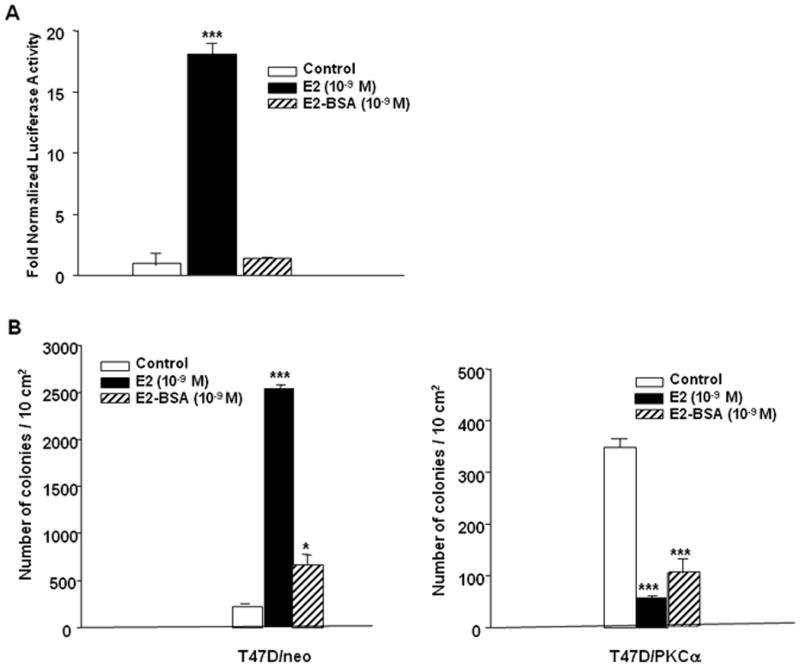
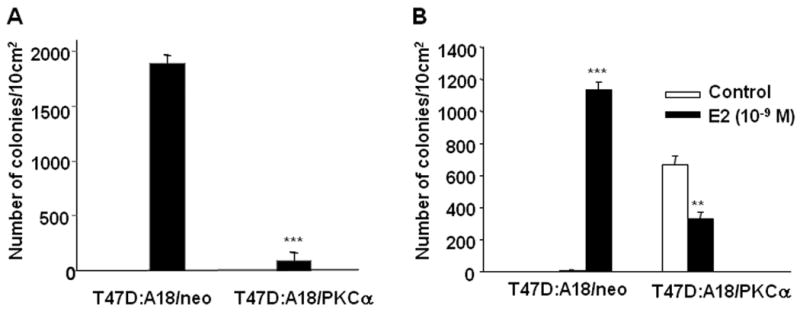
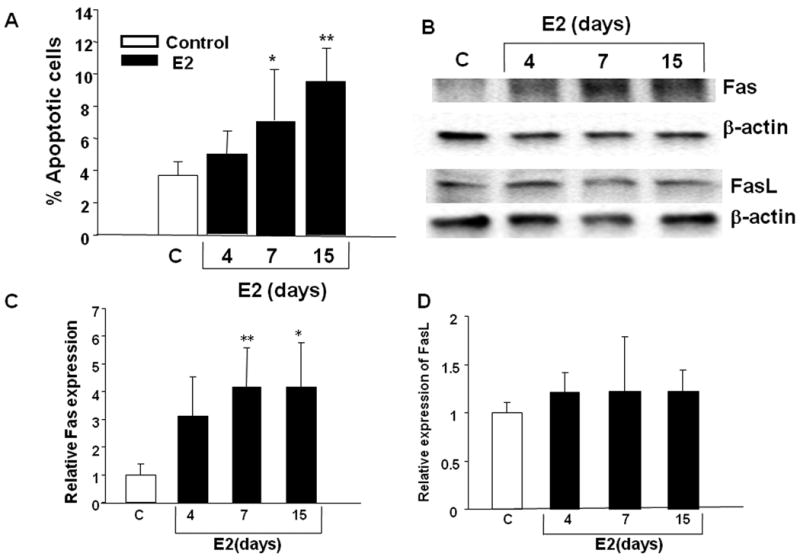
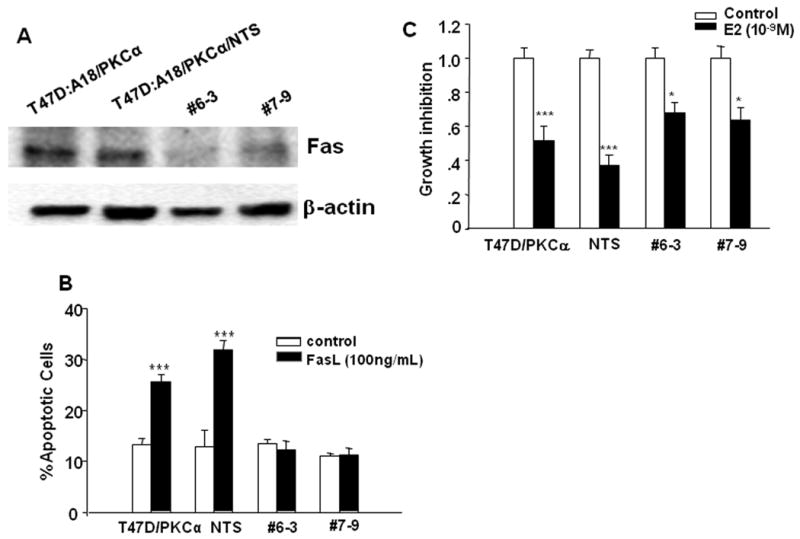
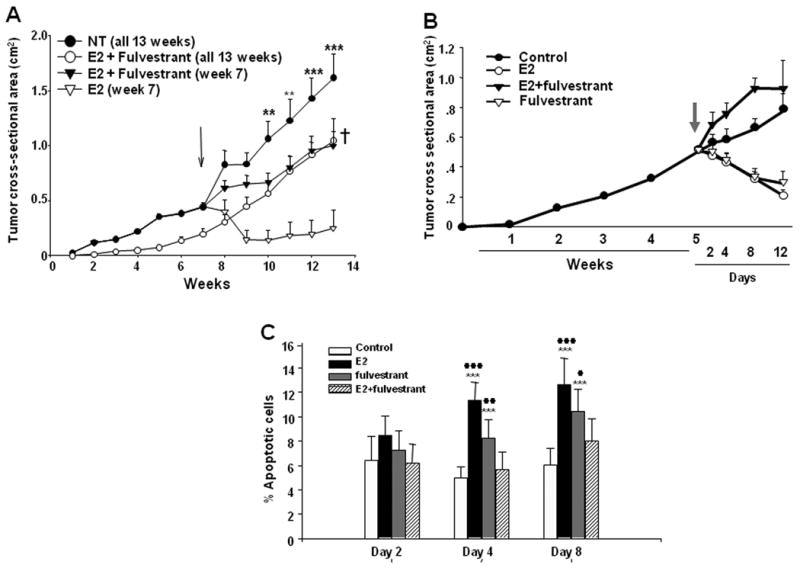
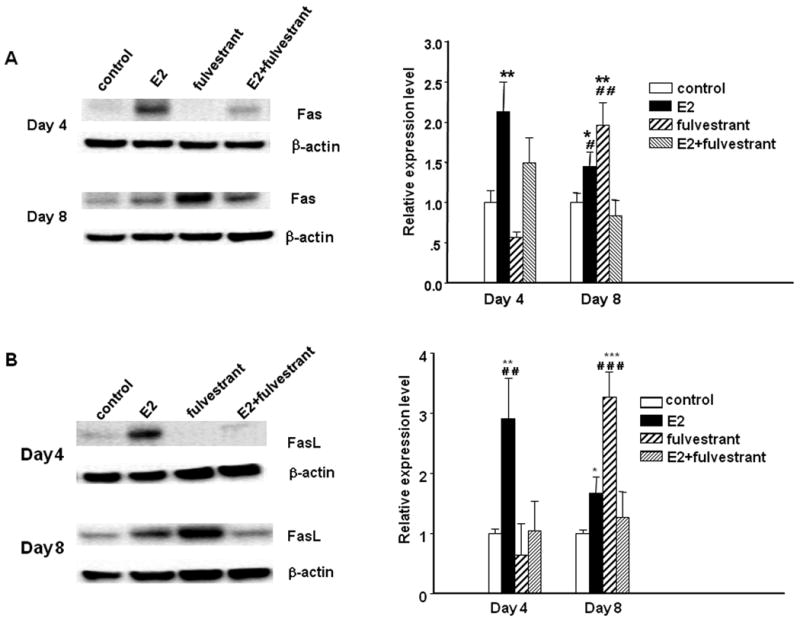
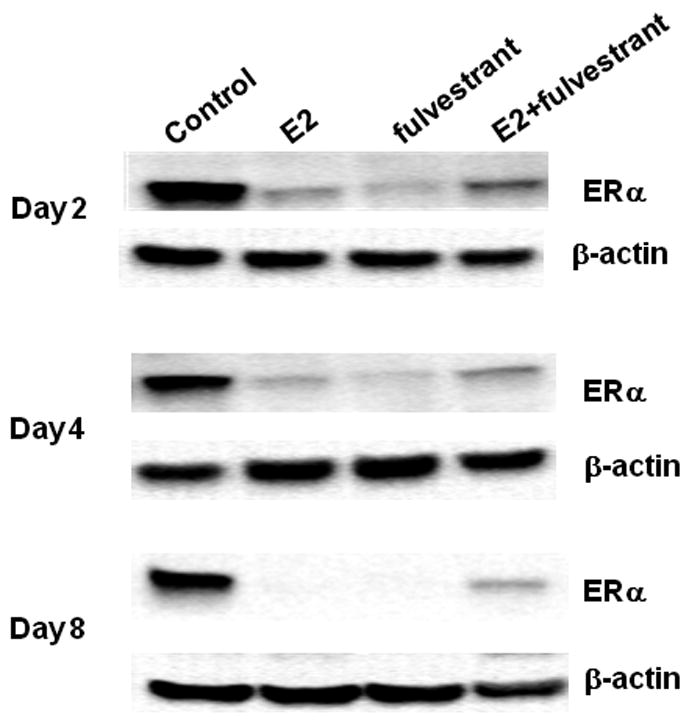
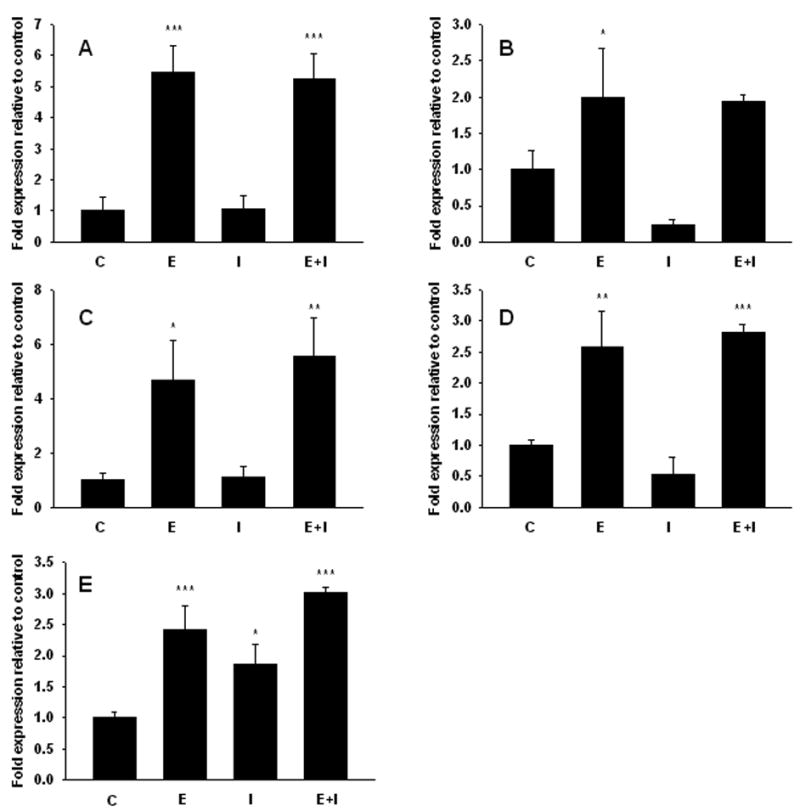
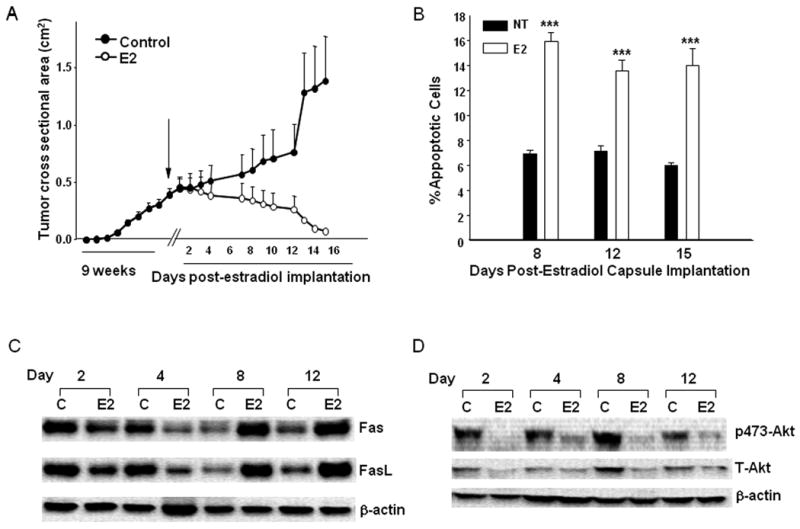
Several breast cancer tumor models respond to estradiol (E(2)) by undergoing apoptosis, a phenomenon known to occur in clinical breast cancer. Before the application of tamoxifen as an endocrine therapy, high-dose E(2) or diethystilbesterol treatment was successfully used, albeit with unfavorable side effects. It is now recognized that such an approach may be a potential endocrine therapy option. We have explored the mechanism of E(2)-induced tumor regression in our T47D:A18/PKCalpha tumor model that exhibits autonomous growth, tamoxifen resistance, and E(2)-induced tumor regression. Fulvestrant, a selective estrogen receptor (ER) down-regulator, prevents T47D:A18/PKCalpha E(2)-induced tumor growth inhibition and regression when given before or after tumor establishment, respectively. Interestingly, E(2)-induced growth inhibition is only observed in vivo or when cells are grown in Matrigel but not in two-dimensional tissue culture, suggesting the requirement of the extracellular matrix. Tumor regression is accompanied by increased expression of the proapoptotic FasL/FasL ligand proteins and down-regulation of the prosurvival Akt pathway. Inhibition of colony formation in Matrigel by E(2) is accompanied by increased expression of FasL and short hairpin RNA knockdown partially reverses colony formation inhibition. Classic estrogen-responsive element-regulated transcription of pS2, PR, transforming growth factor-alpha, C3, and cathepsin D is independent of the inhibitory effects of E(2). A membrane-impermeable E(2)-BSA conjugate is capable of mediating growth inhibition, suggesting the involvement of a plasma membrane ER. We conclude that E(2)-induced T47D:A18/PKCalpha tumor regression requires participation of ER-alpha, the extracellular matrix, FasL/FasL ligand, and Akt pathways, allowing the opportunity to explore new predictive markers and therapeutic targets.

摘要

几种乳腺癌肿瘤模型会通过凋亡对雌二醇(E₂)产生反应,这种现象在临床乳腺癌中也会出现。在他莫昔芬作为内分泌疗法应用之前,高剂量E₂或己烯雌酚治疗曾成功使用过,尽管存在不良副作用。现在人们认识到,这种方法可能是一种潜在的内分泌治疗选择。我们在T47D:A18/PKCalpha肿瘤模型中探索了E₂诱导肿瘤消退的机制,该模型具有自主生长、他莫昔芬耐药性以及E₂诱导的肿瘤消退特性。氟维司群是一种选择性雌激素受体(ER)下调剂,分别在肿瘤形成之前或之后给予时,可阻止T47D:A18/PKCalpha肿瘤因E₂诱导的生长抑制和消退。有趣的是,E₂诱导的生长抑制仅在体内或细胞在基质胶中生长时观察到,而在二维组织培养中未观察到,这表明需要细胞外基质。肿瘤消退伴随着促凋亡的FasL/FasL配体蛋白表达增加以及存活促进因子Akt途径的下调。E₂对基质胶中集落形成的抑制伴随着FasL表达增加,短发夹RNA敲低可部分逆转集落形成抑制。经典的雌激素反应元件调控的pS2、PR、转化生长因子-α、C3和组织蛋白酶D的转录与E₂的抑制作用无关。一种膜不可渗透的E₂-BSA偶联物能够介导生长抑制,提示质膜ER参与其中。我们得出结论,E₂诱导的T47D:A18/PKCalpha肿瘤消退需要ER-α、细胞外基质、FasL/FasL配体和Akt途径的参与,这为探索新的预测标志物和治疗靶点提供了机会。
相似文献

6
Novel selective estrogen mimics for the treatment of tamoxifen-resistant breast cancer.
Mol Cancer Ther. 2014 Nov;13(11):2515-26. doi: 10.1158/1535-7163.MCT-14-0319. Epub 2014 Sep 9.

引用本文的文献

1
Revisiting Estrogen for the Treatment of Endocrine-Resistant Breast Cancer: Novel Therapeutic Approaches.
Cancers (Basel). 2023 Jul 17;15(14):3647. doi: 10.3390/cancers15143647.
2
Metabolomics Analysis Discovers Estrogen Altering Cell Proliferation the Pentose Phosphate Pathway in Infertility Patient Endometria.
Front Endocrinol (Lausanne). 2021 Nov 15;12:791174. doi: 10.3389/fendo.2021.791174. eCollection 2021.
3
4
ERα upregulates the expression of long non-coding RNA LINC00472 which suppresses the phosphorylation of NF-κB in breast cancer.
Breast Cancer Res Treat. 2019 Jun;175(2):353-368. doi: 10.1007/s10549-018-05108-5. Epub 2019 Mar 4.
6
The new biology of estrogen-induced apoptosis applied to treat and prevent breast cancer.
Endocr Relat Cancer. 2015 Feb;22(1):R1-31. doi: 10.1530/ERC-14-0448. Epub 2014 Oct 22.
7
Novel selective estrogen mimics for the treatment of tamoxifen-resistant breast cancer.
Mol Cancer Ther. 2014 Nov;13(11):2515-26. doi: 10.1158/1535-7163.MCT-14-0319. Epub 2014 Sep 9.
8
Crosstalk between PKCα and Notch-4 in endocrine-resistant breast cancer cells.
Oncogenesis. 2013 Aug 5;2(8):e60. doi: 10.1038/oncsis.2013.26.
9
c-Src modulates estrogen-induced stress and apoptosis in estrogen-deprived breast cancer cells.
Cancer Res. 2013 Jul 15;73(14):4510-20. doi: 10.1158/0008-5472.CAN-12-4152. Epub 2013 May 23.

本文引用的文献

1
Membrane ERalpha-dependent activation of PKCalpha in endometrial cancer cells by estradiol.
Steroids. 2008 Oct;73(11):1110-22. doi: 10.1016/j.steroids.2008.04.012. Epub 2008 Apr 30.
2
Unraveling the microenvironmental influences on the normal mammary gland and breast cancer.
Semin Cancer Biol. 2008 Oct;18(5):311-21. doi: 10.1016/j.semcancer.2008.03.013. Epub 2008 Mar 26.
3
Direct binding and activation of protein kinase C isoforms by steroid hormones.
Steroids. 2008 Oct;73(9-10):885-8. doi: 10.1016/j.steroids.2008.01.001. Epub 2008 Jan 12.
5
Estrogen receptors outside the nucleus in breast cancer.
Breast Cancer Res Treat. 2008 Apr;108(3):351-61. doi: 10.1007/s10549-007-9618-4. Epub 2007 Jun 26.
6
Protein Kinase C alpha is a marker for antiestrogen resistance and is involved in the growth of tamoxifen resistant human breast cancer cells.
Breast Cancer Res Treat. 2007 Aug;104(2):165-79. doi: 10.1007/s10549-006-9399-1. Epub 2006 Oct 24.
8
Fulvestrant (ICI 182,780)-dependent interacting proteins mediate immobilization and degradation of estrogen receptor-alpha.
J Biol Chem. 2006 Apr 7;281(14):9607-15. doi: 10.1074/jbc.M510809200. Epub 2006 Feb 3.
9
Estrogen-induced apoptosis in a breast cancer model resistant to long-term estrogen withdrawal.
J Steroid Biochem Mol Biol. 2005 Feb;94(1-3):131-41. doi: 10.1016/j.jsbmb.2004.12.032. Epub 2005 Feb 8.
10
Reversal of tamoxifen resistant breast cancer by low dose estrogen therapy.
J Steroid Biochem Mol Biol. 2005 Feb;93(2-5):249-56. doi: 10.1016/j.jsbmb.2004.12.005.

文献AI研究员

20分钟写一篇综述,助力文献阅读效率提升50倍。

立即体验

用中文搜PubMed

大模型驱动的PubMed中文搜索引擎

马上搜索

文档翻译

学术文献翻译模型,支持多种主流文档格式。

立即体验